


FRP Bonding Angles are 90° structural profiles made from layers of precision-laid multi-axial E-glass, infused and cured using ATL’s advanced epoxy technology. Fibre direction and laminate schedules are tailored to maximise strength in right-angle joints, providing durable, predictable performance in high-load areas.
These angles are designed for use with DuFLEX® panels, ATL’s structural epoxy pastes, and the broader Kinetix® and Techniglue® adhesive systems, ensuring superior compatibility and long-term bonding integrity.
Right-angle joints between DuFLEX® panels
Structural corner reinforcement in hulls, decks and modules
Internal framing and stiffeners in marine and industrial structures
Overhead and confined-area bonding where wet lay-up is impractical
Curved bases and partitions (kerfed angles)
Structural joints in modular, transport and architectural systems
FRP Bonding Angles are manufactured using the same resin technology that underpins ATL’s DuFLEX® panels, Kinetix® laminating systems and Techniglue® structural adhesives. This ensures:
Excellent chemical compatibility between angles, core and laminates
High bond strength when used with ATL epoxy paste adhesives
Consistent cure behaviour and long-term durability
A fully integrated composite system from core to coating
Independent tensile testing conducted by Queensland University of Technology (QUT), Test Report CET 4149/3 – Tensile Tests to Fibreglass Connections (Fins), using a Grade A Tinius Olsen Universal Testing Machine at 5 mm/min, evaluated the performance of polyester and epoxy bonded joints using FRP Bonding Angles.
In both cases, failure occurred through the adhesive layer rather than the FRP Bonding Angle, demonstrating the superior structural integrity of the angles.
| Test | Specimen Thickness (mm) | Nominal Area (mm²) | Failure Load (kN) | Failure Mode | Apparent Shear Strength (MPa) |
|---|---|---|---|---|---|
| 1 | 21 | 48,400 | 77.6 | Part shear through polyester bond / part tearing | 1.60 |
| 1 | 14 | 30,400 | 68.5 | Shear through epoxy bond | 2.25 |
ATL Composites manufactures FRP Bonding Angles in precision-cured 90° profiles engineered for structural joining, reinforcement and fast assembly of composite components. Each angle is produced using multi-axial E-glass and ATL’s high-performance epoxy resin systems to ensure dimensional stability, reliable bonding and predictable mechanical performance.
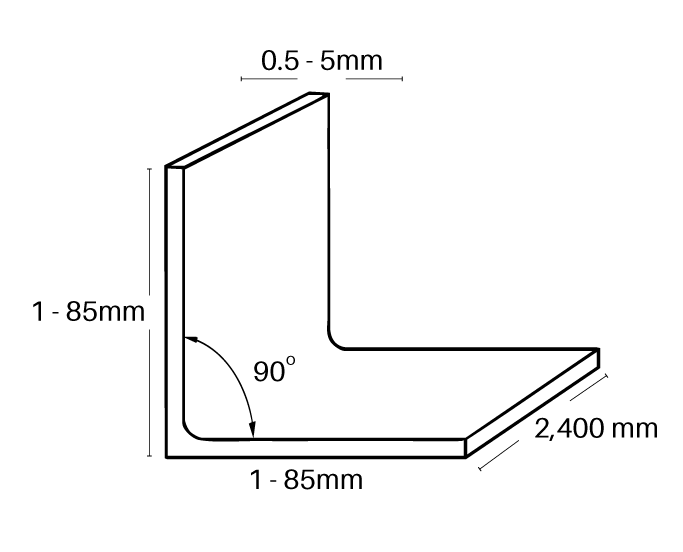
Our standard FRP Bonding Angle profile features 85 mm × 85 mm legs and is supplied in 2400 mm lengths for easy handling and integration into marine, transport, industrial and architectural structures.
Thanks to ATL’s proprietary joining techniques, Bonding Angles can also be supplied in extended continuous lengths for large modules, long-span structures and custom projects requiring uninterrupted reinforcement.
FRP Bonding Angles are available in a wide range of laminate thicknesses from:
0.5 mm to 5 mm
This allows designers and builders to choose the optimal balance of weight, stiffness and bonding area for their project requirements.
Standard profile: 1 – 85 mm × 1 – 85 mm
Standard length: 2400 mm
Custom lengths: available using ATL’s proprietary joining process
Thickness range: 0.5 – 5 mm
Material: multi-axial E-glass laminated with ATL epoxy systems
Geometry: consistent 90° pre-cured structural profile
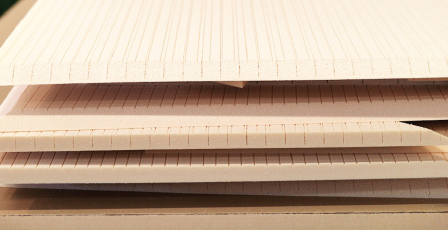
DuraKore® Strip Planks are manufactured using Diab ProBalsa® end-grain balsa, laminated with high-quality hardwood veneers to produce a lightweight, dimensionally stable composite core material. The unique structure provides excellent compressive strength, fatigue resistance and impact toughness — outperforming traditional timber while maintaining the warm working characteristics builders appreciate.
Each plank is supplied 300 mm wide × 2400 mm long and is pre-scarfed for rapid joining and seamless assembly.
This approach results in:
Reduced labour — no on-site de-coring, filling or re-laminating
Consistent engineering performance — factory-controlled density, thickness and placement
Higher structural reliability — designed and integrated during panel production
Cleaner, faster assembly — ready-to-use fixing zones in every supplied panel
The end-grain structure of Diab ProBalsa® provides:
Outstanding compressive strength
Very high shear strength
Exceptional impact and fatigue resistance
Excellent stiffness-to-weight performance
These mechanical properties make DuraKore® ideal for both lightweight performance boats and robust commercial or prototype structures.
One-off composite boatbuilding
Compound hull forms (e.g., catamarans, performance yachts)
Prototypes and plug fabrication
Conversions and repair work
Custom moulds and tooling for marine, transportation and industrial applications
Width: 300 mm
Length: 2400 mm
Construction: ProBalsa® end-grain balsa with hardwood veneers
Joining: Supplied pre-scarfed for efficient alignment and bonding
Compatibility: Works with ATL epoxy systems, DuFLEX® panels, strip-planking techniques
ATL’s structural engineers and composite specialists provide technical support throughout every project. Our team offers structural load verification, FEA modelling, compliance guidance, and assistance with material selection, joining methods, and fabrication processes. Support is available remotely or on-site, ensuring optimal performance and seamless integration into your build workflow.
Developed and manufactured by ATL Composites, the DuFLEX® Composite Building System delivers lightweight, high-strength performance for marine, architectural, and defence applications. Learn more about the technology, applications, and engineering behind DuFLEX® at www.duflex.com.au
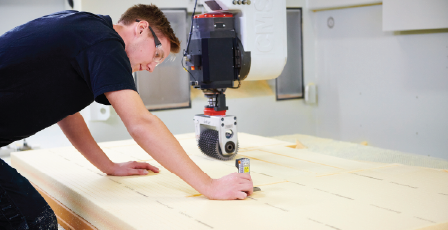
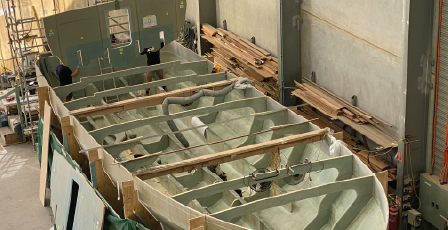
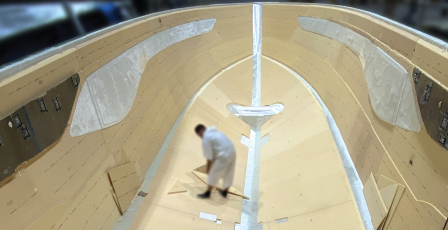
At ATL Composites, your project becomes our project. Our Sales, Engineering, and CNC Kitting teams work directly with you from concept through production to roll out, ensuring every kit is engineered for accuracy, efficiency, and long-term performance.
With ISO 9001:2015-certified processes, in-house resin formulation, advanced kitting technology, and decades of composite expertise, we deliver kits that streamline construction and elevate build quality.
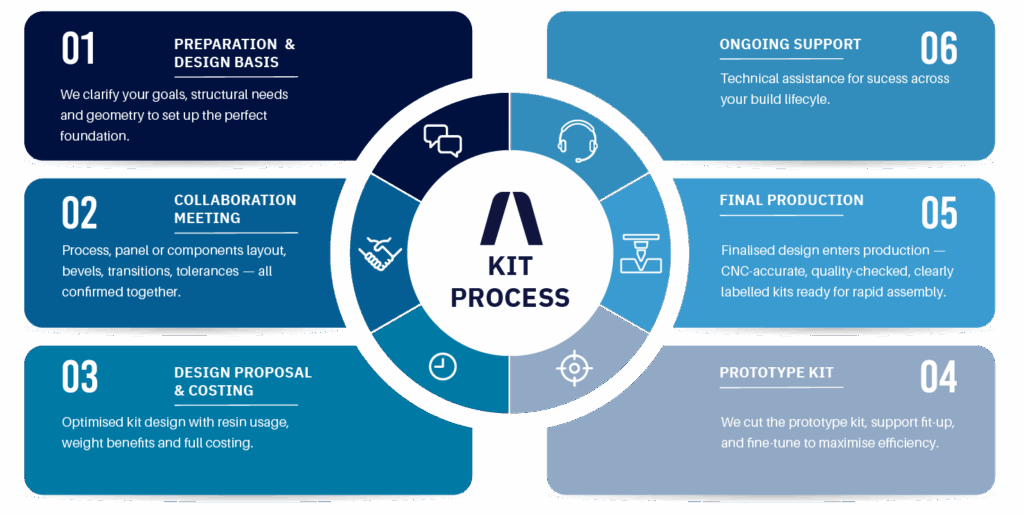
Before cutting begins, we work with you to define the critical success factors for your build.
This early alignment ensures the kit system is integrated correctly across the structure, reducing revisions and accelerating production.
Together, we review every factor that influences kit accuracy and build efficiency
Early collaboration dramatically reduces downstream changes — saving time, material, and labour.
Following the collaboration meeting, ATL develops and presents the full kit design proposal.
Your prototype DuFLEX® kit is manufactured in our Gold Coast facility.
Depending on complexity, an ATL representative can attend the fit-up to observe interface points, tolerances, and assembly flow. Any optimisation discovered during this stage is incorporated into the final design to ensure seamless production for subsequent kits.
After all refinements are complete, we lock in the final design and move into full production.
At ATL Composites, our commitment doesn’t end with delivery — it continues throughout your build.
Our professional team is dedicated to the continual advancement of composite technology and to supporting our customers in achieving optimal performance from their materials and processes.
From project inception to final assembly, ATL offers ongoing technical assistance to help you leverage the full structural advantages of the ATL Kits. Our experienced engineers and technicians are available by phone or email for guidance on product selection, handling, and application. For more complex builds, on-site construction and process support can also be arranged to ensure consistent, high-quality results and long-term durability.
Whether you’re building your first composite structure or refining established production workflows, ATL’s technical expertise and collaborative approach ensure your success across every stage of the build lifecycle.
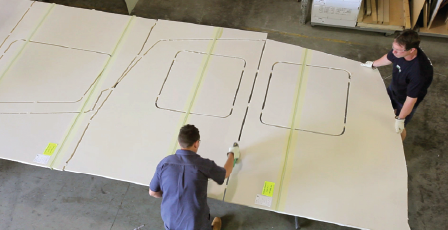
ATL delivers precision-engineered, ready-to-assemble CNC composite kits that reduce labour, minimise waste, and improve build quality across every industry.
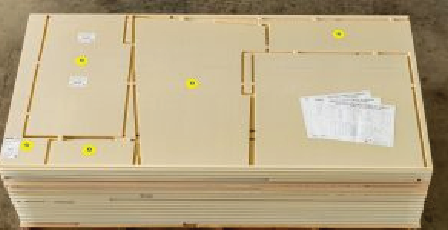
Components arrive pre-cut, pre-joined and fit-ready.
Builders simply position and tape them into place — no panel joining, no layout time, no trimming.
Precision nesting reduces off-cut waste.
Pre-joined parts eliminate fabrication steps and reduce the risk of errors.
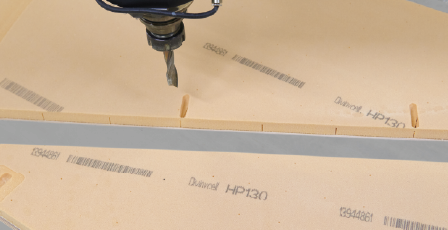
All parts are machined using state-of-the-art CNC routers for consistent, repeatable geometry.
Parts are produced directly from naval architecture or engineering CAD files, ensuring exact assembly fit.
Curved, compound and multi-piece assemblies can be delivered as ready-to-use full panels.
Suitable for primary and secondary structures in high-performance composite builds.
Full-Sized Component Packs form part of ATL’s broader Precision CNC Kitting Services, which include:
For projects requiring larger prefabricated parts, ATL can supply fully assembled component packs — reducing production time from weeks to days.
Full-Sized Components can be manufactured from:
DuFLEX® Structural Panels
Featherlight® Ultra-Light Panels
FRP Laminates
Coosa® Composites
Divinycell® Foam Cores
Options include:
Square-edge or Z-Joint panels
CNC-machined cut-outs, rebates and detailing
Integrated inserts (PVC, PET, Coosa®, FRP)
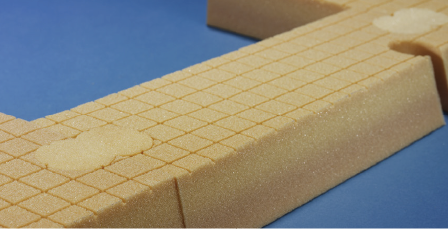
Kerfed or curved assemblies
Interior module kits and furniture sets
Marine
Bulkheads, soles, floors and interior modules
Catamaran and monohull structural sets
Decks, superstructures and furniture kits
Transportation
Caravan and RV interiors
Rail and road panel systems
Fleet conversions and lightweight modules
Architectural & Industrial
Structural lightweight partitions
Complex composite modules
Prefabricated bonded assemblies
Full-Sized Components enable builders to:
Reduce fabrication time
Minimise workshop waste
Improve accuracy and repeatability
Achieve faster hull and module turnover
Lower labour costs and handling time
Deliver high-quality composite structures with confidence
ATL’s integrated system — combining DuFLEX®, Featherlight®, CNC kitting, Z-Joining and Full-Sized Components — provides one of the most efficient composite construction workflows available today.
Concerns sometimes arise regarding secondary bonding between different resin systems. Because DuFLEX® and Featherlight® panels have an inert cured surface, polyester, vinyl ester and epoxy resin systems can all be used to successfully bond Full-Sized Components into place.
Modified ISO 527 double lap joint testing demonstrated that polyester tabbing achieves the same strength on both polyester and epoxy substrates.
Lap Joint Test Results
| Specimen | Failure Load (kN) | Apparent Shear (MPa) | Failure Mode |
|---|---|---|---|
| A | 42.45 | 5.66 | Interlaminar Shear* |
| B | 48.47 | 6.46 | Interlaminar Shear |
| C | 46.50 | 6.20 | Interlaminar Shear |
| D | 47.08 | 6.28 | Interlaminar Shear |
* Interlaminar failure occurred within the CSM layer of the tabbing laminate.
** One specimen showed adhesive failure between tabbing and substrate.
Conclusion: Polyester tabbing performs equally well on both epoxy and polyester substrates — confirming reliable cross-compatibility for secondary bonding.
Available in 200 g/m² and 290 g/m², plain weaves are ideal for:
Composite laminate construction
Skin layers
Cosmetic surfaces
Fibreglass repairs
They offer stable handling and a clean surface finish.
Designed for single-direction strength, available in multiple weights.
Best for:
Beam caps
Spars
Stiffeners
Local reinforcements
Provides outstanding tensile and compressive performance along the fibre axis.
Available in multiple weight combinations, 0°/90° biaxial fabrics are ideal for:
Structural laminates
Panel reinforcement
Hulls and decks
Flat or lightly contoured surfaces
They deliver excellent strength in two primary directions with efficient fibre alignment for high stiffness and load-bearing performance.
Available in multiple weights, ±45° double bias fabrics are ideal for:
Torsional strength
Shear load distribution
Curved and complex shapes
Impact-resistant laminates
They conform easily to contours and provide balanced strength across off-axis loads, making them ideal for structural and secondary reinforcement.
Optimised for laterally loaded laminates, providing:
Multi-direction reinforcement
Balanced stiffness and strength
Fewer layers for weight savings
Ideal for decks, panels and structural skins.
Reinforcement in all major load directions.
Used when:
Load paths vary
High-performance laminates are required
Maximum mechanical efficiency is needed
Quadraxials reduce build-ups and improve structural uniformity.
Available in:
Double Bias (+/–45°)
Weft Triaxial (90/+45/–45°)
Used for tabbing, bonding, stiffening and structural join reinforcement.
E-Fibreglass reinforcements integrate seamlessly with ATL’s resin systems and composite products, ensuring optimal wet-out, superior mechanical properties and reliable, long-term structural performance.
Carbon UD fabrics and tapes concentrate fibres in one direction, providing maximum tensile and compressive performance along a single axis. Ideal for:
Beam caps and stringers
Spars and masts
High-load structural reinforcements
Local stiffening and directional load paths
300 g/m² Carbon Unidirectional “Thermoplastic” – 12K
Width: 500 mm
Roll Length: 100 LM
Provides extreme directional stiffness and strength with clean handling and efficient lay-up.
Plain weave fabrics use a simple over-under pattern, providing equal strength in both surface directions and excellent stability during lamination. Ideal for:
Large flat surfaces
Cosmetic surfaces
Skins for panels and mouldings
General composite laminating
200 g/m² Carbon Plain Weave – 3K
Width: 1270 mm
Roll Length: 92.4 LM
Offers balanced mechanical performance and a clean woven appearance.
Twill fabrics use a 2×2 or similar pattern, producing a signature diagonal texture. This weave has superior drape and formability, making it the preferred option for curved geometry and visible carbon structures.
Benefits include:
Excellent drapability for complex curves
Improved cosmetic finish
Reduced bridging and air entrapment
200 g/m² Carbon 2×2 Twill – 3K
Width: 1270 mm
Roll Length: 92.4 LM
Ideal for surfaces requiring high aesthetics and smooth draping around contours.
Carbon Double Bias fabrics consist of two stitched layers oriented at +45° and –45°, providing exceptional shear, torsional and twisting resistance. Ideal where:
Complex contours require flexible drapability
Laminates are exposed to torsional loads
Reinforcement is needed in non-axial directions
Curved hull sectors or composite tubes are being laminated
300 g/m² Carbon Double Bias (+/–45°)
Width: 1270 mm
Roll Length: 100 LM
400 g/m² Carbon Double Bias (+/–45°)
Width: 1270 mm
Roll Length: 100 LM
Both deliver high shear capacity and improved stability in long, narrow laminates.
ATL carbon reinforcements are fully compatible with:
Kinetix® laminating epoxies
Techniglue® structural adhesives
DuFLEX® and Featherlight® composite panels
Polyester, vinyl ester and polyurethane resin systems
Ensuring superior wet-out, reliable mechanical performance and long-term structural durability across ATL’s composite systems.
Hull impact zones and collision bulkheads
Keel floors, daggerboard cases and high-wear marine components
Ballistic and protective panels
Automotive and motorsport crash structures
Industrial equipment subject to abrasion
Paddles, kayaks and high-performance sporting goods
Hybrid laminates combining carbon and aramid for optimal stiffness and toughness
Aramid reinforcements supplied by ATL are compatible with:
Kinetix® laminating epoxies
Techniglue® structural adhesives
DuFLEX® and Featherlight® panel systems
Polyester, vinyl ester and polyurethane resin systems
This ensures reliable bonding, excellent wet-out, and long-term structural performance across marine, industrial and defence applications.
Flax fibre reinforcements pair exceptionally well with KINETIX® R135 – the ultra-clear, UV-stable, bio-based surfboard laminating & filler epoxy system.
Together they create a premium, environmentally conscious composite system for surf, lifestyle and performance laminates.
Natural Aesthetic + Ultra-Clear Resin
Flax’s warm, organic texture shows beautifully under R135’s crystal-clear, bloom-free finish.
Environmentally Driven Pairing
R135 contains 26% bio-based carbon (verified to ASTM D6866-16), complementing flax’s renewable fibre origin.
UV-Stable Clarity
R135 maintains its appearance in sunlight, preventing yellowing and allowing flax’s natural colour to remain vibrant.
Superior Fibre Wet-Out
R135’s fast wet-out makes flax laminations clean, consistent and visually premium.
High Strength & Durability
Flax offers excellent toughness and vibration damping, while R135 provides epoxy-grade mechanical performance.
Sustainable Performance for Modern Surfcraft
The combination is ideal for surfboards, paddleboards, watercraft components, and lifestyle products where sustainability and aesthetics matter.
Flax
E-glass
Carbon
Hybrid fibre systems
Timber, EPS and PU foam blanks
Together, Flax and R135 deliver eco-driven, performance-proven composite solutions for surfboard builders and modern composite designers.
Surfboards, paddleboards & lifestyle watercraft
Interior joinery, furniture & panel systems
Visible laminates with natural fibre aesthetics
Architectural acoustic panels
Sporting goods and eco-conscious consumer products
Hybrid laminates for balanced stiffness and damping
Flax reinforcements integrate seamlessly with:
KINETIX® laminating epoxies (R135, R246TX, R118, R260 etc.)
Techniglue® structural adhesives
DuFLEX® and Featherlight® panel systems
Polyester, vinyl ester and PU resins
Ensuring reliable curing, excellent fibre wet-out and consistent long-term performance across sustainable, structural and decorative composite applications.
50/50 Additive : Gelcoat → best for repairs, fastest finish, highest gloss
25/75 Additive : Gelcoat → optimises colour hide, recommended for dark pigmented gelcoats
10–25% Additive → upgrade tooling gelcoat for improved flow and finish
Repairs: 8–15 mils
Resurfacing: 18+ mils (5–7 mils per pass)
Key Features
Converts gelcoat to an air-cure system, eliminating the need for wax additives or PVA barriers.
Removes the typical dull “donut” effect around patch repairs, providing consistent gloss across the entire surface.
Produces a flatter, smoother finish than standard gelcoat or gelcoat modified with wax/styrene.
Promotes improved air release, minimising pinholes and enhancing overall surface quality.
Creates a glossy, porcelain-hard surface that sands and polishes easily for rapid turnaround.
Allows gelcoat to spray like paint, reducing orange peel and improving overall finish uniformity.
Suitable for in-mold coating, wet-on-wet over polyester gelcoat, or as a topcoat over cured laminates.Can be used at multiple blend levels (25–50%) depending on opacity requirements and application type.
Formulated to deliver true clarity and high-gloss finishes with minimal colour shift or haze, ensuring premium visual presentation.
Rapid-build coatings that can be sanded and polished to a flawless, ultra-smooth surface ideal for moulding or finishing workflows.
Deep substrate wetting improves adhesion, reduces porosity, and enhances the performance of subsequent finishing layers.
Rapid gelling and quick sanding times help fabricators accelerate plug and pattern preparation while maintaining surface accuracy.
Compatible with polyester, vinyl ester and most epoxy systems, depending on product selection—supporting a broad range of manufacturing processes.
High thermal stability and strong mechanical properties deliver long-lasting surface integrity for industrial and marine applications.
ATL Composites stocks a comprehensive range of Duratec coating systems and support materials, backed by technical expertise and industry-leading application knowledge. Our team can assist with product selection, processing recommendations and integration into marine, industrial or composite manufacturing workflows.
Duratec® Clear Hi-Gloss Additive is ideal for:
Gelcoat Repairs
Producing invisible, high-gloss repairs with no halo, low-gloss edges or porosity issues.
Complete Gelcoat Resurfacing
Restoring aged or weathered surfaces to a durable, glossy, like-new condition.
Plug & Pattern Manufacturing
Creating high-gloss plug surfaces with reduced porosity and improved sanding/polishing performance.
Tooling Gelcoat Enhancement
Improving flow, reducing orange peel and enhancing gloss on mould surfaces.
Below Waterline & Above Waterline Marine Repairs
When paired with correct gelcoat build strategy, ideal for marine hulls and components.
Industrial Composite Components
Enhancing finish quality for automotive, RV, architectural, aerospace and general composite parts.
Restoring Mould Surfaces
When blended with tooling gelcoat, rejuvenates worn moulds to a smooth, high-gloss finish.
12 mils typical for UV protection
Up to 22 mils possible for heavy post-sanding or high-gloss finishing
Key Features
Resists yellowing and degradation under sunlight—no urethane clear coat required.
Polishes to a deep, reflective gloss ideal for carbon fibre, FRP and premium surface finishes.
Sprays smoothly, levels well, and sands/polishes easily for professional results.
Ready to use with simple MEKP catalysis; cures without wax, delivering reliable consistency.
Highly cross-linked polymer network ensures strong resistance to solvents and environmental exposure.
Provides excellent impact resistance and flexibility, supporting use on rigid and semi-flexible substrates.
Suitable for in-mold coating, wet-on-wet over polyester gelcoat, or as a topcoat over cured laminates.
Formulated to deliver true clarity and high-gloss finishes with minimal colour shift or haze, ensuring premium visual presentation.
Rapid-build coatings that can be sanded and polished to a flawless, ultra-smooth surface ideal for moulding or finishing workflows.
Deep substrate wetting improves adhesion, reduces porosity, and enhances the performance of subsequent finishing layers.
Rapid gelling and quick sanding times help fabricators accelerate plug and pattern preparation while maintaining surface accuracy.
Compatible with polyester, vinyl ester and most epoxy systems, depending on product selection—supporting a broad range of manufacturing processes.
High thermal stability and strong mechanical properties deliver long-lasting surface integrity for industrial and marine applications.
Duratec® Clear SunShield 904-061 is ideal for:
Exterior carbon fibre components requiring UV stability and a high-gloss finish
Exterior fiberglass (FRP) parts across marine, industrial and automotive sectors
Marine surfaces above the waterline, including topsides, deck accessories and composite structures
Outdoor timber and furniture, providing a durable, UV-resistant clear finish
High-gloss protective topcoat for polyester laminates, gelcoat and vinyl ester surfaces
Wet-on-wet application over unwaxed polyester gelcoat for a protective UV sealing layer
In-mold coating for parts requiring a premium surface finish directly from the mold
Restoration or refinishing of composite or carbon fibre parts exposed to sunlight
ATL Composites stocks a comprehensive range of Duratec coating systems and support materials, backed by technical expertise and industry-leading application knowledge. Our team can assist with product selection, processing recommendations and integration into marine, industrial or composite manufacturing workflows.
Select your desired option below to share a direct link to this page.
Your friends or family will thank you later.