


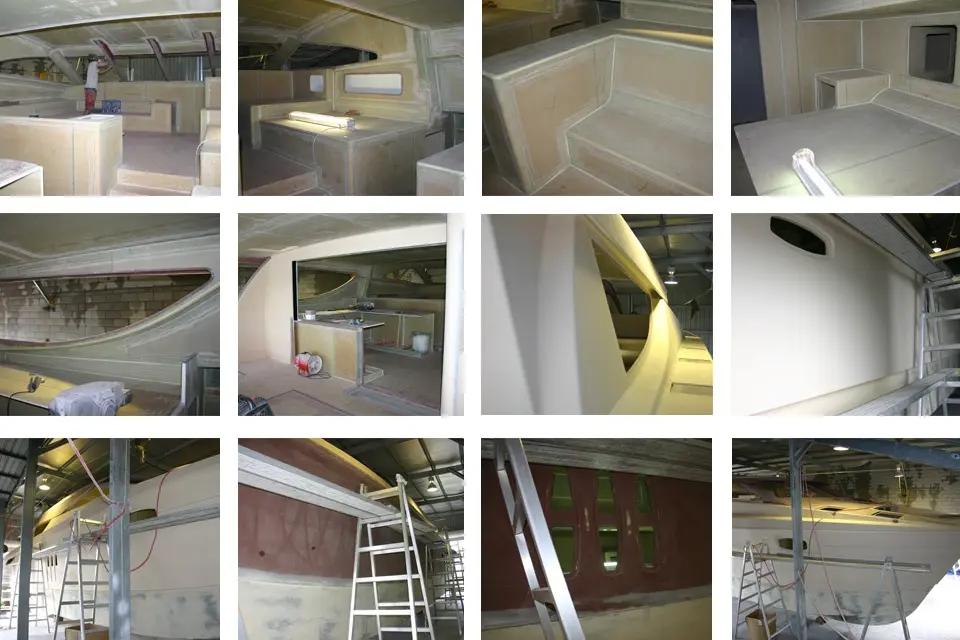
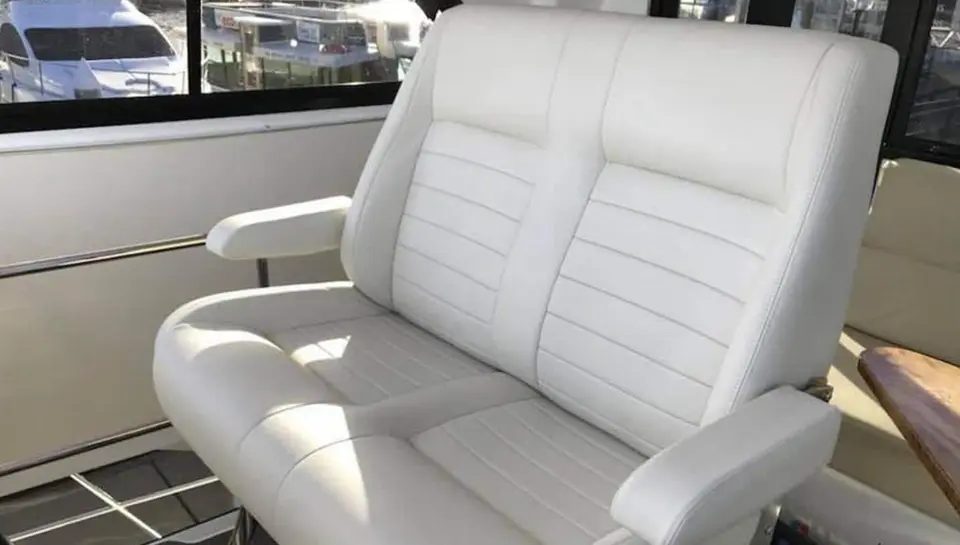
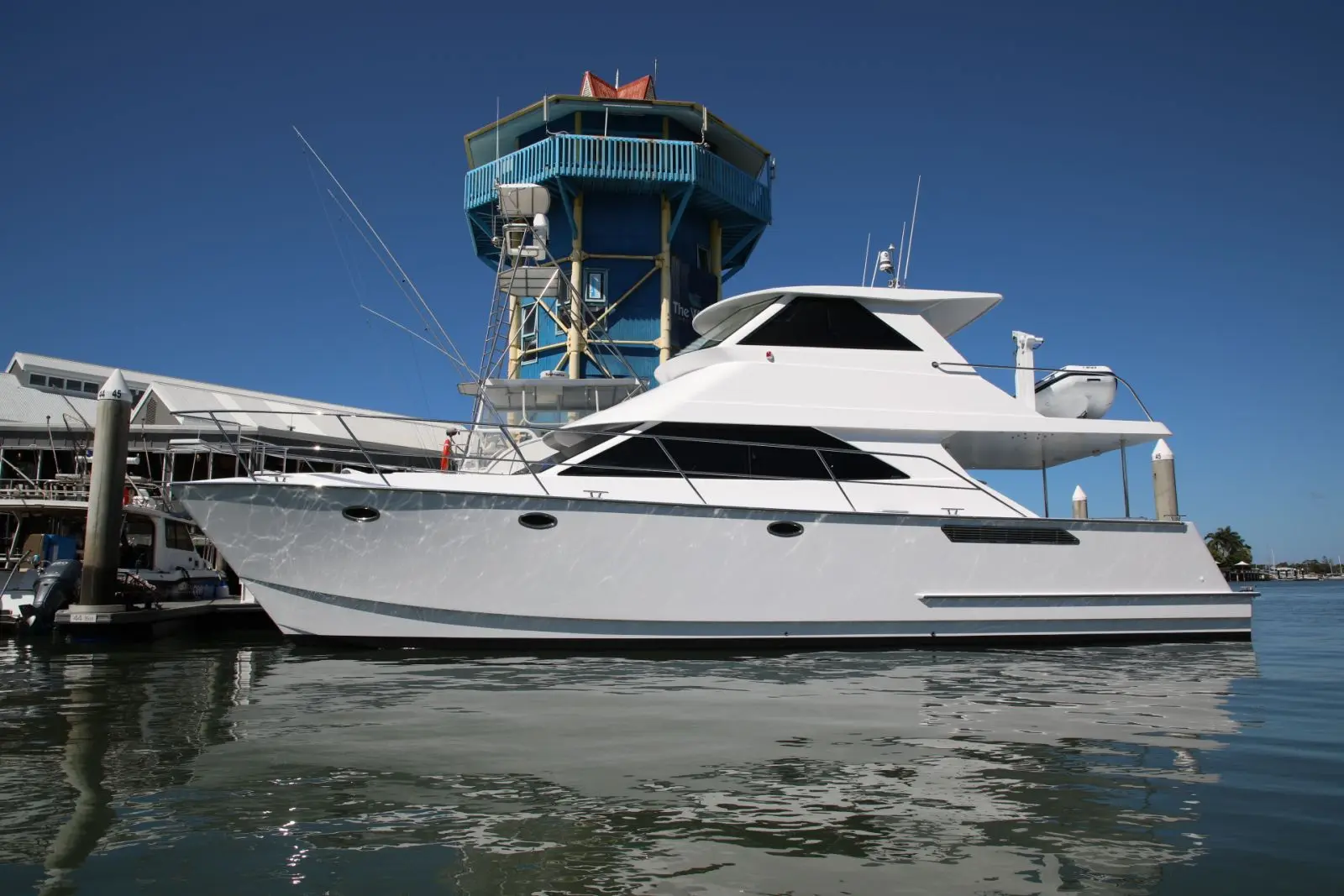
Launched December 14 2015, the 18.7 metre Bajaca designed by Roger Hill Yacht Design, New Zealand, was commissioned by a Sunshine Coast businessman with a brief for up-to-date styling above the waterline, self-contained facilities for extended cruising in remote areas, and the ability to run at 25 knots if required.
| LOA | 18.7 m |
| WL | 17.24 m |
| Beam | 6.76 m |
| Displacement | 32,800 kgs |
| Water | 1900 L |
| Fuel | 9800 L |
| Engines | 2 x 500 HP (Yanmar 6XCN-GTEZ) |
| Roger Hill Yacht Design | www.powercatsnz.com |
| Noosa Marine | www.noosamarine.com.au |
With those goals in mind, it was clear to Roger that a semi-displacement hull form would meet the type of boating and performance the clients were looking for. Live aboard ability was critical so fuel capacity, water-making ability, power generation, and storage were priorities in the design.
Noosa Marine was commissioned for the build, and construction began in June 2014. Founded by Julian Griffiths in 2008, Noosa Marine specialise in custom boat building services and consult closely with the owners and designers to create a craft that will suit their needs – a proven formula that will ensure an outstanding result for this luxury project. Julian has an impressive portfolio spanning 25 years and has used the DuFLEX System extensively in many projects, most recently in the construction of the Schionning Designs G Force 1800 KATO that was launched in May 2014.
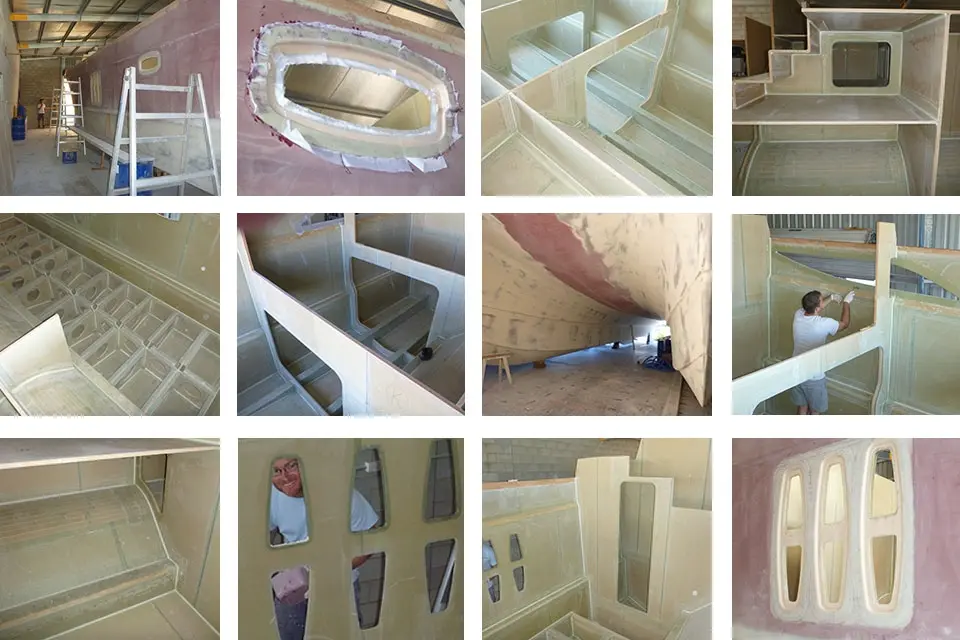
Because of previous project experience and construction successes, Roger based the design for construction with ATL Composites DuFLEX composite panels with structural DIAB Divinycell foam cores.
The hull bottoms, lower topsides, chines and engine bearers were cored with 30mm Divinycell H130 and laminated with 2 layers of 850grm E-fibreglass quadraxial. Divinycell H has a proven track record, and its unique IPN chemical structure, yields impressive mechanical performance making it ideal for applications subject to fatigue, slamming or impact loads.
DuFLEX panels, cored with Divinycell H80 and laminated with a variety of fibreglass orientations, were manufactured for all other structural areas, predominantly in flat panel form, but in some cases, with unidirectional laminates for strip planking curved sections, to optimise the engineering and performance in specific areas.
ATL’s Featherlight panels have been supplied for the non-structural interior parts, and are cored with lower density Divinycell H60 and H35 cores laminated with a 600grm quadraxial E-Fibreglass to ensure uniform stiffness, stability and lightweight. The interior panels will be finished with a combination of timber veneers, decorative fabrics and some painted sections.
Roger commented “Construction with DuFLEX will ensure the required weight, stiffness and stability is achieved to optimise the performance and fuel consumption without sacrificing comfort or performance. Using the DIAB foam- cored DuFLEX option has saved approximately 2,000 kgs over more conventional building methods”
To take full advantage of the DuFLEX Building System, Roger worked with ATL engineers to supply the design as a CNC-routed kit to reduce labour and keep wastage to a minimum, and a DuFLEX Z-Press was supplied to Noosa Marine to join the panels and further speed up the build process.
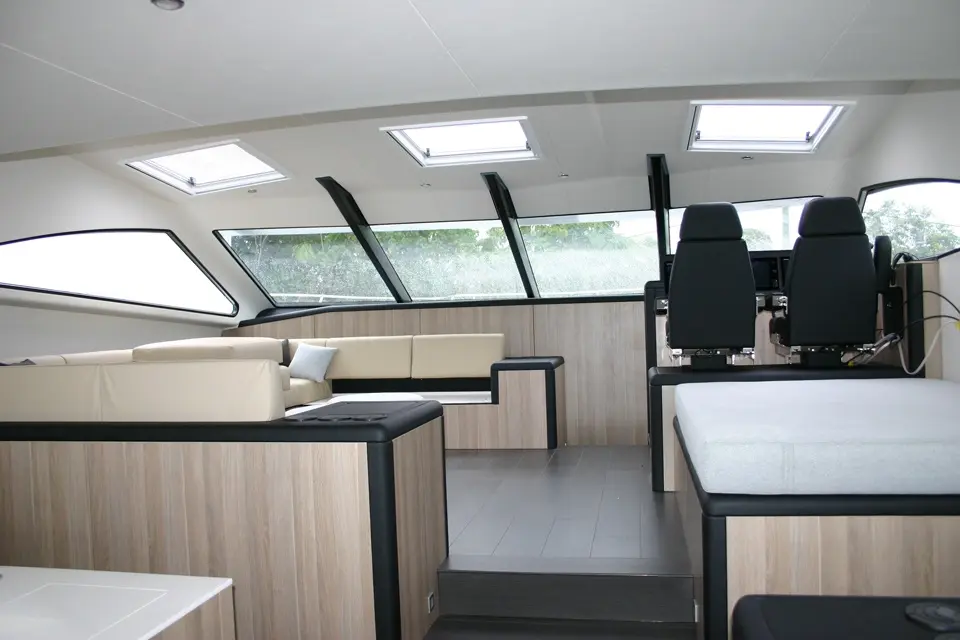
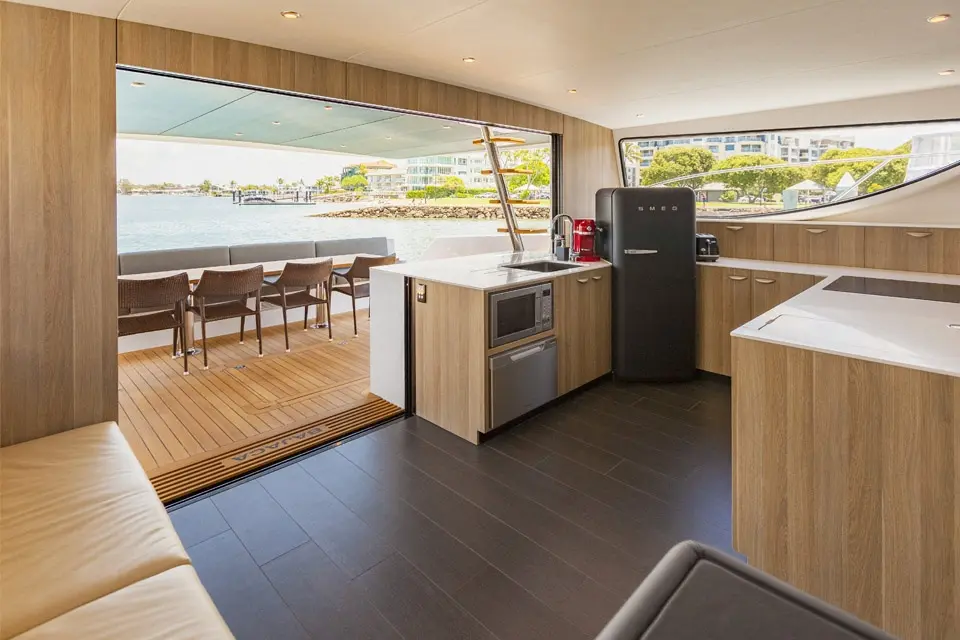
The design layout was developed closely with the owners keeping the cabins as large as possible with full head room. The main cabin/saloon area is open plan with the doors and windows sliding away to allow entry to the cockpit with no step-over sills, and the large dining space is easily served from the galley or the BBQ on the aft platform.
The owner’s cabin is forward, featuring a large ensuite bathroom, and takes the full width of the starboard hull. The prime guest cabin also has its own ensuite and the other two secondary guest cabins share a large, mid-ship bathroom that includes a full-size domestic washing machine and separate dryer.
The design does not have a conventional flybridge, but does have a sun-bathing area on the cabin top where the tender is stored with a davit crane and a surfboard/paddleboard rack. This cabin top area is also fitted with large sliding hatches to maximise ventilations and light into the forward area of the saloon.
The boat will comfortably house family and friends, and the modern design, extensive entertaining both inside and out, luxurious interior, and a cruising speed of 16 knots will make it perfect for long range cruising and living.
For a number of years fast monohull yachts have been getting wider and relying more and more on form stability rather than deep heavy keels. The best
examples are the TP52s, Volvo Around the World yachts and the 100 foot Comanche that took line honours in the 2015 Sydney to Hobart Yacht Race.
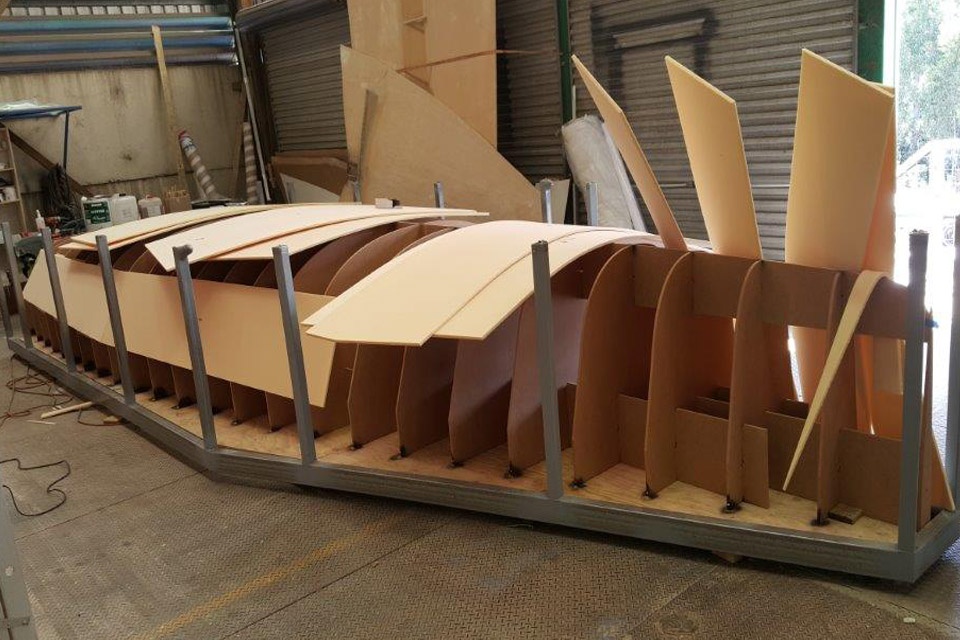
| LOA | 7.2 m |
| Beam | 2.49 m |
| Draft | 1.63 m |
| Keel | Anodised extruded aluminium 15 kg |
| Bulb | 44 kg of lead |
| Displacement | 350 kg in sailing trim |
| Designers | Andrew York & Bennett Yachting Inc. |
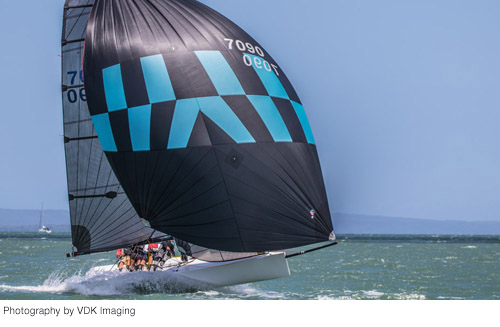
Andrew York has been racing his VX One for three years. It is a 5.8m long sports boat designed by Brian Bennett which is beamy, with very good form stability, terrific acceleration and great downwind speed in a breeze. With only three VX One’s in the country, the owners decided to compete within the ASBA (Australian Sports Boat Association) to get exposure for their new toys. They found that the other sports boats were bigger and Andrew, being fairly competitive, wondered early on how a bigger version of the VX One would go in the ASBA fleet.
One night in May 2015 Andrew realised that he had the spars, keel and rudder so there was nothing to stop him just putting a bigger hull under them. Brian agreed to produce the lines of the hull with a plan to build the boat with a foam core to keep weight to a minimum. Andrew’s friend, Richard Stanning, a specialist in composite boat construction methods and materials, confirmed his thoughts, and recommended products from ATL Composites for the build.
Andrew had little knowledge of vacuum bagging to begin with but Michelle Crouch at ATL Composites was extremely helpful with technical information on suitable materials and construction techniques.
DIAB 12mm Divinycell H80, used worldwide with a proven track record for marine applications was used for the construction of the deck and topsides, and Divinycell HM80, also in 12mm, was used in combination with ATL’s KINETIX R246TX Laminating epoxy to produce a very tough hull, capable of absorbing high dynamic impacts and slamming loads. Core for the hull and bulkheads were delivered in CNC-routed kit form by ATL. To keep the cost down, the majority of the boat is laminated with a combination of +/-45 double bias and woven E Fibreglass.
Andrew did the engineering for the boat and the keel box, chainplates and other high-load areas were reinforced with woven and unidirectional carbon. WEST SYSTEM powder modifiers, including lightweight 410 Microlight fairing modifier, were used in the construction, and ATL also supplied a selection of AIRTECH vacuum bagging consumables.
The build was completed in 6 months in Andrew’s portable building manufacturing factory. The last fitting was bolted on the day before the ASBA Nationals started on January 5 2016. Rigging modifications were made every day of the regatta, with the change on the final day allowing REO Speedwagon to score 1,2,1 to win the National Championships by one point.
Andrew has now crossed off an item that has been on his Bucket List for 40 years and commented “The boat has more than met my expectations, and there is still plenty of untapped potential. To say I am happy with her is the understatement of the year.”


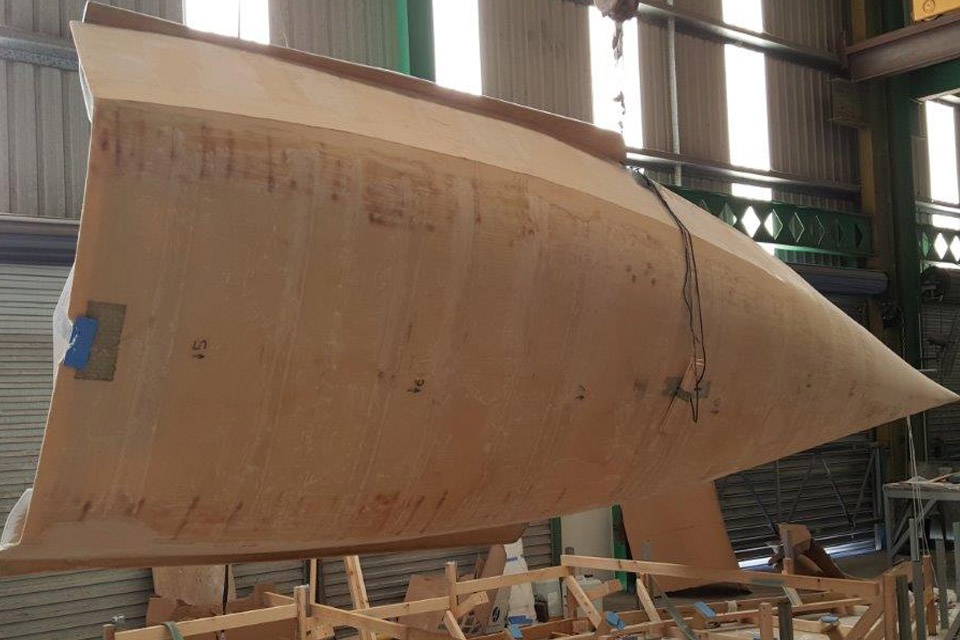
The G-Force Series from Schionning Designs has continued to grow from the very first G-Force 1400 over ten years ago. Now, in 2017, another bigger sister joins the ranks…
| LOA | 19.5 m |
| BOA | 8.6 m |
| Displacement | 12,670 kg |
| Bridgedeck Clearance | 0.95 m |
| Beam to Length Ratio | 15:1 |
| Schionning Designs | www.schionningdesigns.com.au |
| Noosa Marine | www.noosamarine.com.au |
Commissioned by an experienced G-Force owner Tony Longhurst, the 2000 Speciale is a specialised version that has some small changes and added waterline length. Overall measures are being taken to reduce weight and produce one of the lightest and fastest cruising multihulls on the water and 2000 Speciale is sure to make a splash!
With a 19.50 metre waterline length, the 2000 Speciale is the largest in the Schionning Designs G-Force range. The goal was to keep KATO as light as possible, to produce one of the lightest and fastest cruising multihulls on the water. Schionning Designs specified all structural sections of the boat in a combination of DuraKore Strip Planks and DuFLEX Composite Panels, manufactured by ATL Composites in Queensland.
Hull construction was planked with DuraKore Strip Planks, which has been the standard choice for the G-Force designs since they were first designed, however, the hulls have been reinforced with double bias carbon-fibre , rather than standard E-fibreglass, to provide extra stiffness and a reduction in weight for increased performance. All other structural components for the catamaran were supplied as CNC-routed DuFLEX Component Packs with various core thicknesses and carbon-fibre laminate specifications to meet design and engineering requirements.
Both the DuraKore Planks and the DuFLEX Composite Panels were cored with ProBalsa 150kg/m3 end grain balsa, produced by the DIAB Group, which is used extensively in the marine industry worldwide to provide exceptional compressive strength, high thermal and sound insulation and low FST (Fire, Smoke & Toxicity) properties.
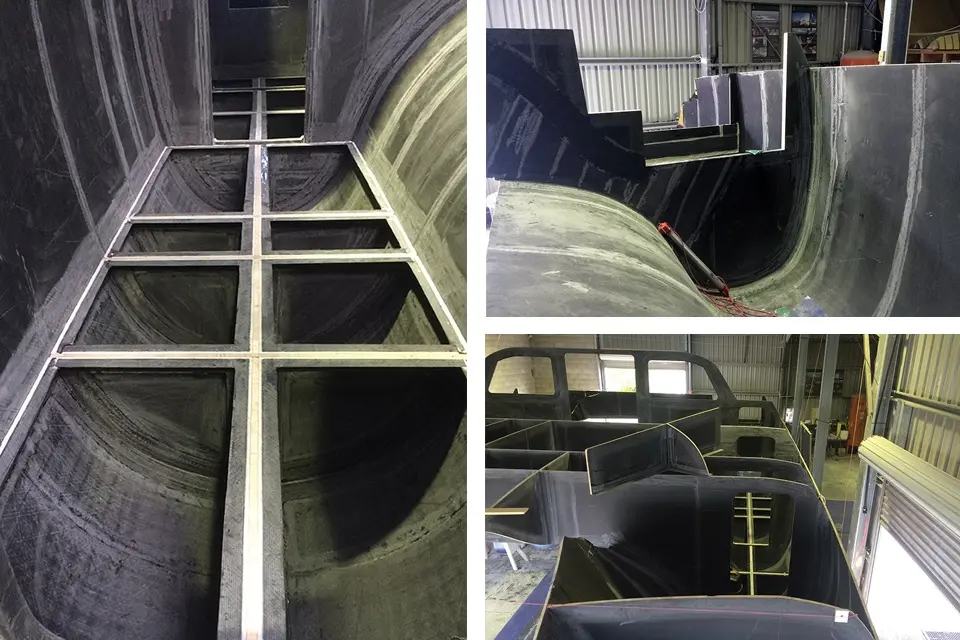
The interior fit-out on KATO was also supplied as a CNC-routed Component Pack in FEATHERLIGHT Marine Grade panels from ATL. Cored with 15mm Divinycell H60, a low density unique combination of polyuren and pvc core, the Featherlight panels will provide good thermal/acoustic insulation, and being laminated with carbon fibre reinforcements, these custom panels will provide superior stiffness and ultra-lightweight in the G-Force 2000.
By specifying Components Packs for the project, weight consistency of parts was ensured, and the computer generated nesting allowed for maximum efficiency in positioning of the parts on the panels. The majority of parts were supplied with complete reinforcements applied, so the labour savings normally associated with standard wet-laminate construction, was also significant.
High performance KINETIX R246TX epoxy resin, manufactured by ATL, was specified to provide outstanding mechanical properties and stiffness when combined with the carbon fibre reinforcements in all additional laminating and taping on the cat, which will reduce fatigue and increase the overall durability and performance of the vessel. All structural bonding, filleting and fairing on the boat was completed with WEST SYSTEM 105 epoxy Resin and 206 Slow Hardener, and combined with the appropriate WEST SYSTEM powder modifier.
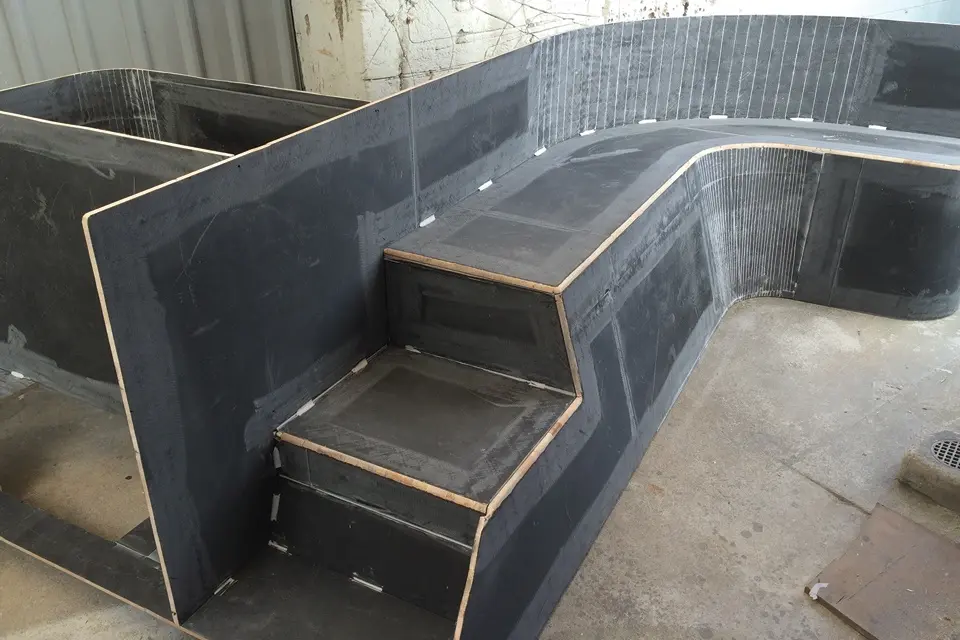
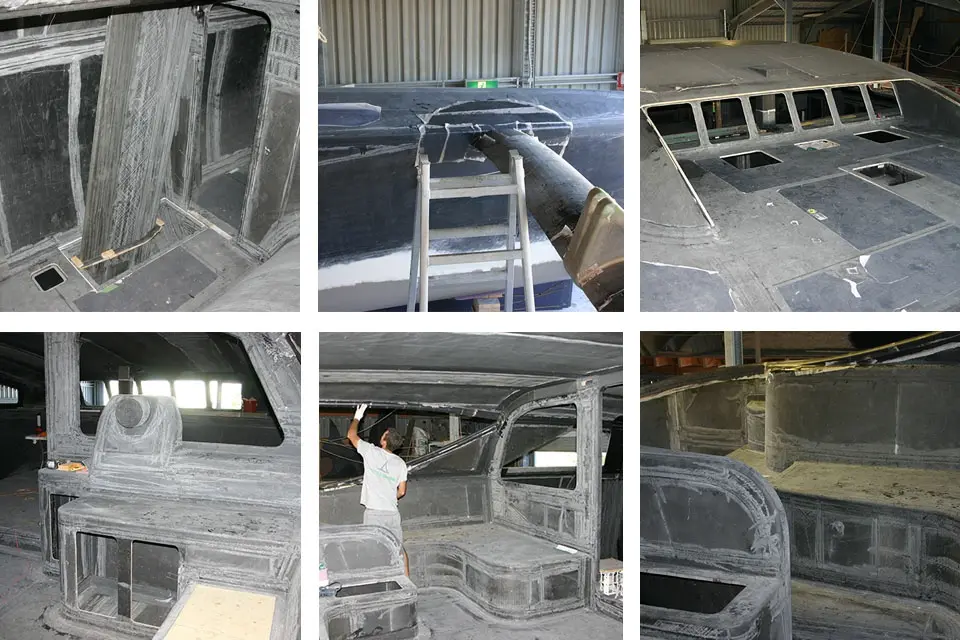
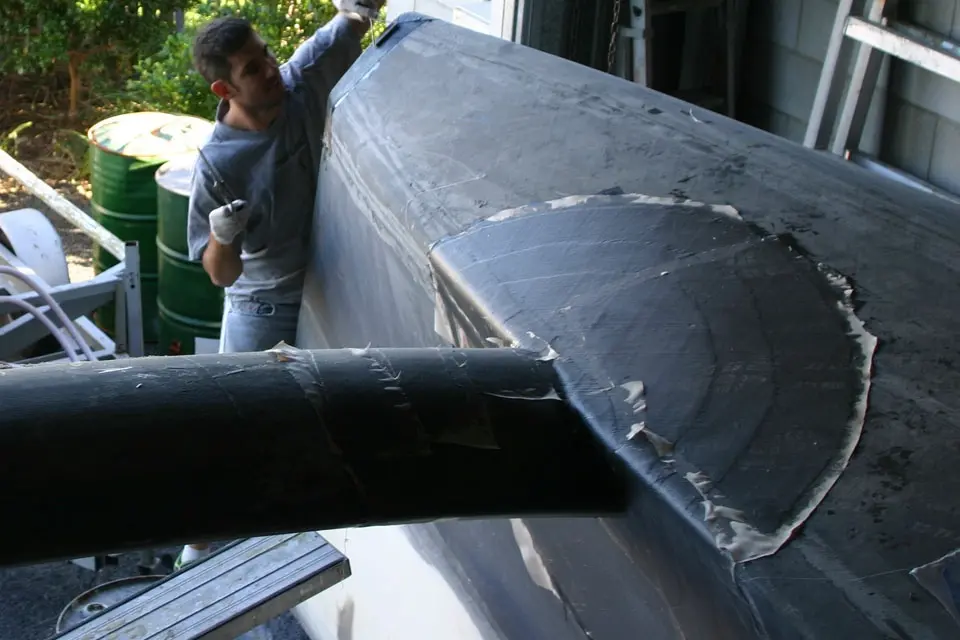
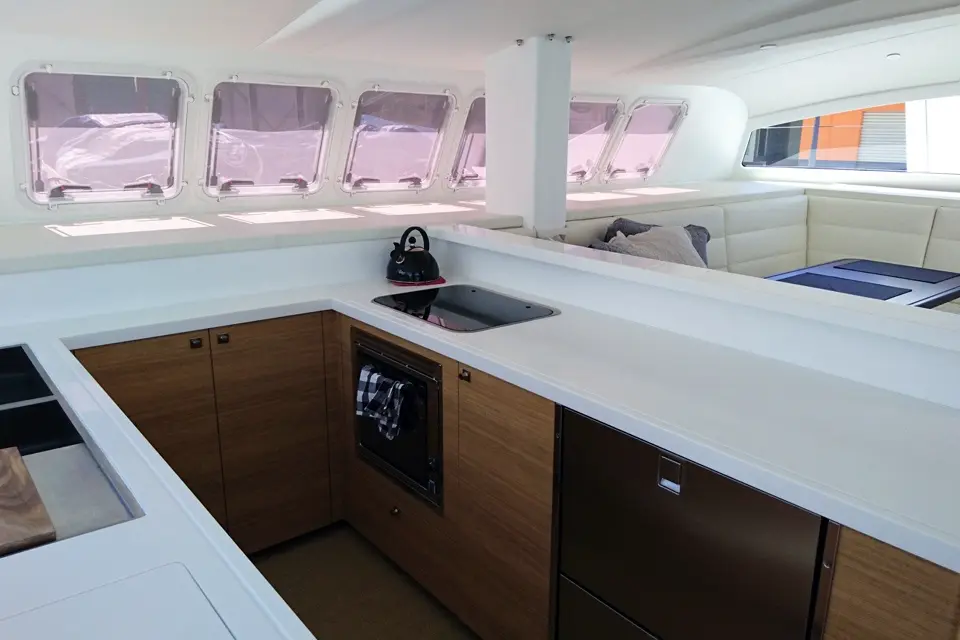
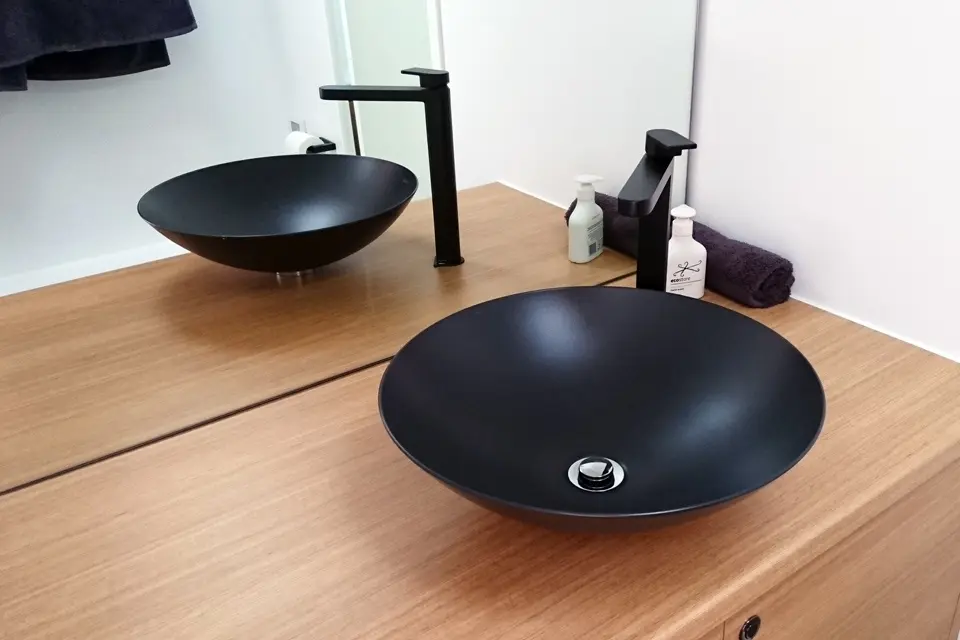
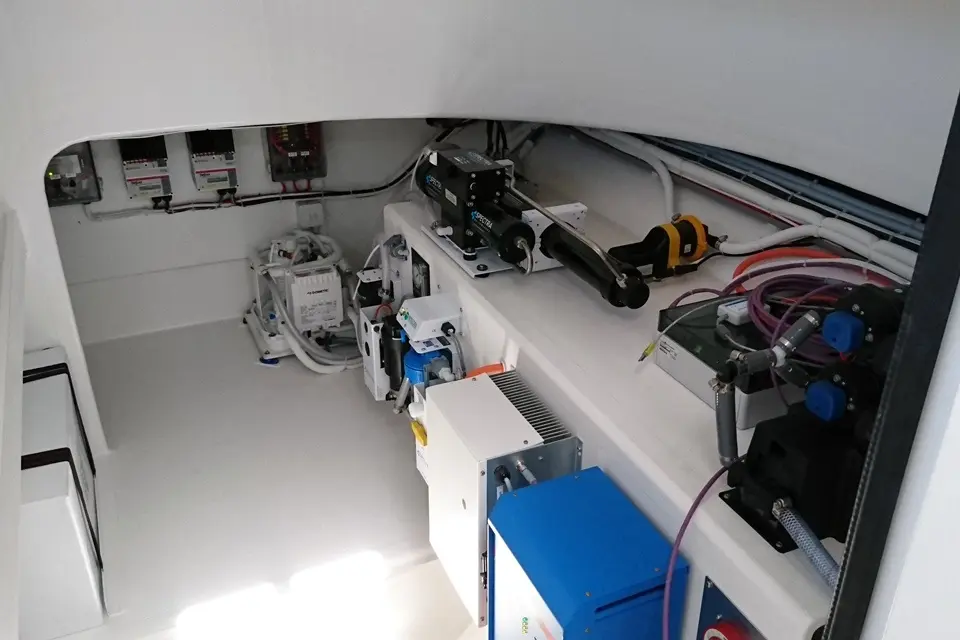
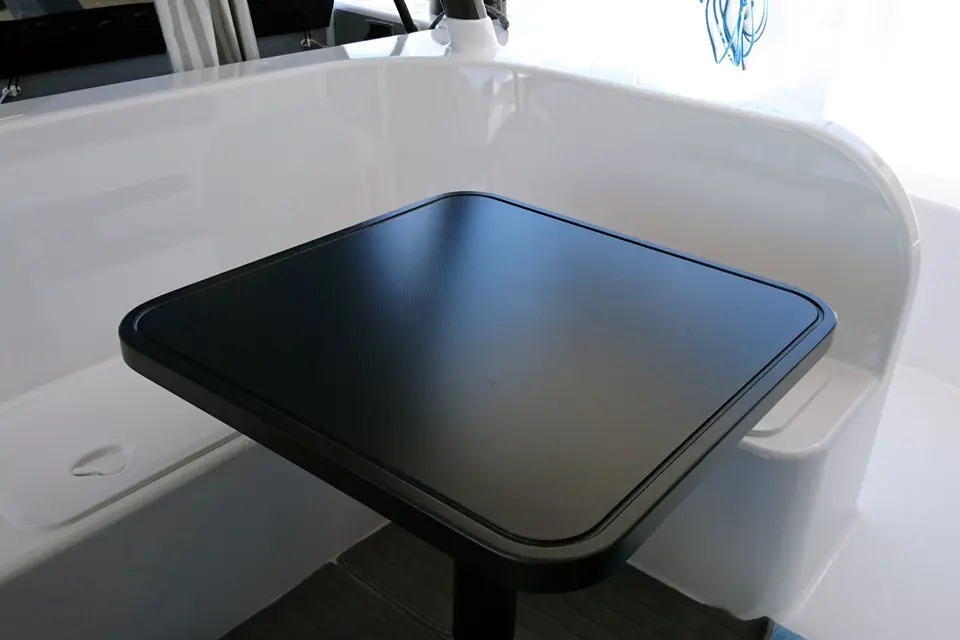
MS 2017 – DuFLEX Composite Panels saved time and weight for 275m2 sun deck.
| Length overall | 63.5 m |
| Beam Overall | 13.5 m |
| Displacement | 400 t |
In autumn 2013, the Board of Directors of the SGV decided on construction of the new, large passenger ship with space for 1,000 passengers.
The well-known yachting design office Judel / Vrolijk & Co from Bremerhaven were commissioned to do the design, and the planning and construction is being carried out by Shiptec AG, one of the largest shipyards in Switzerland.
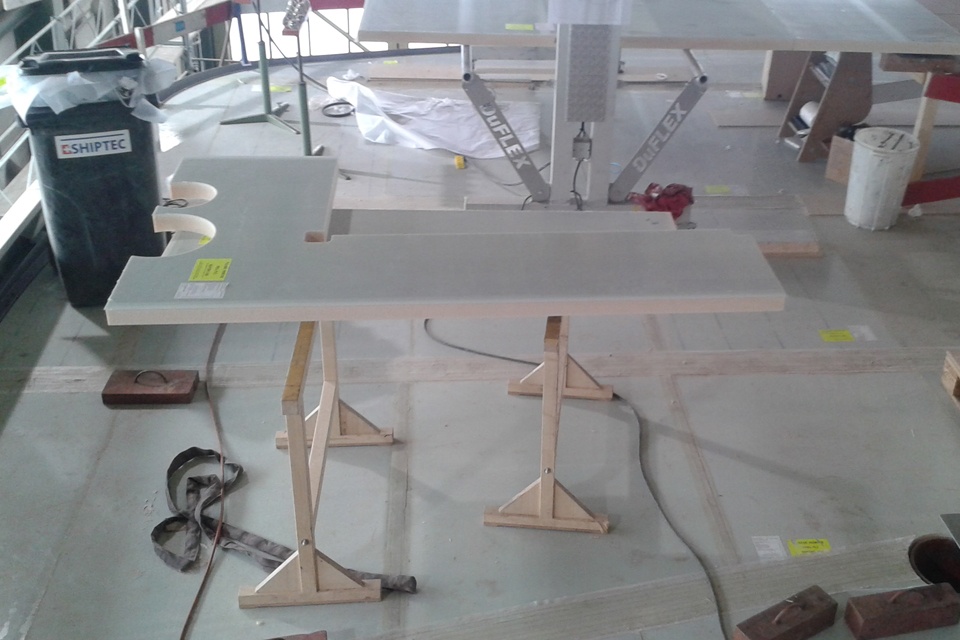
A new sundeck floor was specified for the upper section of the vessel and vdL Composites GmbH were approached to supply a composite alternative to provide strength, stiffness and durability. DuFLEX Composite Panels were specified as the best option for the large 275m2 area.
109 Custom DuFLEX panels ranging from 1.3m to 2.4m in length were manufactured at the vdL Composites facility in Wesel, Germany. The panels were cored with
60mm Divinycell H80 and reinforced with multiple layers of multiaxial E-fibreglass, laminated with a custom-blend, high performance epoxy resin. Divinycell H80 is widely used, and has a proven track record, in the marine industry for leisure, military and commercial applications. Combined with epoxy laminates, the DuFLEX H80 panels provide excellent mechanical properties at low weight, a consistent high quality finish, excellent chemical resistance, low water absorption and good thermal/acoustic insulation.
The panel edges were machined with the DuFLEX Z-Joint and CNC-routed from electronic design files, enabling the panels to be joined and the full size parts to be released. The panels were delivered, along with the proprietary DuFLEX Z-Press, to Shiptec to be joined and fitted on site. The Z-Press was set-up on the deck of the vessel, and vdL staff were present to assist with joining and to offer technical support during the process.
On installation, the full-sized parts fitted perfectly into the specified areas eliminating the need for time-consuming trimming and fitting. The large sections were lifted into position with a vacuum lifter and Pro-Set Epoxy adhesive was used to fill and bond non-scarffed edges. Multiaxial E-fibreglass tapes were applied to complete the structural requirements on those joins.
A driving factor in the choice of materials for this project was the installation time-frame. DuFLEX offered the perfect solution to meet a tight deadline for project completion.
The first contact was made to vdL on February 2 2016, with the first delivery on March 11. The first panels were joined on March 21 and 3 days later, one third of the deck was joined and mounted on the steel frame. 166 parts were installed to complete the 275m2 deck. Compared to conventional methods of hand-lamination, this saved hours in labour, wastage and tooling costs.
MS 2017’s maiden voyage is scheduled for May 2017. The ship will be officially named at this time and will be scheduled for trips on the Lucerne-Flüelen-Luzern and Lake Lucerne.
In terms of quality and innovation the new flagship of the shipping company Luzern (SGV) MS 2017 sets a new milestone in Swiss shipping.


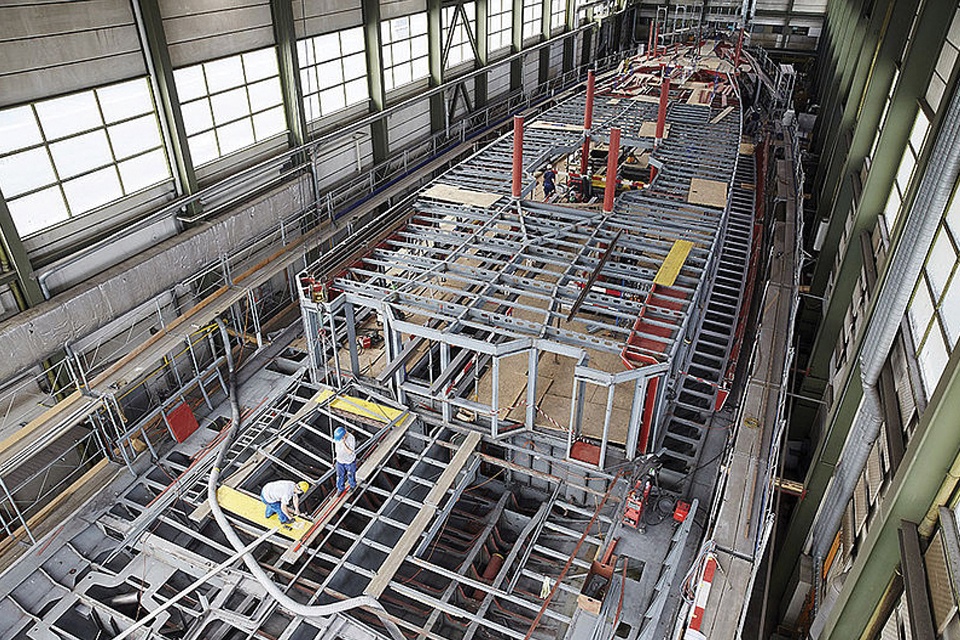


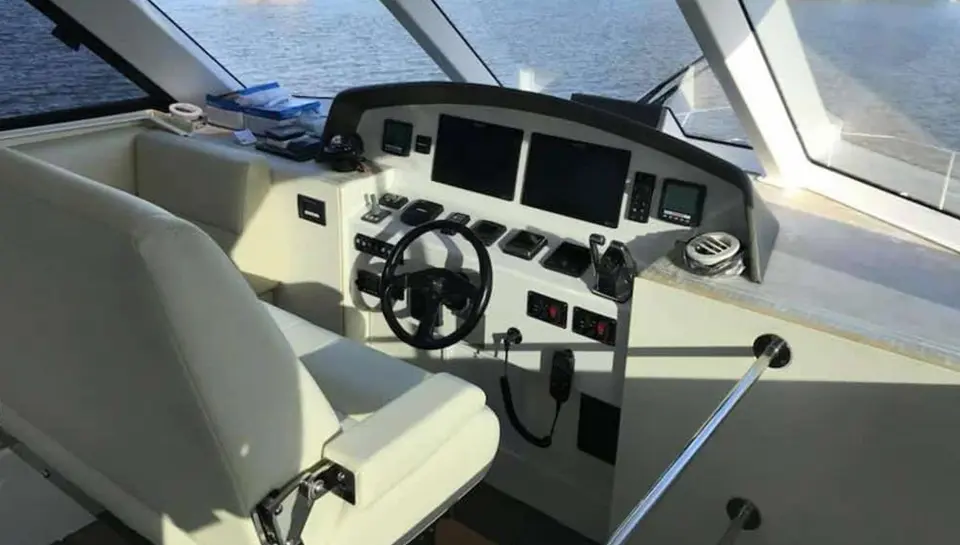
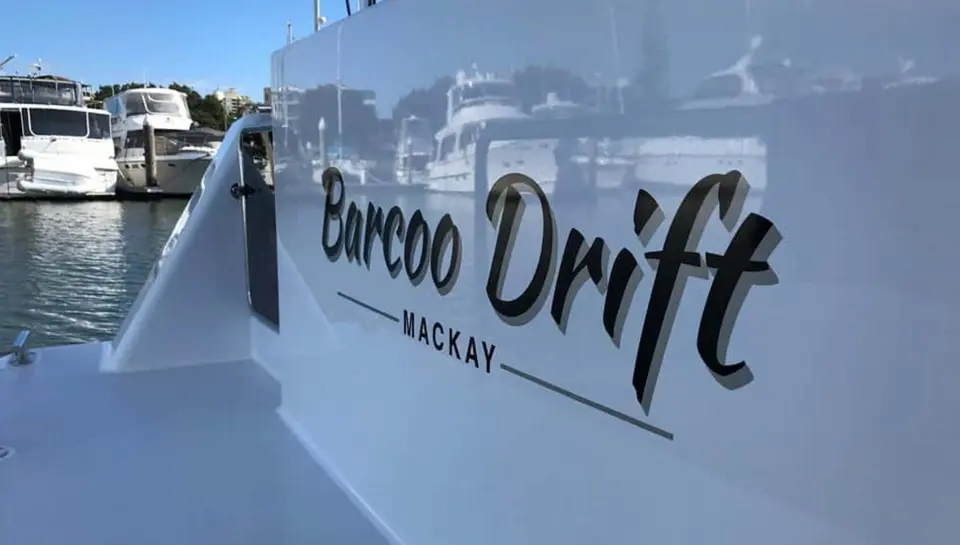
Barcoo Drift, designed by Roger Hill and built by Julian Griffiths and his team in Noosa Marine, was launched on April 9, 2018.
| LOA | 14.10 m |
| LWL | 12.11 m |
| Beam | 5.17 m |
| Beam WL | 1.50 m |
| Draft (Hull) | 0.600 m (approx. fully loaded) |
| Displacement | 15,000 kgs (approx. fully loaded) |
| Water | 640 L |
| Fuel | 2,560 L |
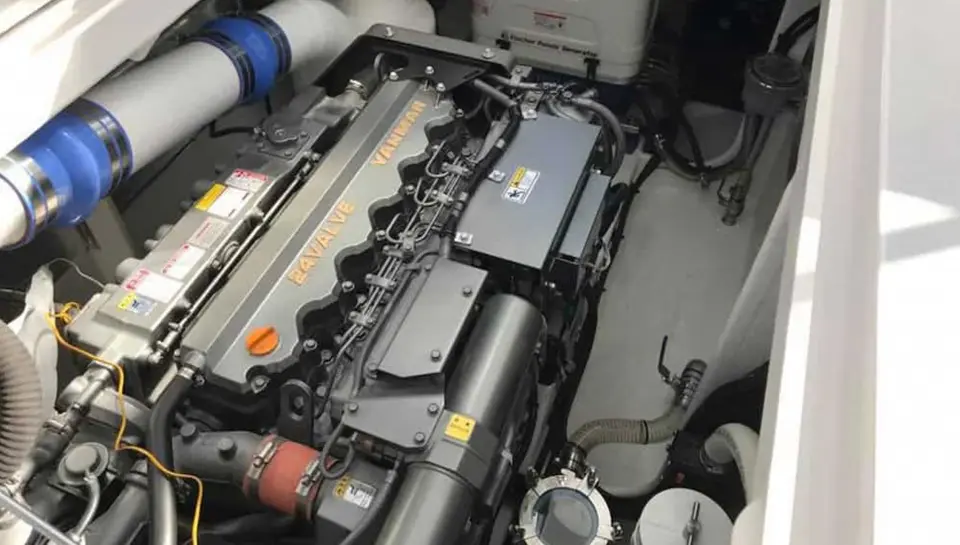
| Engines | 2 x 480 HP (Yanmar 6LY3-ETP) |
| Genset | 8 Kva |
| Roger Hill Yacht Design | www.powercatsnz.com |
| Noosa Marine | www.noosamarine.com.au |
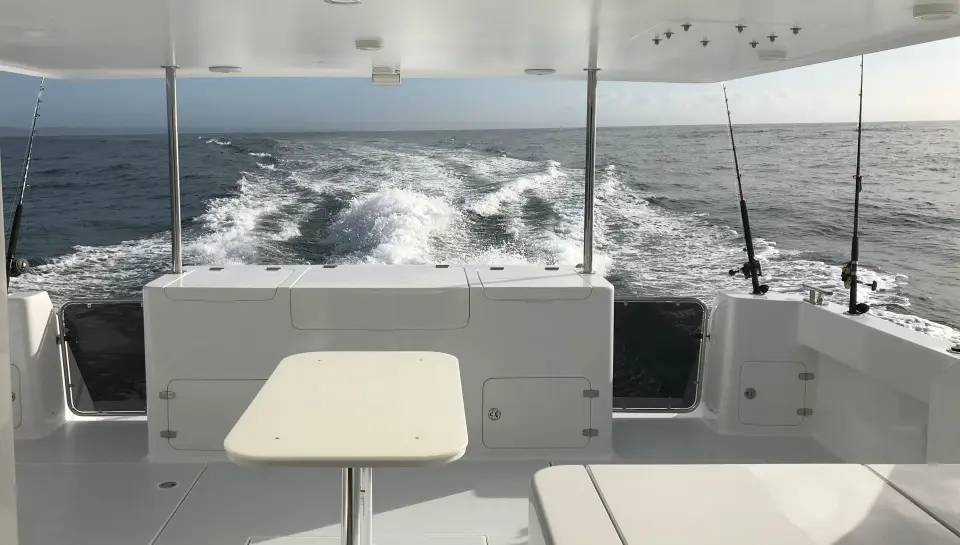
The name Barcoo Drift describes the quiet, laid back way of fishing on the Barcoo River in the North Queensland interior where the owners live and farm, many kilometers from the nearest salt water. With fishing being very high on the preferred activity, the back of the boat and cockpiit is specifically set up to optimise that activity.
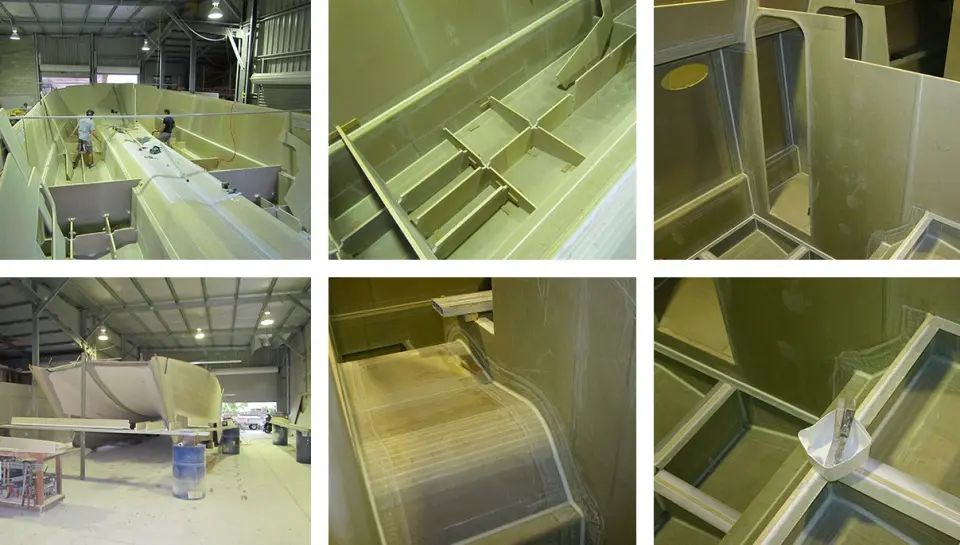
The custom designed 14m sports fishing catamaran was constructed with a combination of DuFLEX Composite Panels cored with DIAB’s Divinycell H80 and HM100 structural foam cores with some panels laminated with unidirectional laminates so they could be strip-planked to conform to the more compound sections of the outer topsides and wing-deck areas. ATL Composites engineered the HM100 into the hull bottoms and lower topsides to provide extra toughness to absorb high dynamic impacts and slamming loads while ensuring a light, yet strong structure.
Designed to keep weight to a minimum and to provide a very comfortable stylish vessel for cruising the North Queensland coastline, all other structural sections including bulkheads, hull soles, cabin sides, side decks, etc, were supplied in CNC-routed Component Packs cored with Divinycell H80 in a variety of thicknesses and E-fibreglass reinforcements to meet design and engineering requirements. Divinycell H has been widely used worldwide and has a proven track record in marine sandwich composite construction.
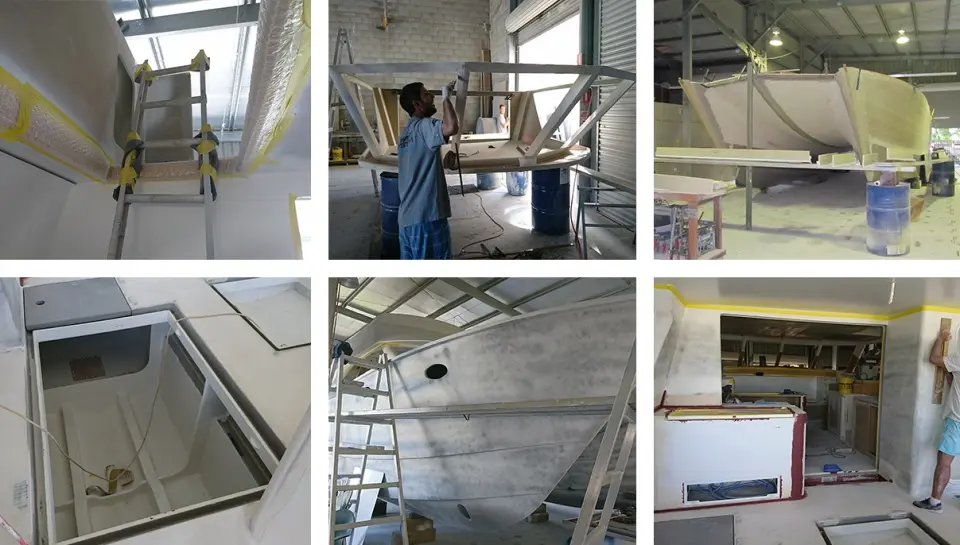
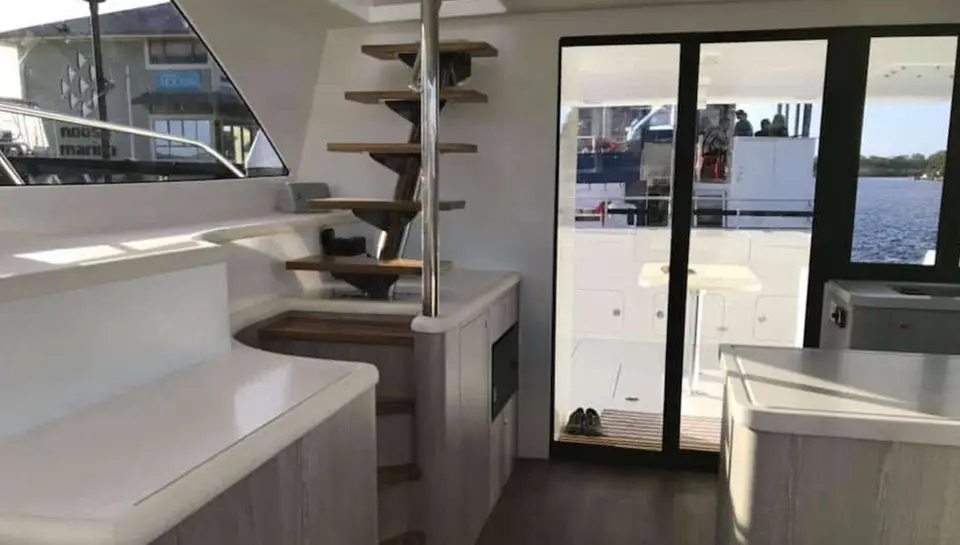
The interior fit-out on Barcoo Drift was also supplied as a CNC-routed Component Pack in FEATHERLIGHT FF1015X6 Marine Grade panels from ATL. Cored with 15mm Divinycell H60, a low density unique combination of polyuren and PVC core, the Featherlight panels will provide good thermal/acoustic insulation and will provide superior stiffness and ultra-light weight to increase overall performance.
Noosa Marine used Techniglue R60 adhesive, in conjunction with the proprietary DuFLEX Z-Press, for the panel joining. Packed in convenient, self-mixing cartidge packs, the R60 makes mixing and application quick and mess free. A thin bead of epoxy can be applied quickly to the scarf joins on the panels and using the heated Z-Press allows the joint to be cured in approximately 12 minutes.
KINETIX R246TX / H160 epoxy systems are being used throughout the vessel for bonding, taping and additional laminating of the strip planked sections. WEST SYSTEM epoxy and powder modifiers were used fo bonding, filleting and fairing.
DuFLEX and Featherlight Component packs ensure weight consistency and build time is highly efficient. To compiment the system, ATL’s FRP Bonding Angles provide a quick and effective means for making right angle joints between the panels. These pre-cured angles reduce wet lay-up in tight corners and over-head applications, and also assist to speed up assembly.
Built in just 12 months, Barcoo Drift is a strong, low maintenance, practical and comfortable vessel that will be sure to satisfy all future cruising and fishing adventures.
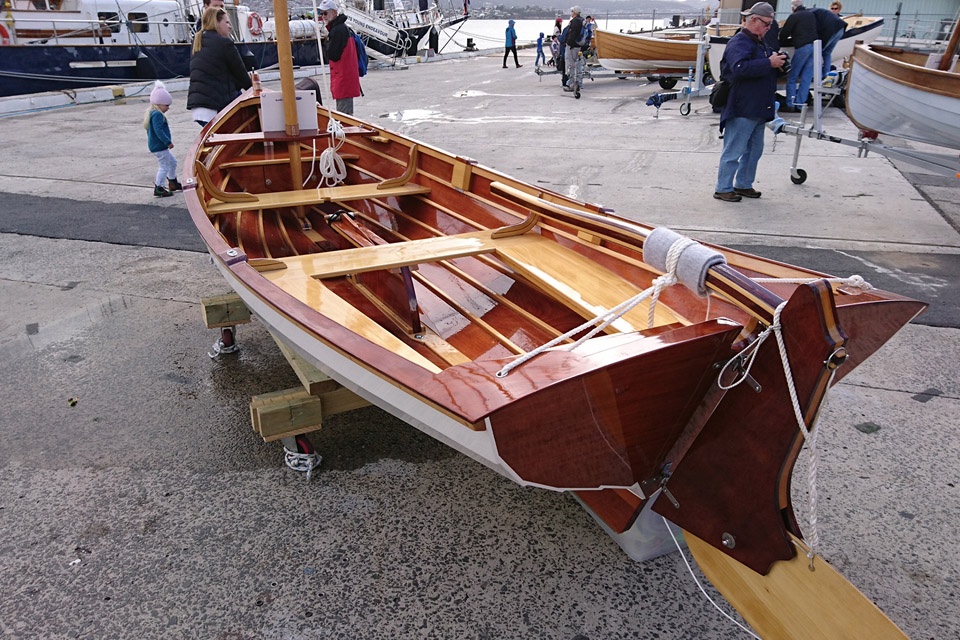
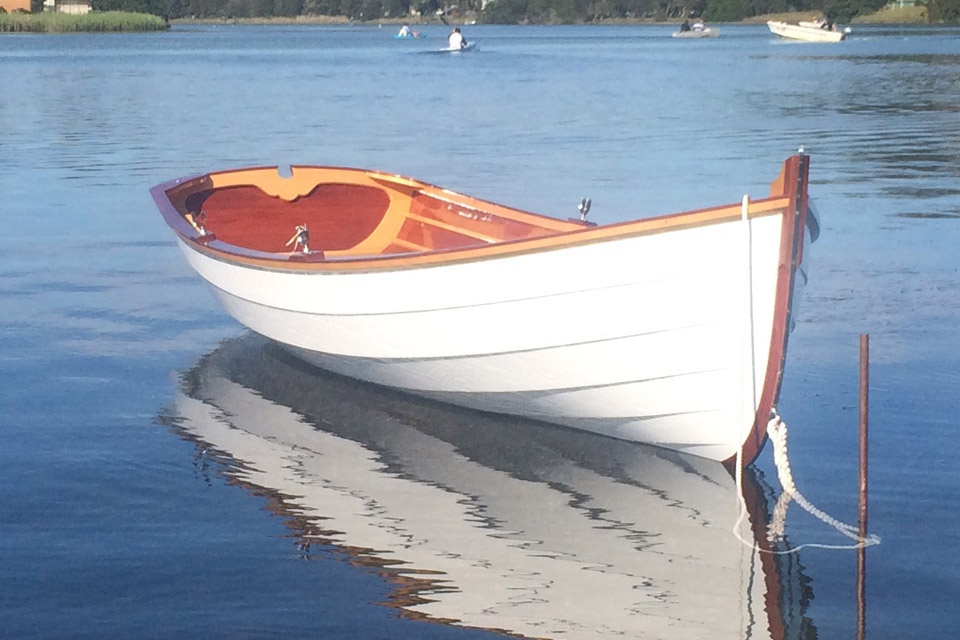
Brought up in a boating family, with historical ties to shipping and the Mediterranean, Tim Calleia has been boating since the age of 4, and has always loved the water. So after owning and operating many boats to date, from a laser to his parent’s cruiser, Tim was looking for a boat that would suit his young family, foremost to teach his girls how to row and sail, and also for himself as an enjoyable form of exercise.
| Length | 4.27 m |
| Beam | 1.38 m |
| Displacement | 70-80 kg |
| Arch Davis | www.archdavisdesigns.com |
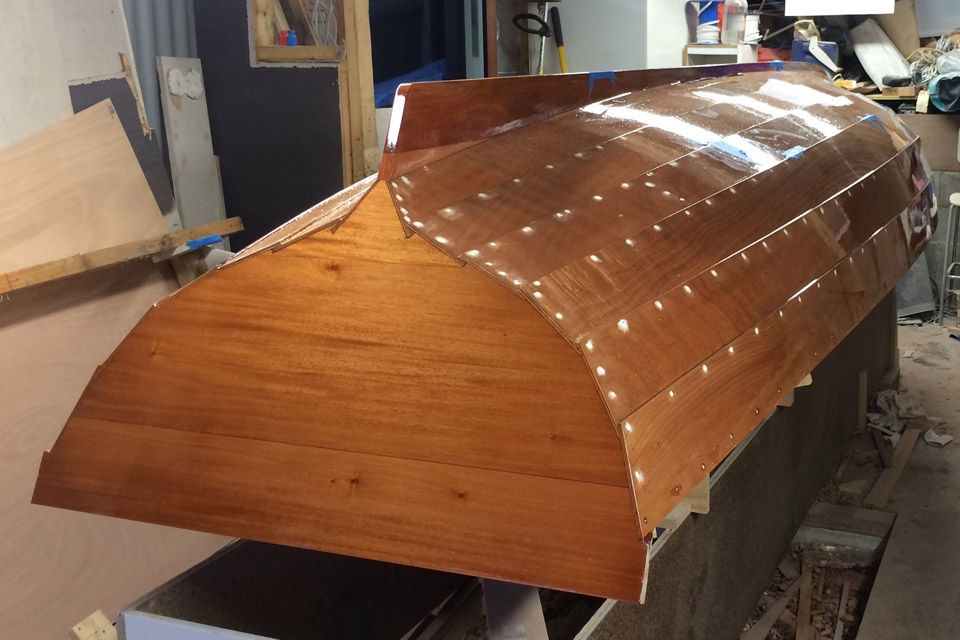
Designed by Arch Davis, Maine, USA, the Penobscot 14 was intended as a boat to be a suitable project for any builder with modest woodworking skills. “I took great care in drawing the lines, making a model to help me arrive at the prettiest, and most sea-kindly, hull form” notes Arch on his website. “I chose glued lap-strake construction because it is light, strong, and easy to care for and it also makes the best use of the inherent properties of the materials, so that the resulting structure itself is good to look at.”
Not finding anything available to purchase that could do everything that Tim required, searching online revealed some very nice traditional looking designs for timber construction. “I’ve always been into woodworking, and having completed a year of boatbuilding at TAFE many years ago, I had always wanted to build a boat.” says Tim, now a licensed plumber on Sydney’s northern beaches.
After extensive research Tim ordered the Penobscot 14 plans from Arch Davis and started the build in a make-shift workshop under his house. With his shed opening up to the backyard, Tim’s daughters Charlotte and Eva, could watch the build as it progressed.
Timber selection took some thought and Tim had some inspiration from a builder colleague who is restoring a very old timber yacht, and also sailing friends who all have beautiful wooden boats. All of these friends use WEST SYSTEM epoxy products to maintain and rebuild their boats when required, so with those references, and after reading an article featuring the benefits of 207 Special Coating hardener on the construction of a clear finished canoe in Wooden Boat magazine, WEST SYSTEM became Tim’s choice of epoxy for his project.
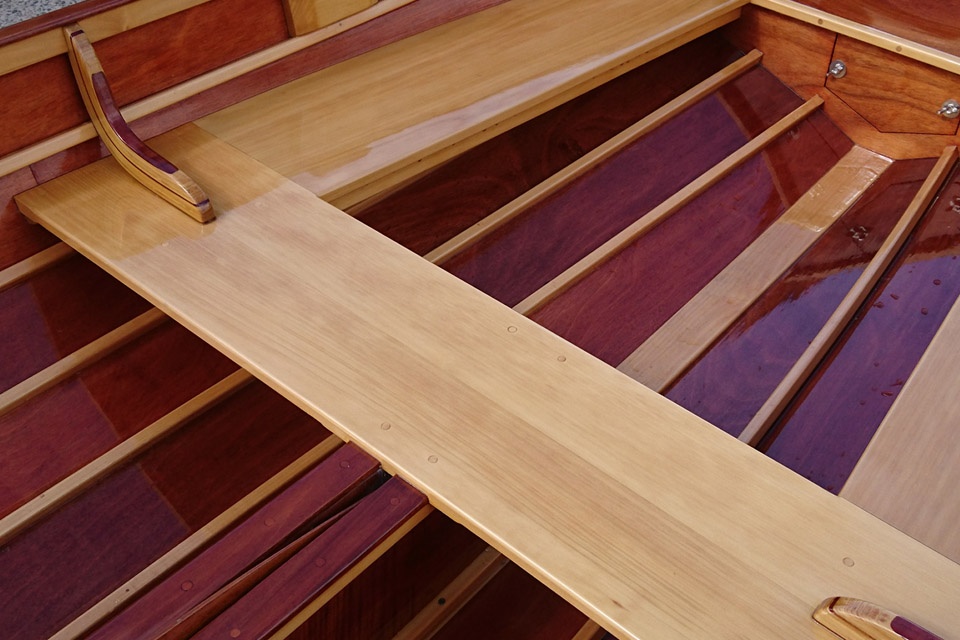
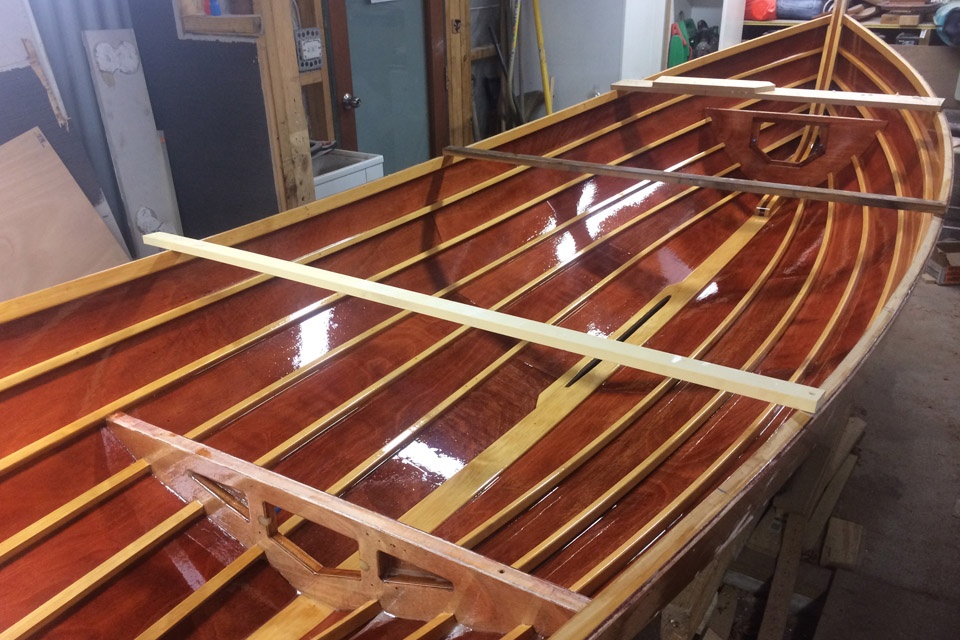
Tim used plantation mahogany and hoop pine solid timbers, and also spruce for the spars. The hull planking is marine ply. The entire boat received two to three coats of WEST SYSTEM 105 resin with 207 Special Coating hardener, to seal all the timbers and provide an exceptionally clear, moisture- resistant finish, followed by numerous coats of varnish to the interior, and a white two-part polyurethane paint on the exterior, to complete this classic look.
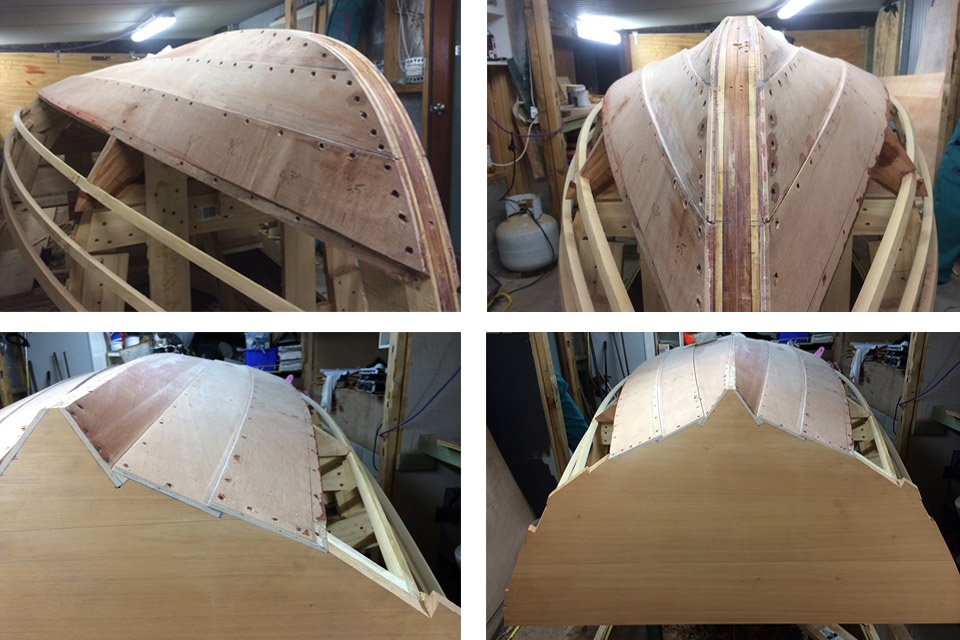
Chareva was built upside down over temporary, and some permanent, frames. Stringers run fore and aft where the planks overlap. The planks are glued and screwed into the stringers, and are also scarffed together on the boat, in position, to make the full length of the boat. The P14 has an inner and outer stem, both are laminated. The outer is fitted after the planking is finished, along with the deadwood or keel.
“Chareva was built over a three and a half year period, mostly working at night and some weekends. I took my time and paid particular attention to the finer detail work as the interior would be varnished and any imperfections would be visible.” Says Tim “ In total I would estimate about one thousand hours of work went into the build. I built and finished the entire boat myself with the exception of drilling the holes in the stainless rubbing strip.”
“I live close to Pittwater in Sydney’s northern suburbs and I can launch my boat at a beach ramp a couple of minutes drive away.” notes Tim “The boat rows extremely well and is always a great conversation topic wherever we stop.”
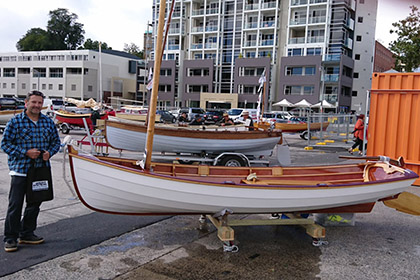
Chareva was exhibited at the 2017 Australian Wooden Boat Festival and is a wonderful example of amateur construction and the finish that can be achieved with WEST SYSTEM epoxy products.
As Arch Davis states on his website “It’s difficult to exaggerate the excitement and satisfaction of watching such a lovely craft come to life under your hands. The attention she draws wherever you take her, and her excellent performance under sail or oars, will give great enjoyment for years to come.”
Designed by Bakewell-White Yacht Design Ltd, New Zealand, the 60′ sailing catamaran began construction at Noosa Marine, Queensland, in early April 2018. The owner and Brett Bakewell-White are working with Bryan Pugh, Sydney, for the styling input to achieve the overall look of this unique vessel.
| LOA | 16.45 m |
| LWL | 18.50 m |
| Beam | 8.28 m |
| Beam WL | 7.87 m |
| Draft | 1.20 m |
| Displacement | 14,000 kg |
| Bakewell-White Yacht Design | www.bakewell-white.com |
| Noosa Marine | www.noosamarine.com.au |
Custom designed for New Zealand businessman Warren Matthews, the design criteria focused on fast ocean passages and to operate in some of the remotest areas of the world. It is set-up for single-handed sailing with a high level of comfort.
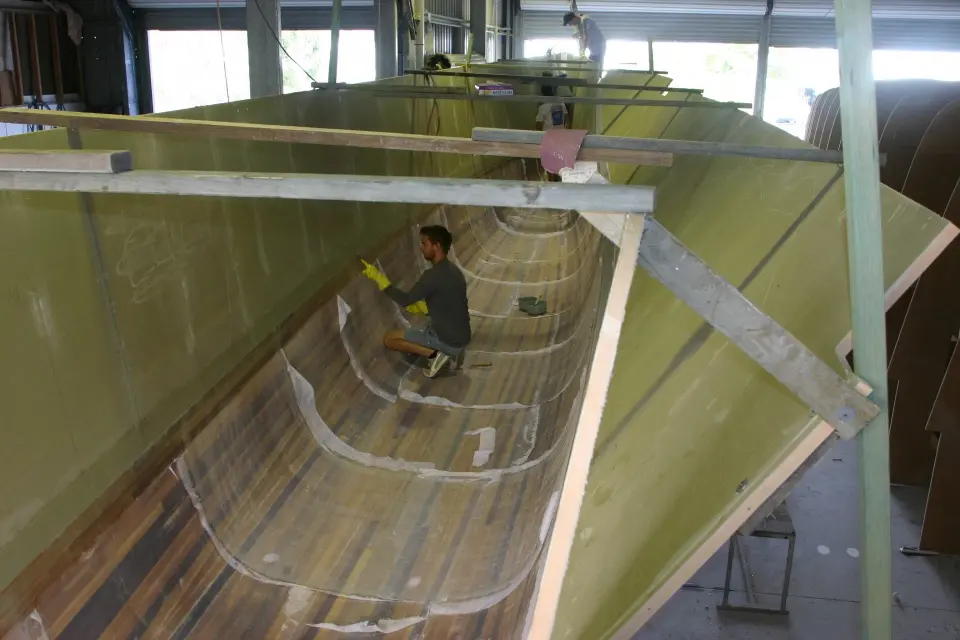
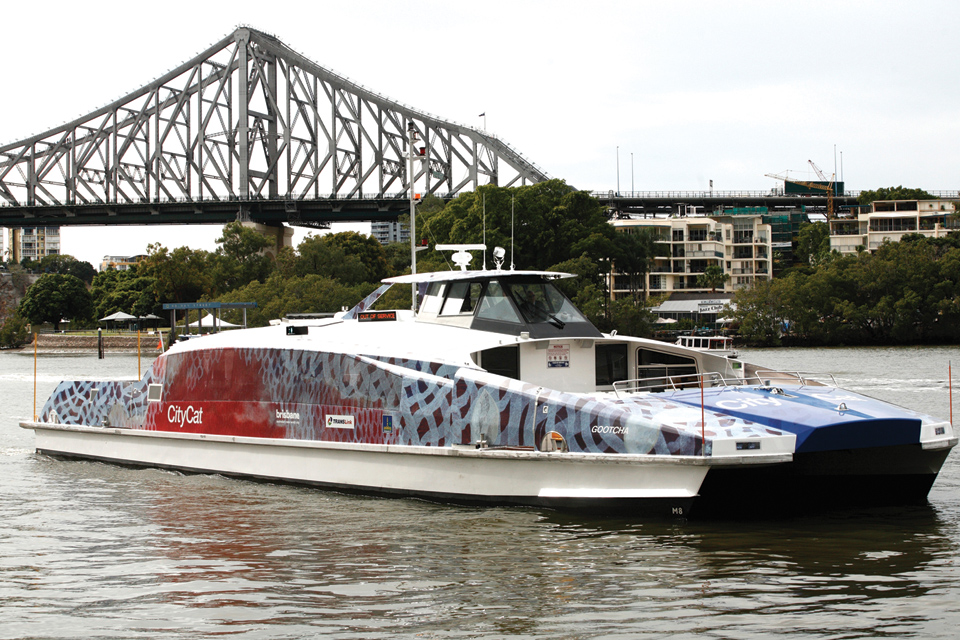
Norman R. Wright & Sons have been building CityCats for the Brisbane City Council for several years, including six second generation models and two third generation models. The CityCats are light-weight, power-efficient, low wash vessels designed for rapid boarding and discharging of 162 passengers.
| LOA | 26m |
| Beam | 7.77m |
| Fuel | 2 x 1200L |
| Water | 600L |
| Engines | Cummins QSM11 2 x 305 kW |
| Speed | 24 knots |
| Grahame Parker Yacht Design | |
| Norman R. Wright & Sons | www.wrightsons.com.au |
Designed by Grahame Parker Yacht Design, Sydney, the Brisbane City Council’s CityCats have alloy hulls and composite super-structures. The Brisbane City Council chose composites for the super-structures to reduce weight and maintenance, and also to allow for the inclusion of compound shapes to improve the aesthetics of the vessels.
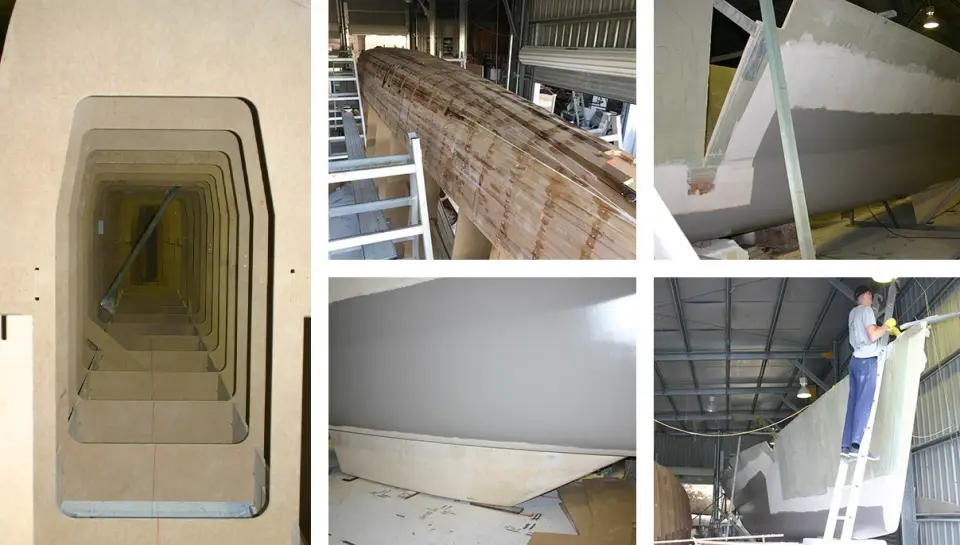
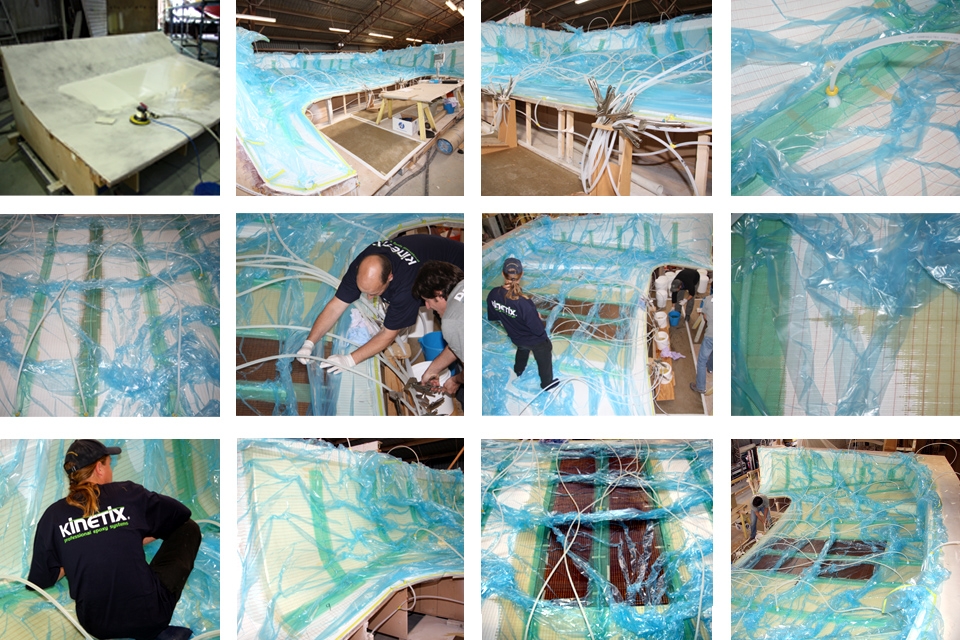
The composite super-structures are constructed with DuFLEX® Composite Component packs cored with structural foam and the bonnet, bulwarks, cabin tops and superstructure components are constructed using infusion moulding techniques and KINETIX® R118 epoxy.
ATL Technical staff worked with the Wrights team on the infusion strategy for the larger parts. Minimal weight was one of the driving factors for the project, so a custom surface profile was used on the foam core to control resin consumption, and still allow the core to conform to the part shape and enable resin flow.
A custom blended hardener was used with the R118 resin for infusion of the bonnet that incorporated a number of core types with different flow rates. As this was the first part of its type to be infused, a slower flow rate was desirable, and the custom hardener enabled an extended pot-life without the need for post-curing. Actual resin consumption was within 10% of the calculated requirement.
ATL Technical staff assisted with compiling imagery and flow rate data, which was used in the refinement of the process in subsequent parts, resulting in faster set-up and shoot times.
The successful introduction of infusion on the CityCat project has resulted in Wright’s incorporating this process into their manufacturing on a broader scale, with notable, positive results on the shop floor.
AIRTECH Big Blue vacuum bagging film was used for the larger parts for the CityCat. Big Blue is a multi-layer film of 75 micron thickness, which has a greater degree of toughness over standard films, yet remains soft and supple even in hot and dry conditions. Big Blue is available in 6 metre and 12 metre wide films from ATL.
In addition to the Big Blue, ATL supplied Wrights with a complete range of AIRTECH infusion consumables for the project including infusion medium, flow lines, and connectors.
The CityCats styling and construction are testament to designer Grahame Parker Yacht Design, Sydney, and the skilled team at Norman R. Wright and Sons in Bulimba. CityCat Gootcha #16 bears an indigenous name, and features artwork by acclaimed local artist Judy Watson.

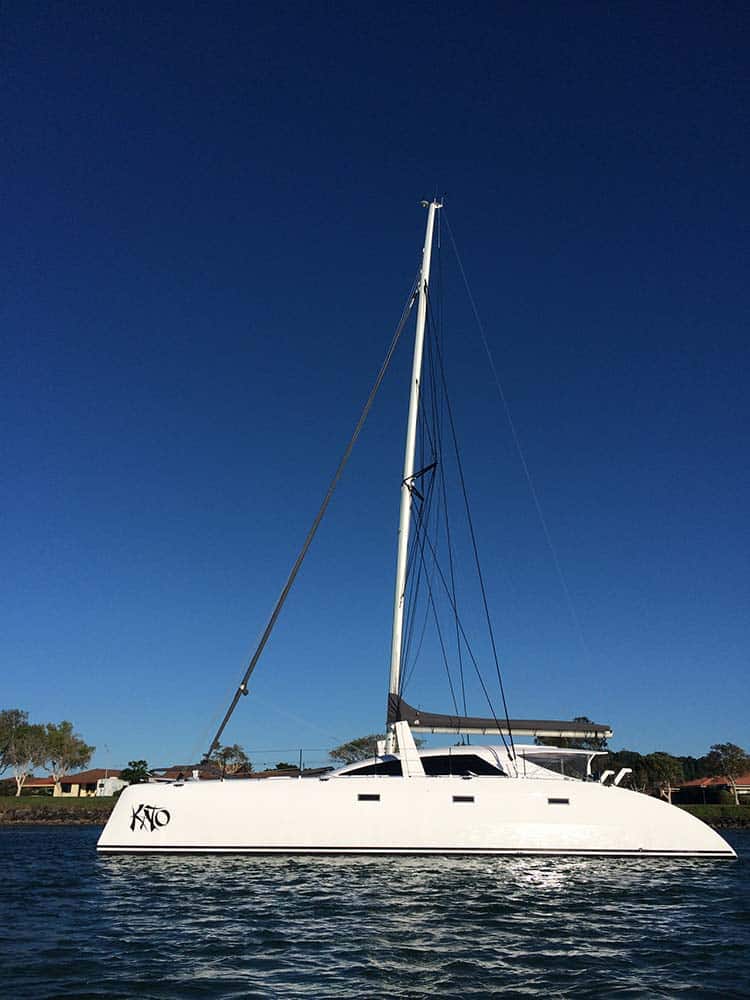
Launched in May 2014, KATO, a custom Schionning G-Force 1800 is set to turn heads with stunning goods looks and outstanding sailing performance.
| LOA | 18.30m |
| Beam | 8.60m |
| Fuel | 600L |
| Water | 600L |
| Engines | 2x 75 hp Saildrive Diesels |
| Speed | 25+ knots |
| Schionning Designs | www.schionningdesigns.com.au |
| Noosa Marine | www.noosamarine.com.au |
Designed by Jeff Schionning, Schionning Designs, KATO was commissioned by a Queensland businessman, with previous catamaran experience, who wanted a performance oriented cruising catamaran with a generous pay-load, that was easy-to-handle for short-handed sailing. The design brief also called for plenty of room for storing kite surfing equipment in the cockpit and a clear area for kite launching and retrieval from the back of the boat.
“The G-Force 1800 is the ultimate in high performance cruising catamarans and is the flagship of the G-Force range. One of the main benefits of these easily driven hulls, with excellent power to weight ratio and a good WL beam to length ratio, is that you don’t need much wind to get up and go.” Jeff Schionning
Jeff specified DuraKore Strip Planking for the hulls and a DuFLEX Composite Component Pack , Techniglue epoxy adhesives and KINETIX laminating systems, for KATO’s construction, with S-Fibreglass and carbon reinforcements, where appropriate, to control weight and achieve the desired strength . The DuFLEX Panels were CNC routed into kit form and cored with a rigid end-grain balsa to optimise the engineering and performance in specific areas. The DuraKore / DuFLEX construction significantly reduced the build time while addressing the need to keep the boat as light as possible without sacrificing comfort or performance.
Built by Julian Griffiths and his experienced team at Noosa Marine, Queensland, KATO was constructed in 14 months. On her maiden voyage, in light 8 knot winds, she hit 9.8 knots of boat speed. A following outing logged 22.3 knots surfing in 2m swells with three reefs in the main and the jib, in winds ranging from 25 – 30 knots. The owner has reported that he could not be happier with the boat, and after an initial cruise to Lizard Island in the Whitsundays they are planning a world sailing adventure.


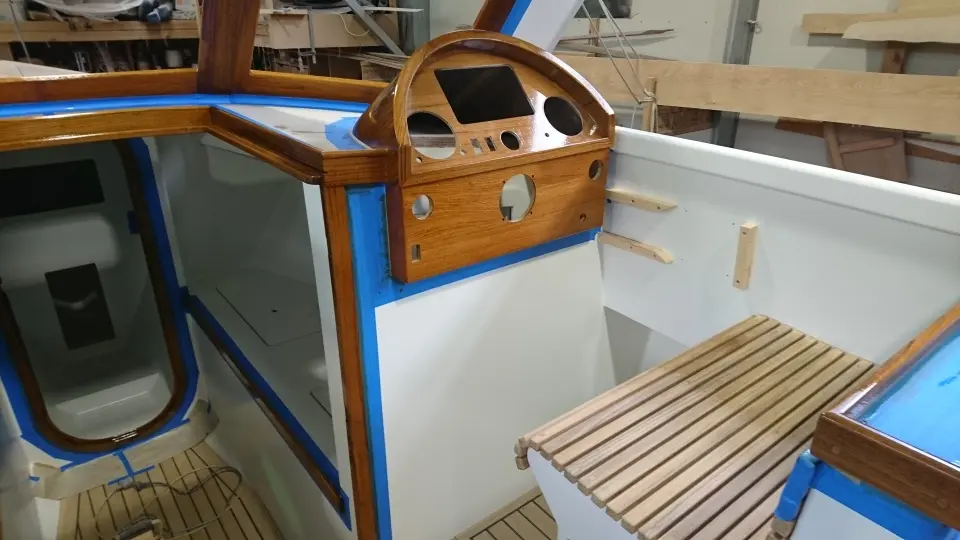
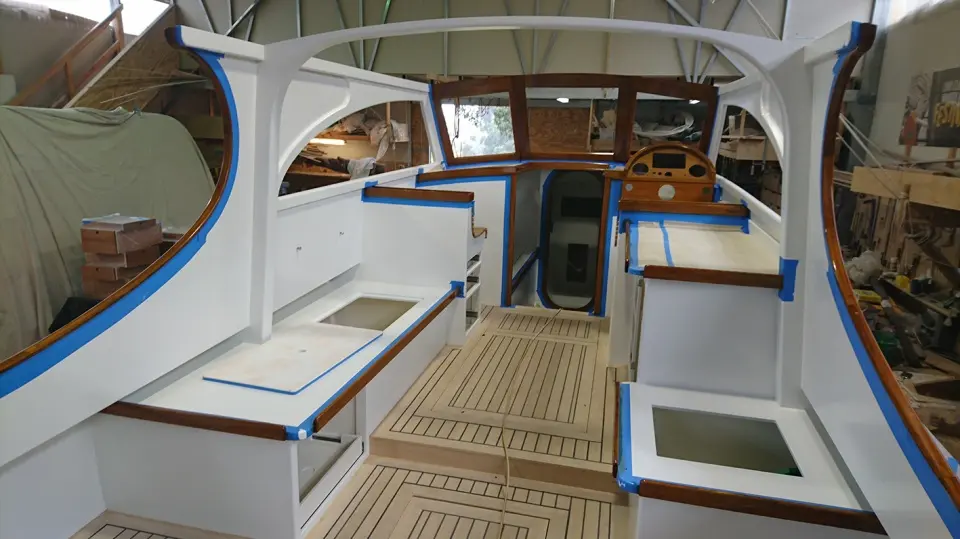
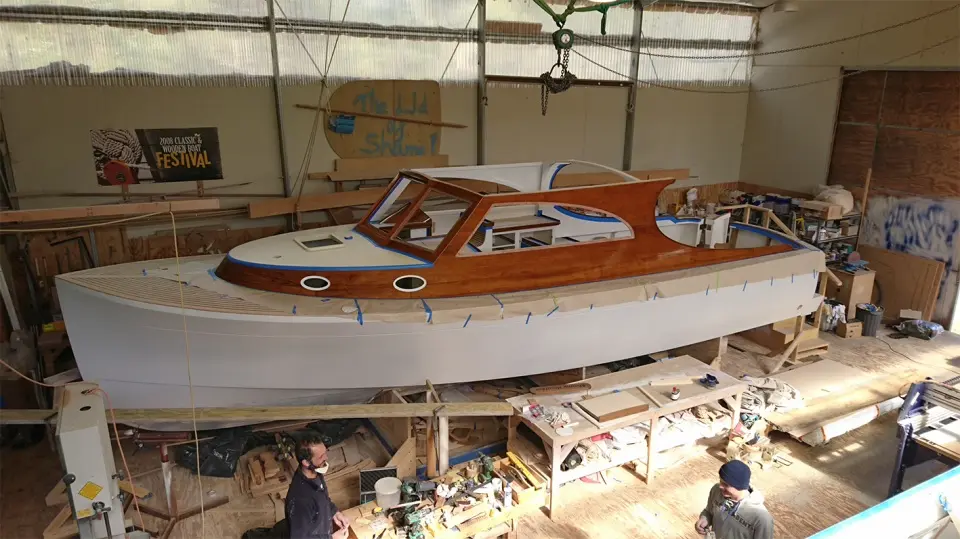
Recently launched by Denman Marine in Kettering Tasmania, Stormy Weather is the first East Coast 32 from the design board of renowned naval architect Andy Dovell.
| LOA | 10.8 m |
| LWL | 9.51 m |
| Beam | 3.65 m |
| Draft | 0.75 m |
| Engine | Steyr SE156E26, six-cylinder 150hp turbo diesel |
| Dovell Naval Architects | www.dovellnavalarchitects.com.au |
| Denman Marine | www.denmanmarine.com.au |
Andy Dovell, Sydney, was commissioned to to create a vessel primarily aimed at day use, and occasional overnight stays on Sydney Harbour, but with the ability for shorter coastal hops in good weather. Emphasis was placed on having an open flow, uncluttered interior to facilitate interaction between the cockpit and the forward cabin area.
Although the East Coast 32 has traditional looks, such as the plumb stem and curved, raked transom, the design incorporates modern materials to achieve a strong, lightweight and easily driven hull. The hull construction was Western Red Cedar core strip planked with WEST SYSTEM 105 resin and 205 Fast hardener thickened with WEST SYSTEM 411 Microsphere Blend to create a lightweight filling putty used to edge-glue the planks together.
The stripped hull was reinforced with multiaxial E-fibreglass skins laminated with KINETIX R246TX high performance epoxy resin and H126 Super-Fast hardener manufactured by ATL Composites. The resulting cured laminate offers excellent mechanical properties with high heat distortion and excellent toughness. Cedar strip-plank has proved to be very popular method of custom boat construction with professional and amateur boat-builders worldwide, because of the ability to make complex, smooth curves to produce beautiful, high quality vessels.
All bonding for bulkhead installation and other structural components were completed with a blend of WEST SYSTEM epoxy and 413 MicroFibre Blend, while filleting and non-structural bonding utilised the lower density WEST SYSTEM 411 Microsphere Blend. Fairing was completed with WEST System 410 Microlight and Altex Epoxy Marine Surfacer. Prior to priming, all underwater areas were barrier coated with WEST System 105 resin and WEST System 422 Barrier coat additive (7 coats to waterline plus 200mm and 3 coats of WEST 105 above.)
Denman Marine uses CAD/CNC technology extensively to improve accuracy and improve production efficiency. For example, the MDF building jig was cut and assembled by one worker over two days and the majority of the interior fit out was CNC cut, assembled and finished outside the boat prior to installation.
Denman Marine aimed for low maintenance for exterior finishes, using Awlcraft 2000, a two- component acrylic urethane topcoat that provides long lasting gloss and colour retention, for the topsides, and Awlwood Primer/ Clear Finish in all clear finishing applications to give a beautiful, high- gloss finish with extended performance.
Stormy Weather is powered by a 150hp six-cylinder Steyr turbo diesel coupled with a 5-blade CNC milled propeller. The combination produces a top speed of just under 20kts, and comfortable cruising in the mid-teens. Due to the flare and extension of the chine forward, the boat is very dry in choppy conditions, and her fine entry ensures no pounding. Her initial delivery to Sydney across Bass Strait in rough conditions proved her to be a dry and capable sea boat.
The main cabin area has two helm seats, a settee/day bed to port and a small galley to starboard with plenty of storage. There are two good- sized berths in the forward cabin, as well as an enclosed head, and hot water is provided for in the galley and at the stern shower.
The saloon area can be isolated from the aft cockpit, when overnighting, with the removable canvas/clear partition and a transom door provides access to the large teak swim platform and boarding ladder, which makes it very easy to get back on board after a swim.
Stormy Weather is a beautiful vessel – perfect for day trips, and offering comfortable accommodations and practical living spaces for the occasional weekend away.
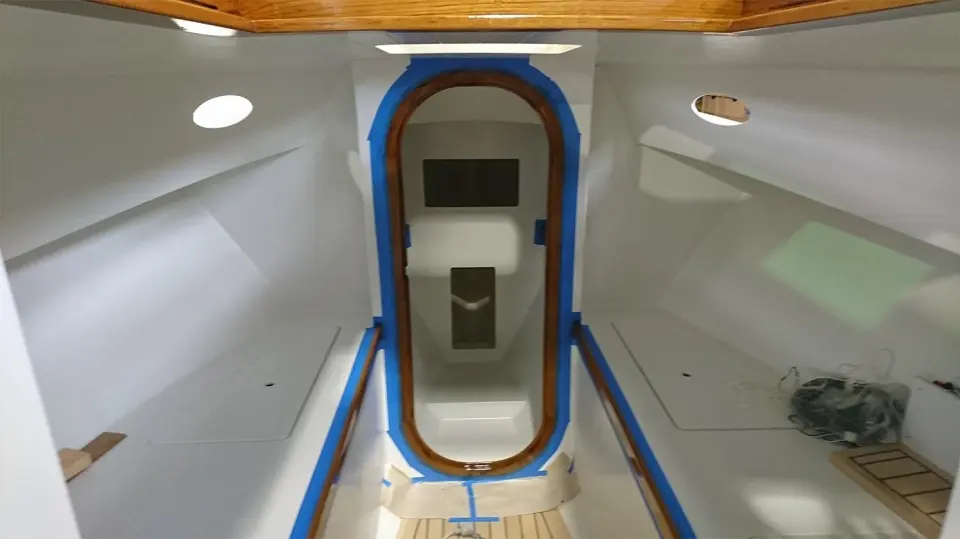
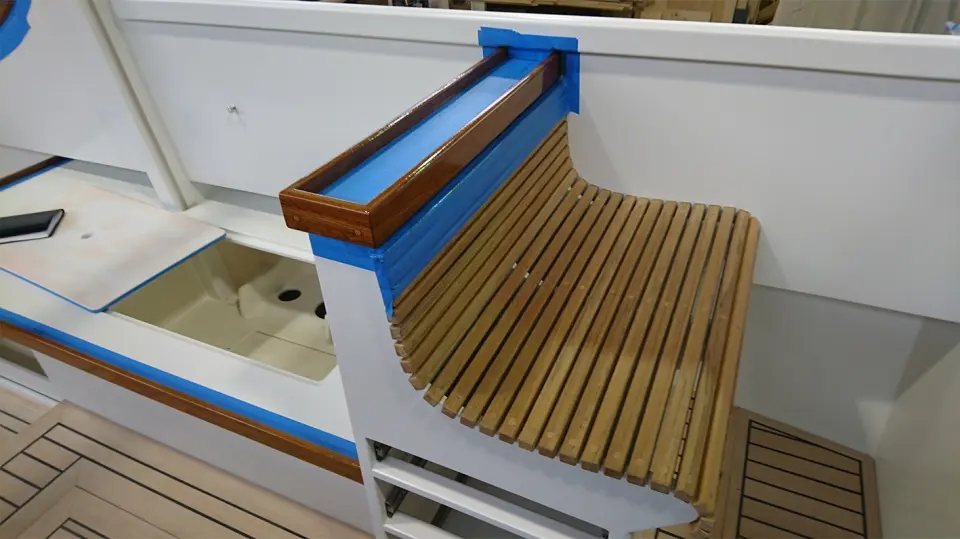
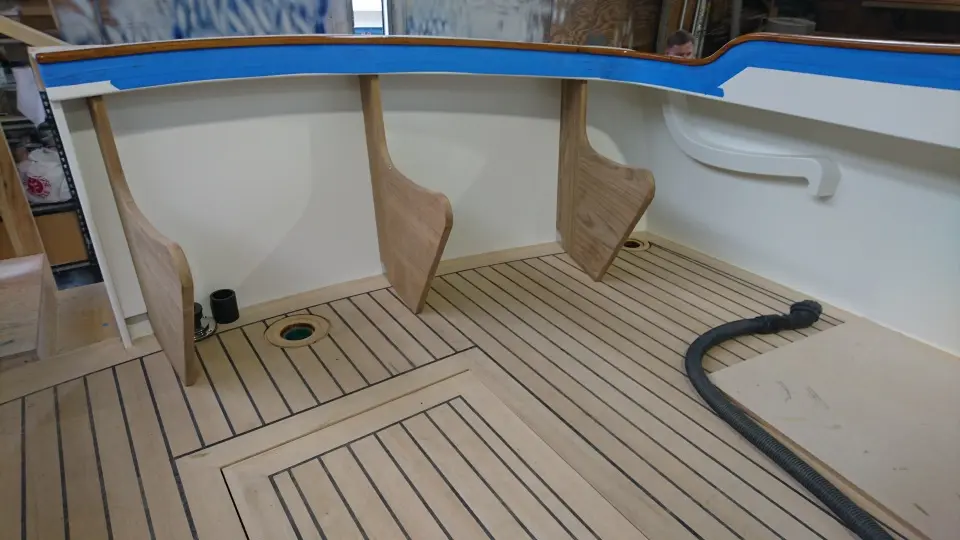
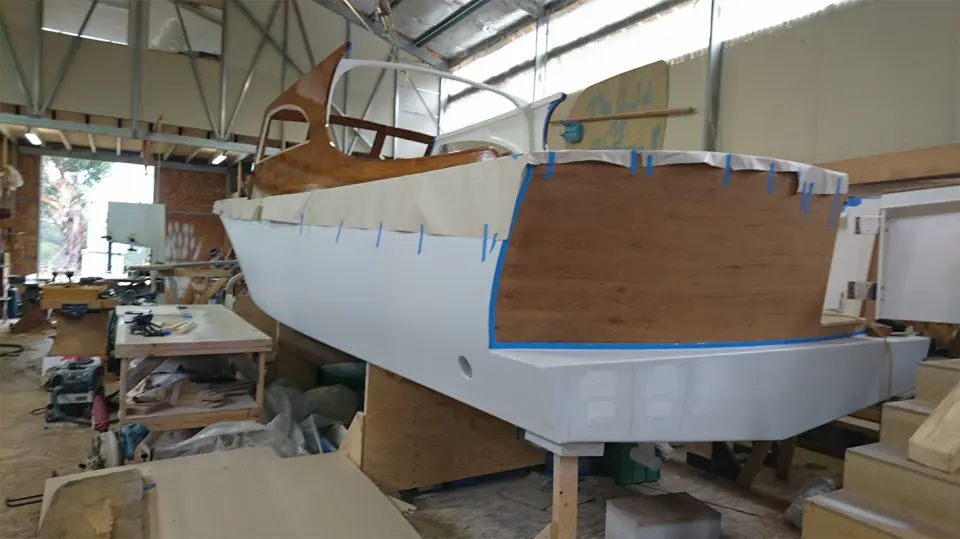
More photos of this project can be viewed on https://www.denmanmarine.com.au/east-coast-32—stormy-weather-i34/
Select your desired option below to share a direct link to this page.
Your friends or family will thank you later.