


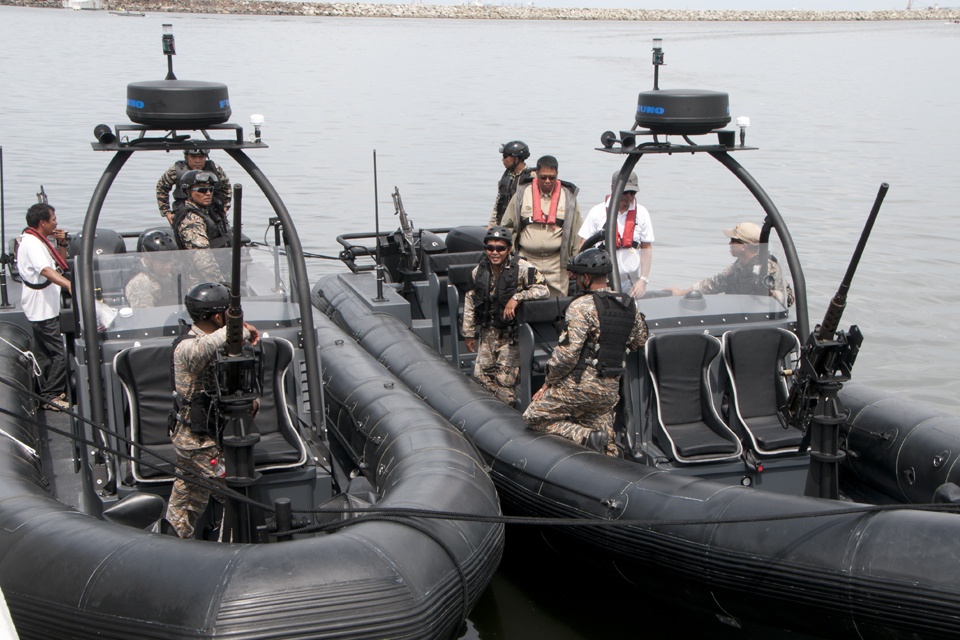
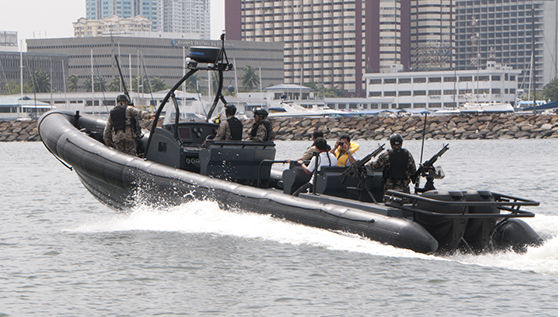
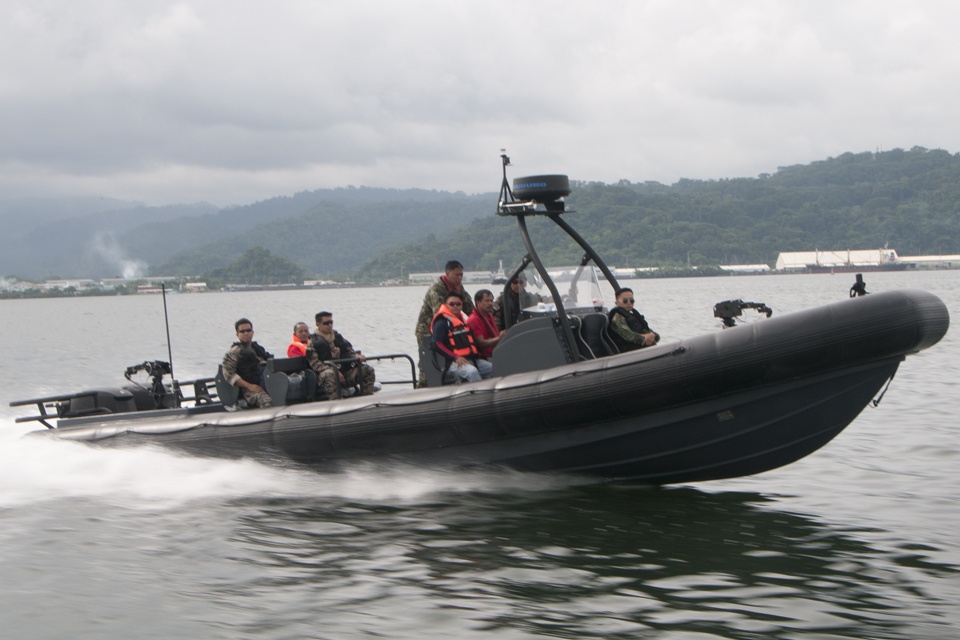
Advanced Composite Systems the Philippines utilise modern materials and manufacturing processes to minimise weight while increasing the strength and durability in the Hammerhead RIB (Rigid Inflatable Boat) range.” Stable, wide-beam hulls, innovative deck layouts, first class engineering, and clean modern styling ensures that each Hammerhead stands out from the crowd.
| LOA | 11 m |
| Beam | 3.1 m |
| Draft | 1 m |
| Passenger Capacity | 11 persons |
| Fuel | 600 L |
| Engines | 2x 250 hp |
| Advanced Composite Systems | www.hammerheadribs.com |
ACS contacted ATL Composites to discuss engineering and materials for their new 10 metre RIB. The smaller models use vinylester resin systems, however for the 10 metre, weight and structural performance were key parameters that ACS wanted to improve on. “With the world alerted to energy conservation, fuel prices and carbon footprints, we believe it’s time to build boats a little smarter.”
ATL assisted with materials and technical processing support for the construction of an epoxy mould capable of handling elevated post-cure temperatures for the new design, and consulted on a suitable E-fibreglass laminate and composite core combination based on the design and performance parameters. Overall weight was to be kept to a minimum, however robustness was considered a key factor as the waterways in the Philippines are known for debris.
Hull and deck construction is a combination of multi-axial knitted E-fibreglass fabrics with an optimised selection of foam cores for toughness and weight. Divinycell® H80 used in the decks has a proven track record in marine applications and yields impressive mechanical properties making it ideal for applications subject to fatigue, slamming and impact loads, such as the high performance Hammerhead range. All cores were vacuum bagged into the moulds with ATL’s Techniglue® R35 Core Bedding adhesive allowing the fabricators to trowel the mixture into the moulds with suitable working time and to ensure a void free bond line.
Hammerheads are manufactured in a strict QC environment using vacuum bagging, as well as open lay-up of reinforcements, and particular attention is paid to glass wet-out ratios to ensure optimum resin to fibre content. The Hammerhead 10 was laminated with KINETIX® R246TX Thixotropic Laminating resin with H160 Medium hardener ideal for providing extended working time in the fabrication of high strength, lightweight structures. While Techniglue R15 toughened adhesive, typically used in the most critical bonding applications to provide superior peel strength, was used for bonding the hull stiffening grid into the hull and deck.
Hammerheads are manufactured under strict supervision and the 10 metre has a displacement of 2720kg with a maximum speed of 55 knots with twin outboards, depending on the power options,
After producing a number of boats for pleasure use, Advanced Composite Systems was confident in the performance and toughness of the craft and has now supplied the Philippines Special forces with a military version.
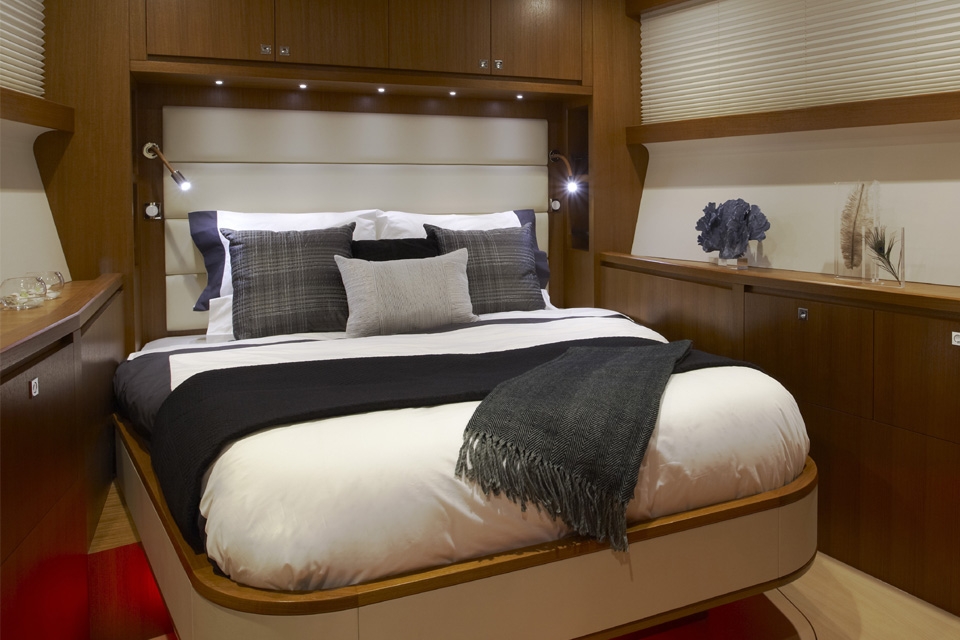
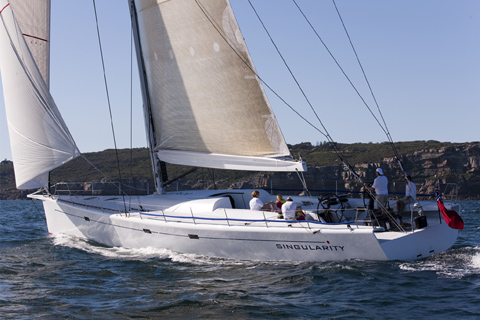
The interior of the Lutra 80′ racing yacht, Singularity, built by McConaghy Boats in Sydney, was fabricated by Marxcraft Pty Ltd incorporating custom DuFLEX® composite panels.
| LOA | 24.5m |
| Beam | 5.33m |
| Displacement | 24,500kg |
| Main Sail Area | 200.83m2 |
| Marxcraft Pty Ltd | www.marxcraft.com.au |
| Lutra Yacht Design | www.lutrayachtdesign.com |
| McConaghy Boats | www.mcconaghyboats.com |
Designed by Adrian Konynendyk of Lutra Yacht Design, Singularity was designed to meet the requirement of a modern lightweight boat, equipped with the functionality of a racing yacht and the comfort of a cruiser.
UK-based yacht design firm Design Unlimited designed the interior to achieve the contrasting demands of looks, comfort and lightweight.
While maintaining the required weight, the finished yacht features a level of comfort including air conditioning, extensive cold storage and luxury soft furnishings.
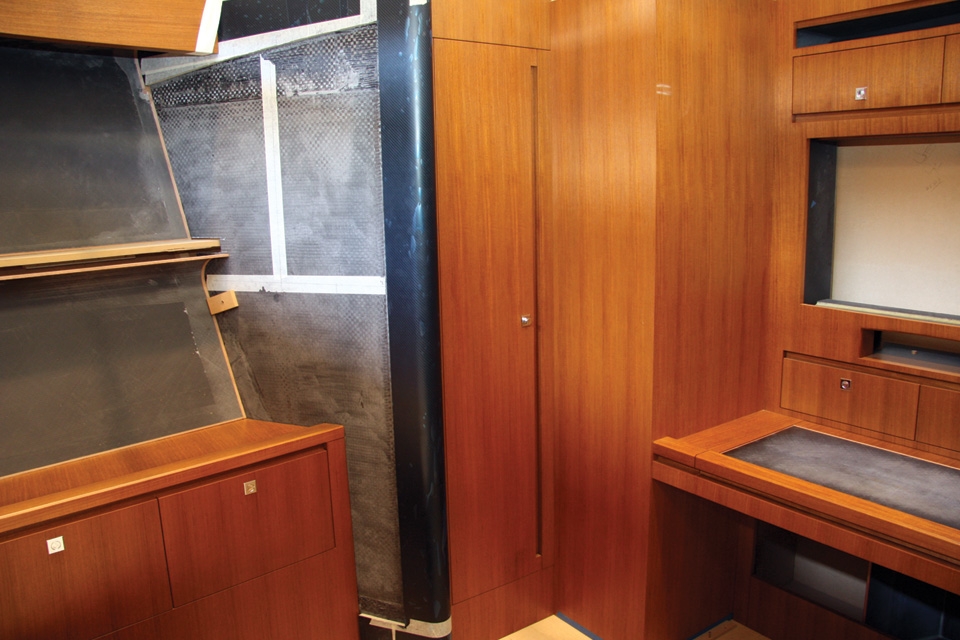
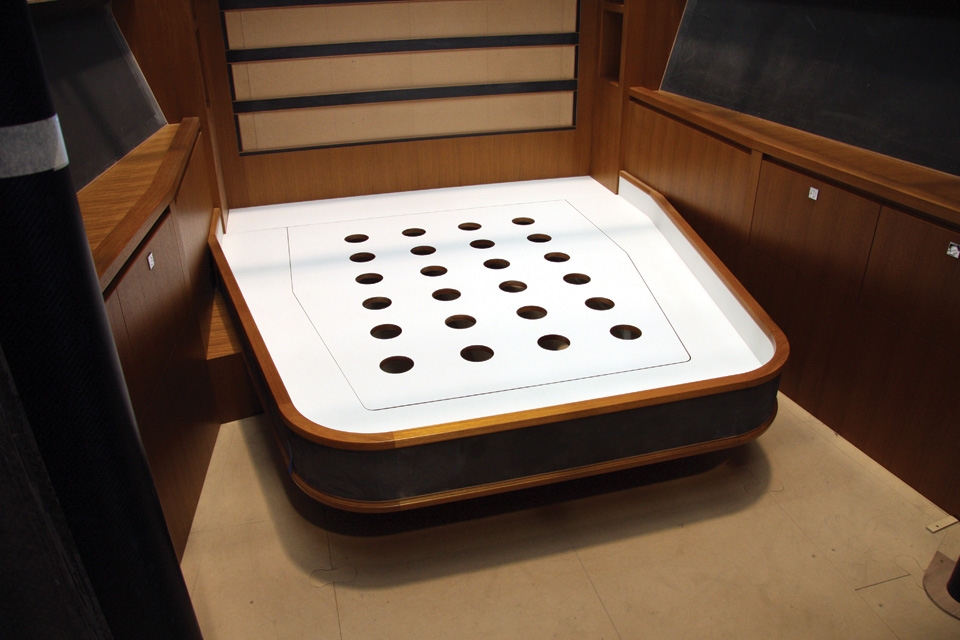
The DuFLEX® panels were a combination of aramid honeycomb cores with lightweight carbon-fibre skins. A variety of thicknesses were required for different areas in the boat, and tight manufacturing tolerances had to be achieved to meet weight, stiffness, and stability requirements.
The surfaces of the panels were then laminated with a teak veneer by Marxcraft’s highly-skilled team of craftsmen. Painstaking attention to detail in choosing wood grain and colour, ensured that each piece was perfectly matched, and beautifully finished edge-trims were inserted on exposed surfaces to complete the sophisticated and luxurious yacht interior.
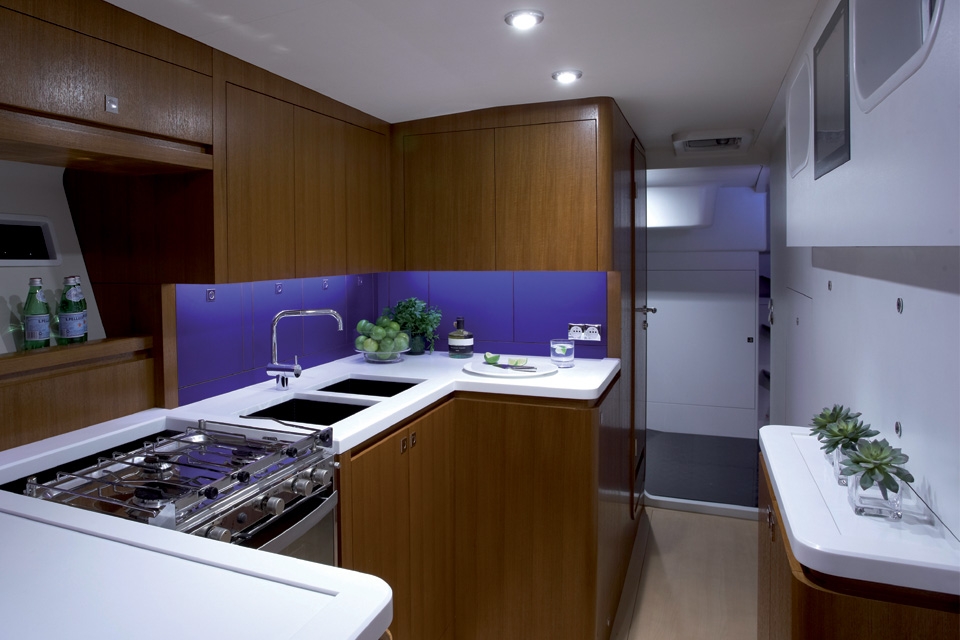
The Palm Beach 65 is the natural progression following the popularity of the PB 50. Smooth and easy to handle, this luxurious motor launch can be handled by family and friends without the need for extra crew.
| LOA | 21.3 m |
| Beam | 5.8 m |
| Displacement | 23,000 kgs |
| Fuel | 5,000 litres |
| Water | 1,270 litres |
| Engines | Twin Volvo IPS 900s |
| Palm Beach Motor Yachts | www.pbmy.com.au |
The Palm Beach Motor Yacht range was inspired by leading edge yacht racing technology. Since production began in 1995, every model has been constructed using high performance structural materials to produce extremely strong, lightweight hulls that deliver superb performance and outstanding fuel consumption.
Over the years, ATL has worked with Palm Beach Motor Yachts to develop and produce CNC-routed DuFLEX® bulkhead, floor, longitudinal, and selected internal fit-out components, cored with end grain balsa, to optimise the weight in their various models, including the Palm Beach 45, 50 and 65’s.
As custom boats, each Palm Beach varies slightly in layout and fit-out and electronic files are supplied for the parts by the team at Palm Beach. ATL produce CAD/CAM files to rout the required parts.
The DuFLEX components, and other fixed furniture are structurally bonded to the hull and deck with Techniglue R15 epoxy adhesive, providing strength and stiffness to the superstructure. R15 is a toughened system with high compressive and tensile strengths, and has been formulated to produce a high strength bond, with exceptional peel properties, making it ideal for the most critical applications.
Fit-out joinery is either fibreglass-taped in place in curved areas, or bonded into position with our 42mm FRP Bonding Angles for right-angle joints.
Component packs are palletised and sent with an assembly booklet which shows part numbers and descriptions to ensure installation proceeds quickly and accurately.



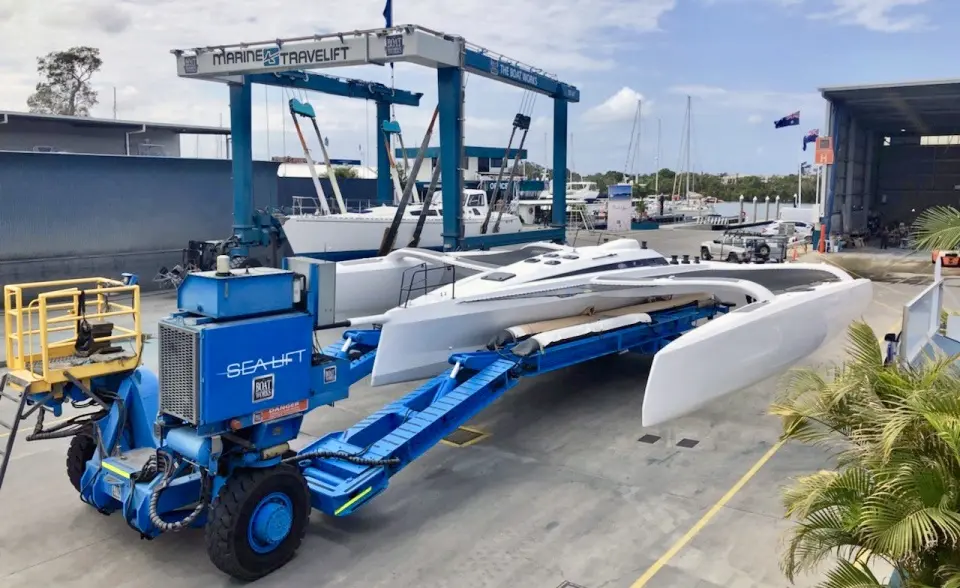
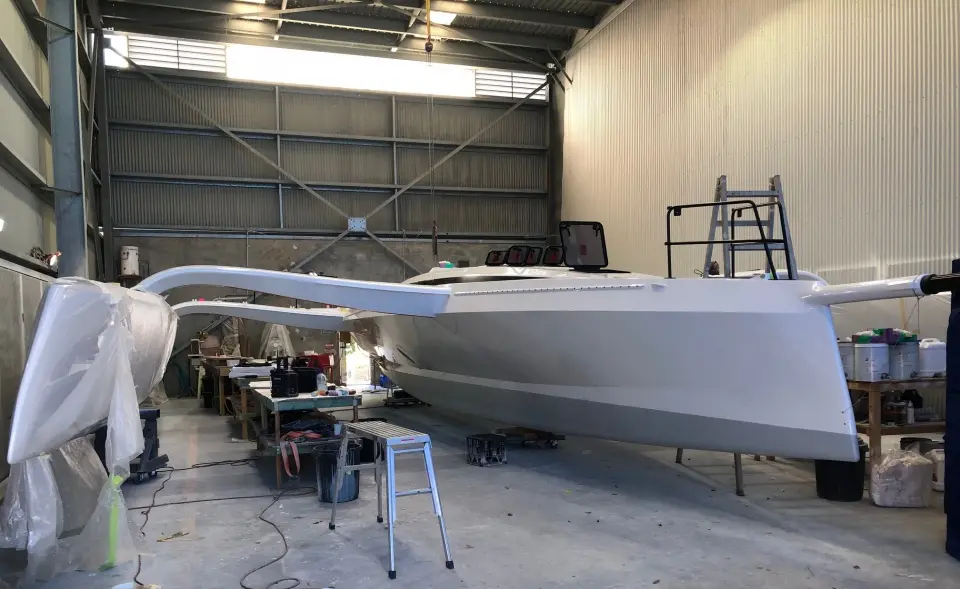
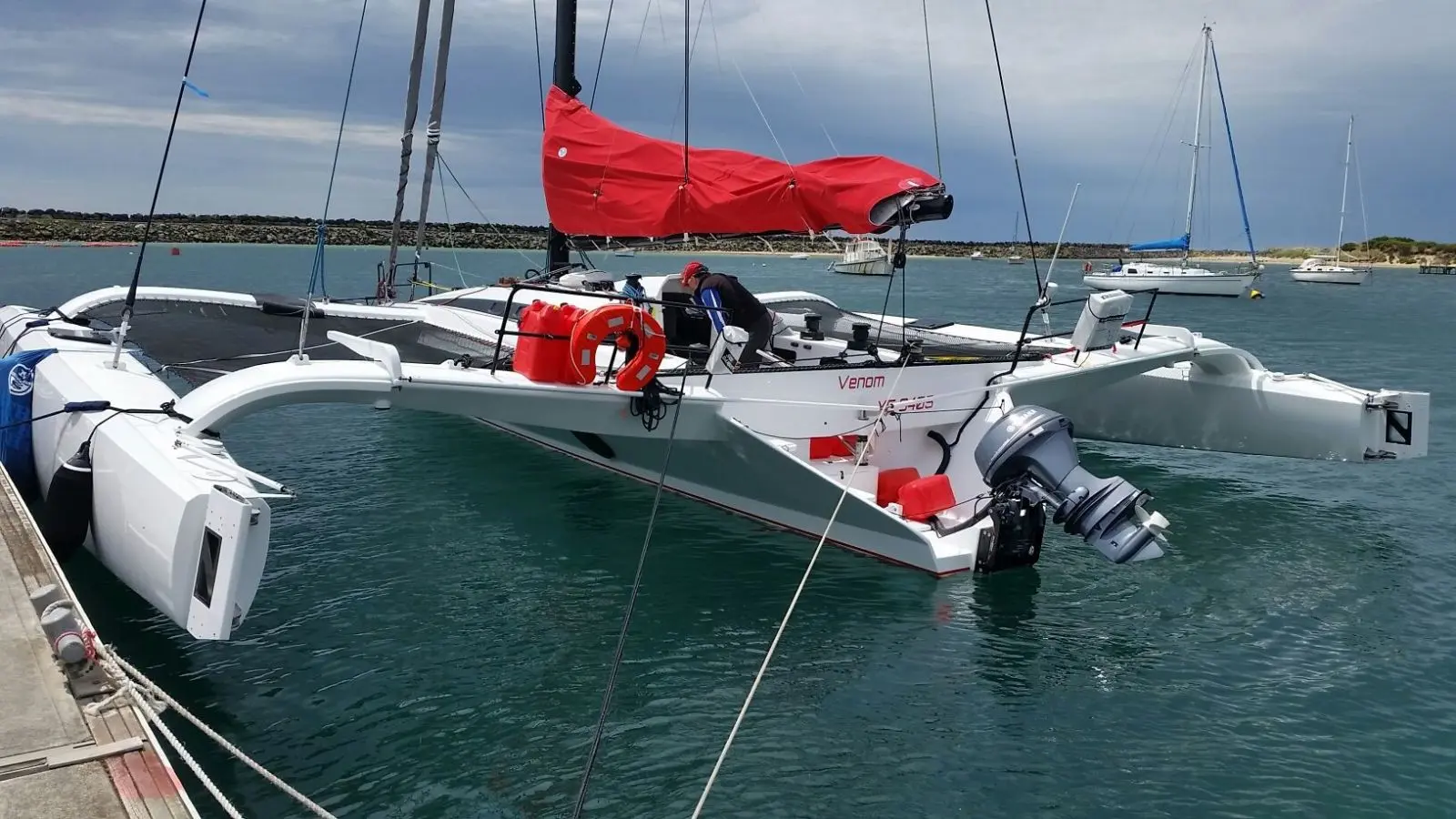
Engineered by Composites Consulting Group (CCG) to Category A Offshore, the R42 designed by Tony Grainger, is the latest high performance trimaran under construction at Australian Custom Multihull Yachts at The Boatworks on Queensland’s Gold Coast.
| LOA | 12.80 m |
| Main Hull – Beam OA | 3.55 m |
| Beam DWL | 1.06 m |
| Sailing Weight | Approx 3,500 – 3,700 kg |
| Grainger Designs | www.graingerdesigns.net |
| ACM Yachts | Australian Custom Multihull Yachts |
A project that explores the boundaries between a high performance cruiser and a lightweight racer, the R42 deploys a fine main hull with just enough concession to creature comforts below decks to ensure that planning a long term cruise, is as equally realistic as mixing with the action at the front end of the fleet in a major race series.
The R42 is custom designed to a well thought through design brief from an experienced Australian trimaran owner.
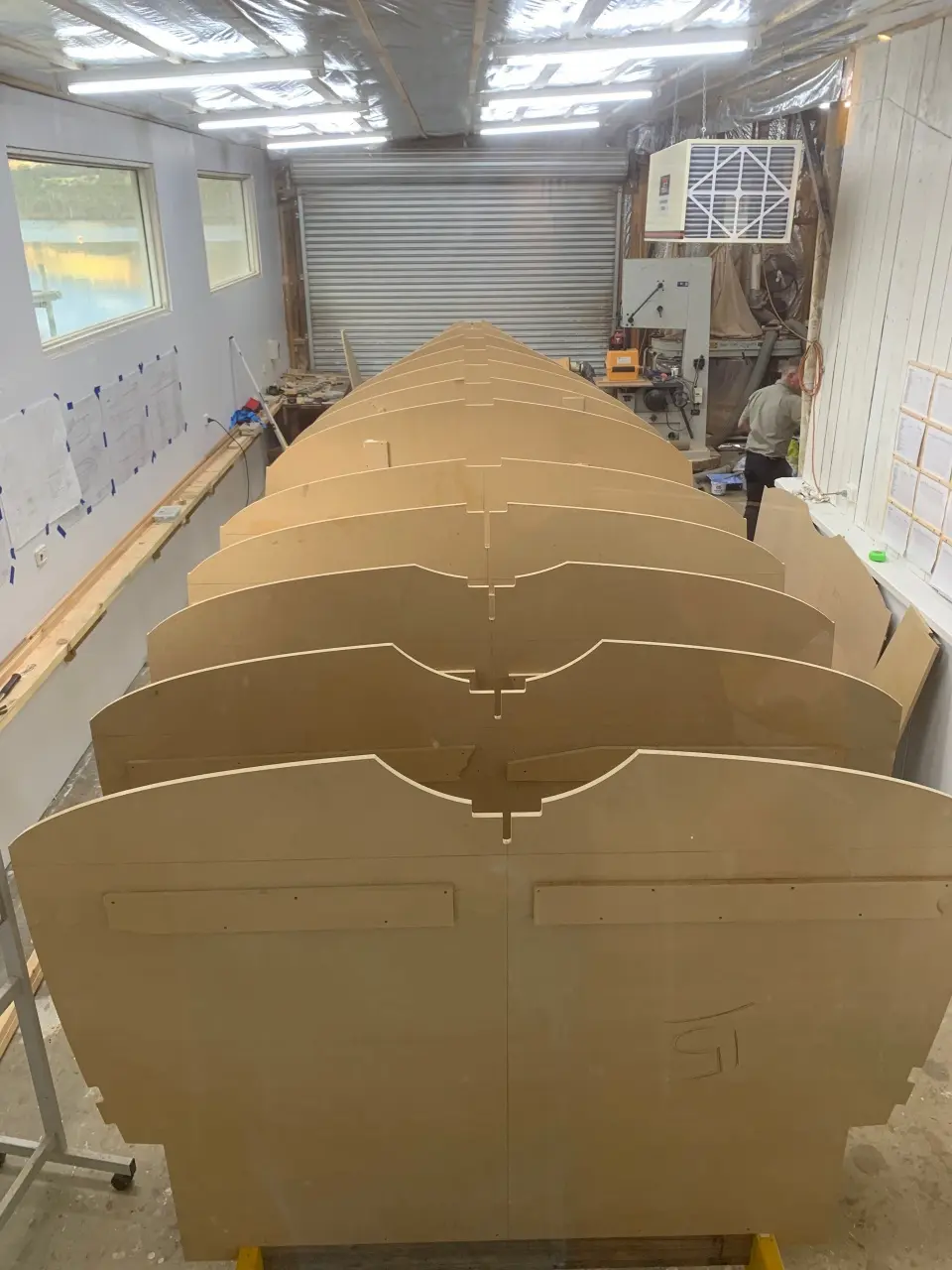
The mould frames and strongbacks are made from 16mm MDF that were CNC machined by ATL Composites from electronic cutting files. The cutting files provide slots for fast assembly and the building forms are stabilised by locking the joints with epoxy fillets. The beams are symmetrical about the athwartships axis, so one set of female tools can be used to build all of the beams. The primary beam is a box structure that sits inside the fairings. The fairings are non-structural, so the laminates are quite light.
The main hull planking material is made with DuFLEX Composite Panels with a 15mm Divinycell H80 structural IPN foam core with 200grm carbon unidirectional laminate on each face. The DuFLEX panels are manufactured under heat and positive pressure by ATL Composites to ensure a consistent laminate with a high fibre ratio. The panels were supplied in 1200mm x 2400mm sheets with the proprietary DuFLEX Z-joint on each 1200mm end.
The panels are bonded with Techniglue R60 structural adhesive, supplied in cartridge packs, using ATL’s Z-Press which applies pressure and heat to the join, allowing the epoxy to cure in just a few minutes. The panels are progressively moved along until a panel of the full length of the hull is created. The full length panels were then ripped into strips of varying widths and planked over the temporary frames to make the hull shell.
The planking has been reinforced with a combination of carbon fibre double bias reinforcements laminated with the high performance KINETIX R246TX Thixotropic Laminating epoxy under vacuum to achieve a high fibre to resin content to optimise the construction for weight and stiffness.
In the more compound sections of the main hull, Divinycell H80 foam in a variety of thicknesses has been used to create the shapes, while H100 and H200 was used intermittently in specific high load areas, and then laminated in-situ with R246TX and a combination of KINETIX H160 Medium and H126 Super Fast Laminating hardeners
The hull has been faired with Technifill XP R1160, a lightweight, pre-thickened compound that is easy to sand with no shrinkage.
Launched October 2019
Aura, designed and built by Norman R. Wright and Sons in Brisbane. Engineered by ATL Composites.
| LOA | 19.22 m |
| BOA | 5.84 m |
| Displacement (fully laden) | 41 tonnes |
| Speed (cruise) | 34 knots |
| Engines | 2 x Caterpillar 32 ACERT |
| Norman R. Wright and Sons | www.wrightsons.com.au |
The 60-foot power boat was designed for private use and built for live aboard sports (game) fishing, with appropriate seakeeping, maneuverability and general handling capabilities. The vessel was configured to facilitate sports fishing; the main desk is fitted with a below floor scuppering system, a plumbed live bait tank located in the transom, and port and starboard desk hatched leading to removable fish/ice buckets. Aura can reach up to 35 knots plus, allowing for more time with lines in the water and less time traveling to your destination.
Engineered by ATL Composites, the hull bottom was infused with Kinetix R118 with H120 infusion hardener. The hull core was 40mm Divinycell H130 IPN foam, which has a proven track record in marine applications in applications that are subject to slamming or impact loads, and reinforced with multiple layers of 800g E-fibreglass biaxial and quadraxials.
The hull topsides were strip planked using DuFLEX strip-planks with a 25mm Divinycell H130 foam core laminated with 800g E-fibreglass unidirectional on each side. An additional layers of quadraxial were applied to each side to complete the structure.
Pre-routed DuFLEX panels were supplied in kit form for applications throughout the boat including fitout and internal structural components:
– Accommodation Sole
– Saloon Sole
– Bulkheads
Specific reinforcements and taping were applied throughout the boat – including 800g E-glass biaxial / 800g E-glass quadraxial / 1200g E-glass quadraxial / 1000g E-glass unidirectional / 600g E-glass double bias / 400g E-glass biaxial / 450g carbon unidirectional / 400g carbon double bias – to meet design and engineering specifications.
As mentioned, infusion processes were completed with KINETIX R118 with H120 infusion hardener, and all hand lamination resin was completed with KINETIX R246TX resin, a room temperature curing, thixotropic laminating system, with a combination of H126 Super Fast and H160 Medium hardeners to meet specific cure schedules.


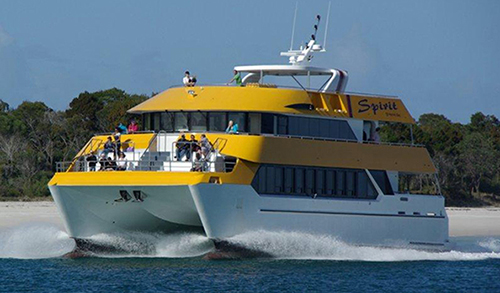
The design specification for Spirit of Hervey Bay required a service speed of between 18 and 20 knots with 245 passengers on board.
| LOA | 24 m |
| Beam | 10.0 m |
| Draft | 1.5 m |
| Fuel | 4000 litres |
| Water | 1000 litres |
| PAX | 245 |
| Engine | 900 HP |
| East Cape Marine | www.eastcapemarine.com |
| Streamline Catamarans | www.streamline-catamarans.com |
Designed by Noah Thompson, East Cape Marine, New Zealand, and built by Wayne Jones at Streamline Catamarans in Hervey Bay, the 24m EC160 Spirit of Hervey Bay was specifically designed for Glen Dorn to charter as a Whale Watching Vessel.
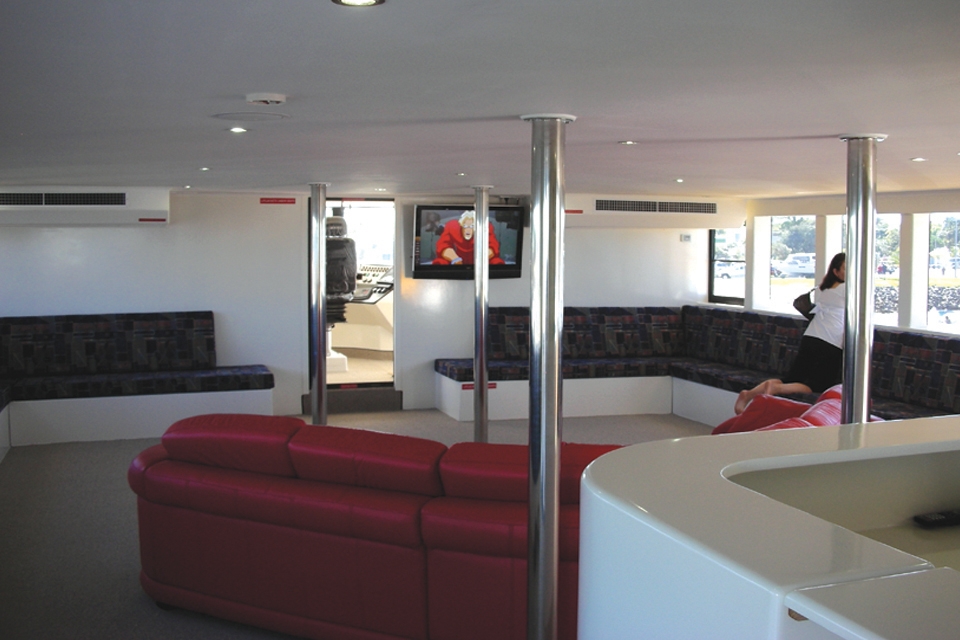
3 stories high, the EC160 was engineered by ATL Composites to meet Australian Standard USL 1C/1, to carry 245 passengers on her 3 decks, and to cruise at 22 knots.
“This is the way of the future,” declared Noah. “In a world where fuel economy is now king, this boat proves that composite construction is becoming the alternative to aluminium. The combination of an
efficient design, the use of ATL Composites materials and engineering services, and a superb build, has led to the creation of a commercial vessel that has exceeded all expectations.”
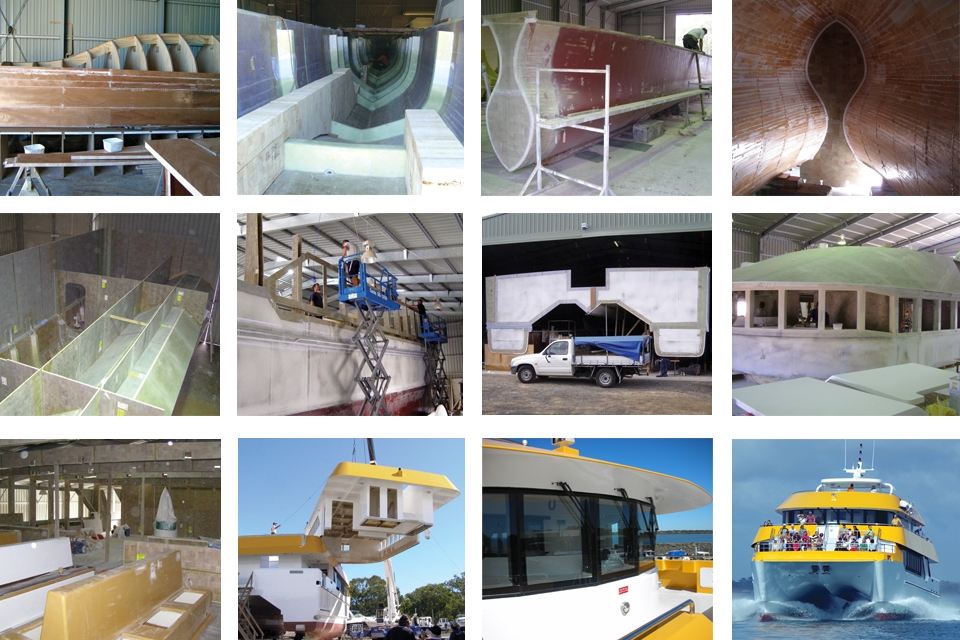
Spirit of Hervey Bay took only 15 months to build. The hulls were strip planked in DuraKore over male frames while the remainder of the vessel was manufactured and supplied by ATL as a DuFLEX Component Pack, including hull topsides, tunnel, transom, bulkheads, soles, decks and superstructure. ATL Composites also manufactured and supplied lightweight non-structural Featherlight panels for the ceilings and supplied the fibreglass reinforcements throughout. Their high performance KINETIX Professional Epoxies were used for additional laminating applications and WEST SYSTEM resins/ hardeners and powder modifiers were used for structural bonding, filleting and fairing on the project.
“ Compared to traditional boat-building where you so often see a major cost over-run, this ATL product proved to be exceptional with the ease of assembly; the CNC routed DuFLEX has every part numbered, so when it arrived at the Streamline factory, each piece could be easily identified and fitted into place during the assembly process.”
DuFLEX structural panels require fewer frames and ring frames to form the structure of the composite vessel, in comparison to a similar size aluminium vessel. The reduction in frames and also the light weight properties of the Duflex Panels, adds up to a significant weight savings overall. This allows the vessel to run with smaller engines and less fuel capacity, to also help with weight reduction.
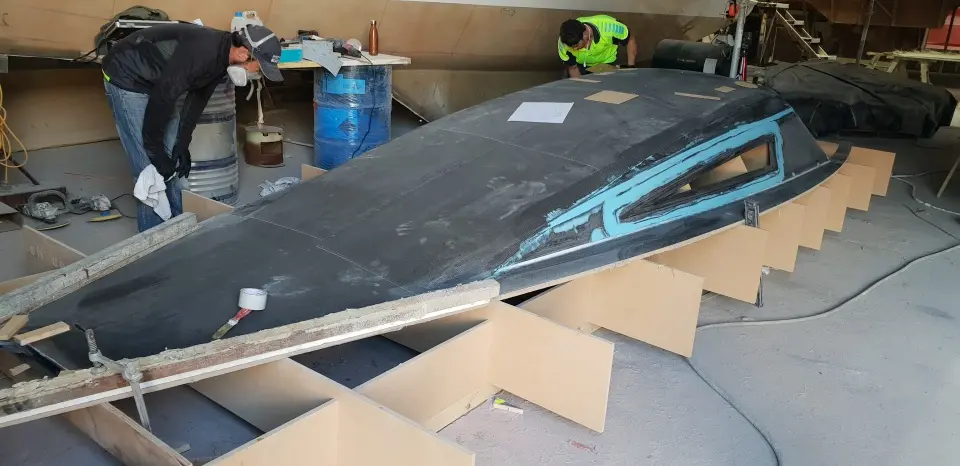
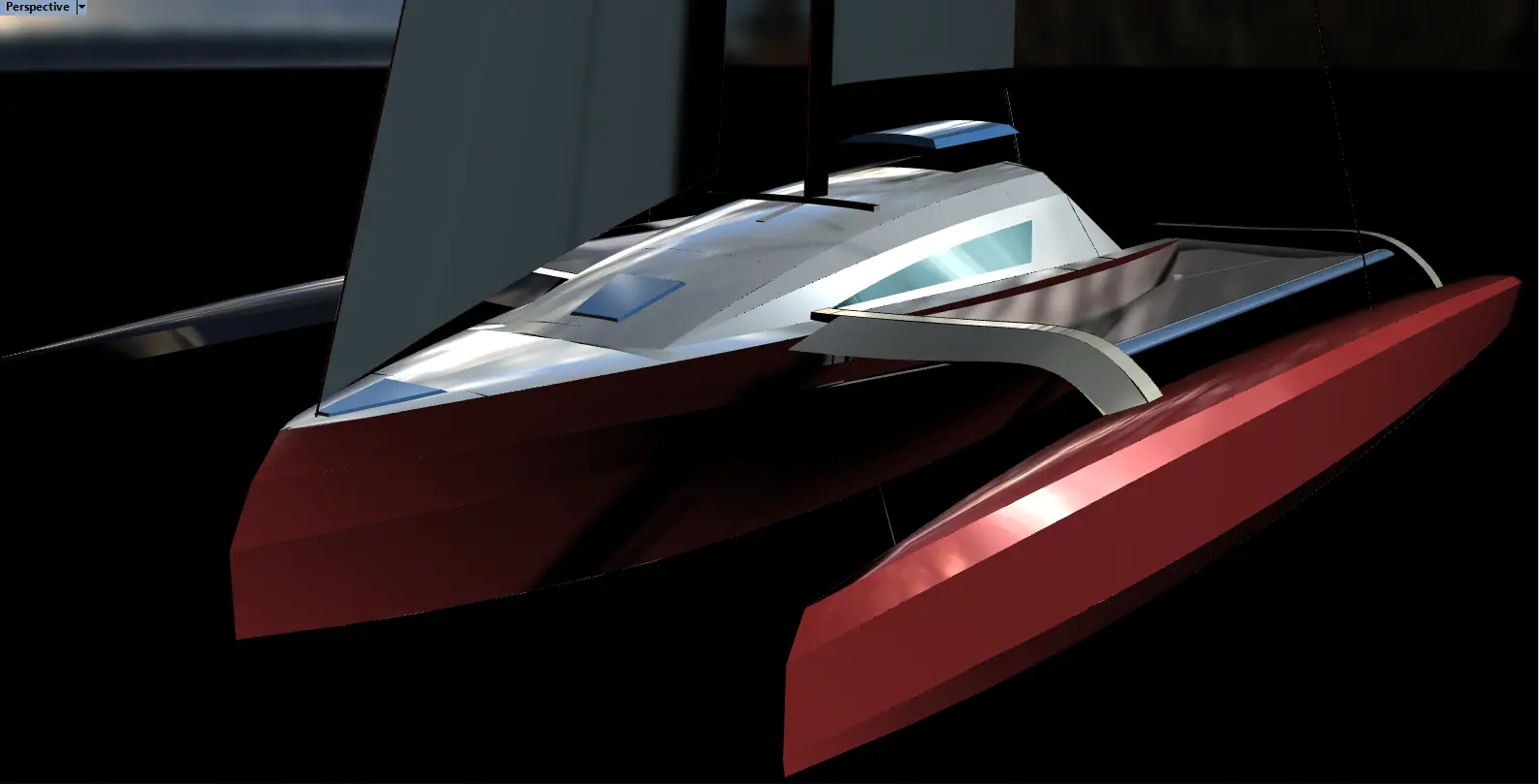
Wayne Barrett has been building boats for 50 years, many of them world renowned. His latest venture is a DIY trimaran kit that embodies his half-century of expertise and celebrates “the joy of building and sailing your own creation”.
| LOA | 7.9 m |
| Beam | 5.85 m |
| Draught Hull only | 0.360 |
| Draught Board Down | 1.475 m |
| Displacement | 1320 kgs |
| Sail Area | 27.75m2 |
| Self Tacking Jib | 15.1m2 |
| Lightwave Yachts | www.lightwaveyachts.com |
| M-Series Trimaran | www.trimarankit.com |
The versatile M80 can be speced for cruising or racing and the larger 9-metre design will have a range enough to sail across the Atlantic. The concept arose from Barrett’s belief that sailing should be within everybody’s reach. The main attributes of the design that have such broad appeal are its simplicity and economical package.
“I’ve built quite a few complicated, high-performance multihulls over the years and I’m aware they consume time that’s way beyond what an amateur could devote to a build. I used the The DuFLEX flat panel concept, adapted to tri design and put it out there for amateur or professional builders”
Getting started is straightforward, according to Barrett. “People buy the plans, complete with DXF files and they can have all the flat components cut out with CNC or jigsaw by hand”.
For the M80 currently in build at Lightwave Yachts, on Queensland’s Gold Coast, the main shell structure, fore and side decks, and cabin sides were built with DuFLEX/foam panels cored with Divinycell H80 structural foam in a variety of thicknesses and reinforced with double bias E-Fibreglass skins.
The cabin top and floats were strip planked with DuFLEX H80 strips with a 450grm uni-directional on either side to achieve the compound shapes and then reinforced with additional laminates to complete the structure.
The project incorporated carbon fibre and E-fibreglass reinforcement, supplied by ATL, to provide stiffness and to achieve the weight specification for the project.
High performance KINETIX R246TX, a thixotropic epoxy, was used to laminate these reinforcements and WEST SYSTEM R105 and H206 was used for all bonding and coving, combined with WEST SYSTEM 413 Microfibre Blend and 411 Microsphere Blend powder modifiers to alter the consistency for the specific applications.
The M80 was faired with ATL’s unique Technifill XP which is a pre-filled epoxy fairing compound that is ultra lightweight and very easy to sand.
Getting started is straightforward, according to Barrett. “People buy the plans, complete with DXF files and they can have all the flat components cut out with CNC or jigsaw by hand”.
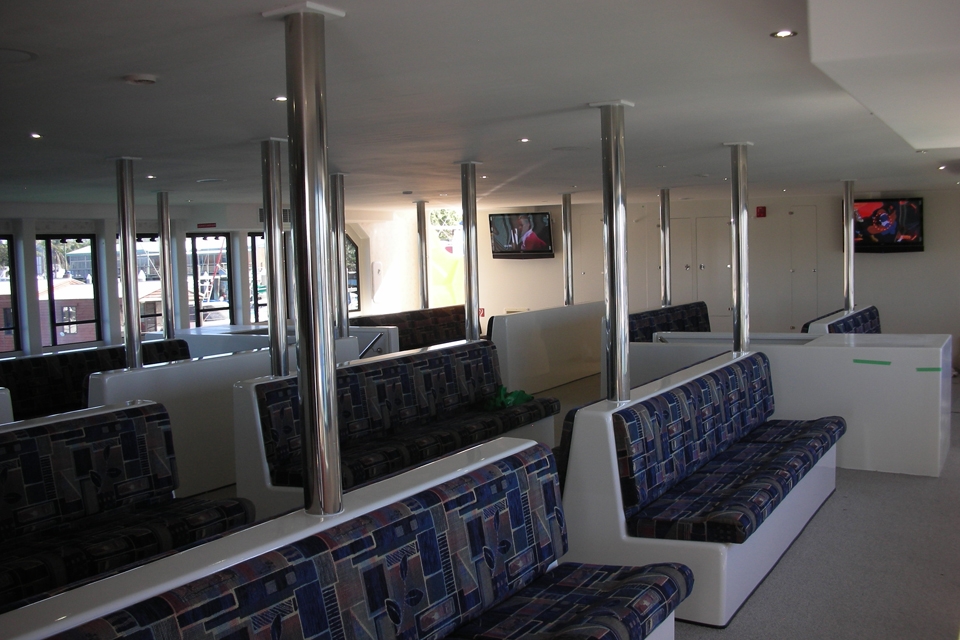
Built by Lloyd Powell and Kate Tarrant of The Cat Factory in Fremantle, the luxury 14m sport fishing catamaran Affinity II was built from a DuFLEX / AIREX Structural Foam Kit over a 20 month period with an ‘out of shed’ weight of 11 tonnes which, even when loaded with fuel, water, payload and passengers, was well under the original design weight.
| LOA | 14m |
| Beam | 4.85m |
| Fuel | 2000L |
| Water | 1000L |
| Engines | 2 x 300hp |
| Speed | 24 knots |
| Noah Thompson Design | www.noahthompsondesign.com |
| The Cat Factory | www.catfactory.com.au |
Designed by Noah Thompson Designs in New Zealand, the boat was commissioned by a local Perth gentleman with a passion for fishing. The design brief called for a fuel efficient vessel of the same size and weight of his current monohull. A lengthy study of hull shapes with POD drive engine packages was conducted and a custom design, with planing hull and the Volvo IPS-400 inboard Performance System was decided on to tick all the required boxes. The design brief called for a fuel efficient vessel of the same size and weight of his current monohull. A lengthy study of hull shapes with POD drive engine packages was conducted and a custom design, with planing hull and the Volvo IPS-400 inboard Performance System was decided on to tick all the required boxes.
Because of previous experience and construction success, Noah based the design for construction with ATL Composites lightweight DuFLEX panels with a structural foam core. The design was transformed into a DuFLEX Kitset and the panels were manufactured by ATL, CNC routed into kit form, including all structural and interior parts cored with a variety of densities to optimise the engineering and performance in specific areas, and shipped to The Cat Factory for construction.
DuFLEX construction significantly reduced the weight of the vessel, addressing the need to reduce fuel consumption without sacrificing comfort or performance.
Additional reinforcements and taping were laminated with ATL’s high performance KINETIX Laminating resins and all bonding, filleting and fairing were completed with WEST SYSTEM resin and hardeners with a combination of WEST SYSTEM powder modifiers as required.
WEST SYSTEM 410 Microlight fairing compound is 30% lighter and less porous than other fairing compounds on the market, and 035 easier to fair than phenolic microballoons.
‘It’s not often you see a vessel with a paint job so finely detailed that you can see the ocean relection in it. For anyone who has bogged and faired a boat will tell you it is a labour of love to get perfection.’ Noah Thompson – Designer
The design layout was developed closely with the owners who had owned large boats in the past. The idea was to keep the cabins as large as possible with full head room, large doors, plenty of light, and stowage under the floor. The main cabin is open plan with the galley opening onto the aft deck for ease of cooking and serving. The lounge and adjoining seat offer a relaxing space. The owner requested that the fly-bridge accessed from inside the cabin which works well for security. Interior components were supplied as a DuFLEX/Foam Kit with a 10mm foam core reinforced with a 600grm quadraxial laminate.
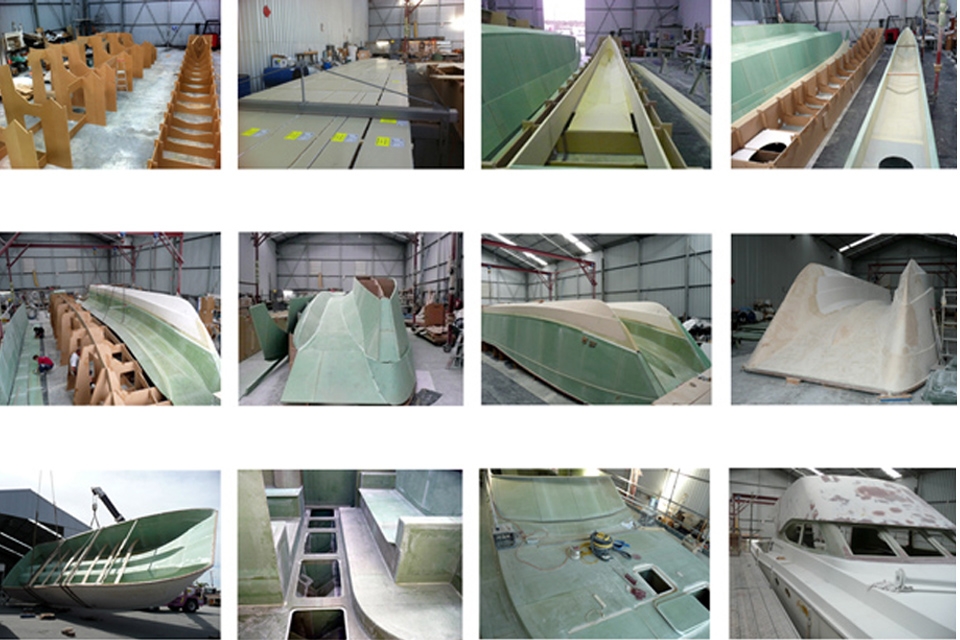
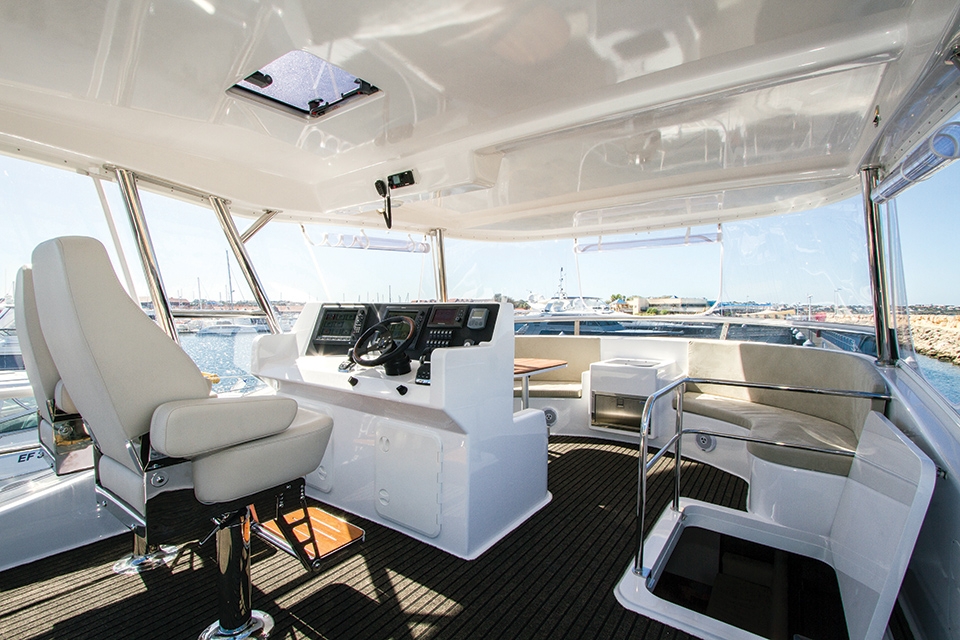
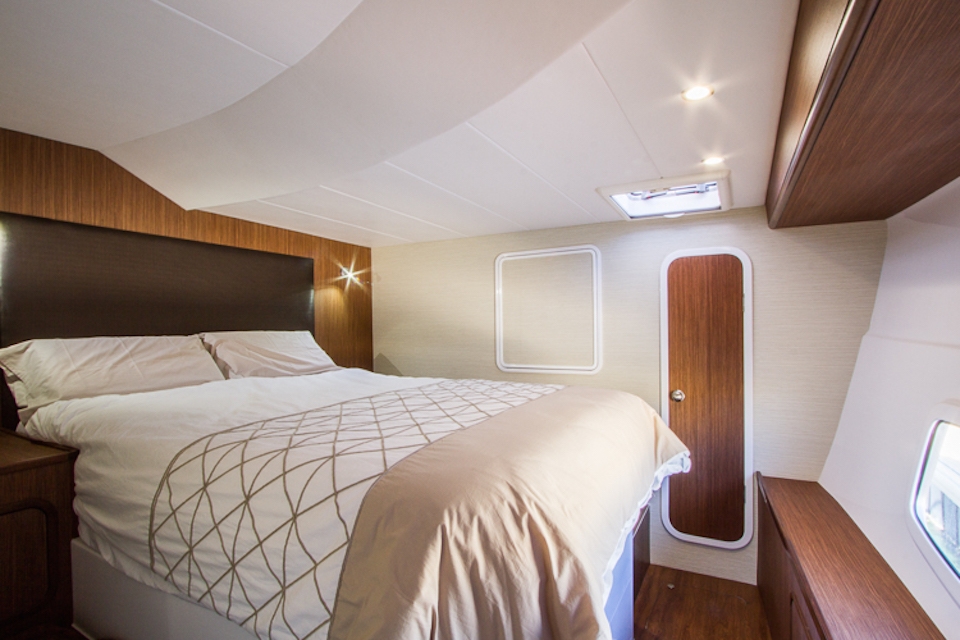
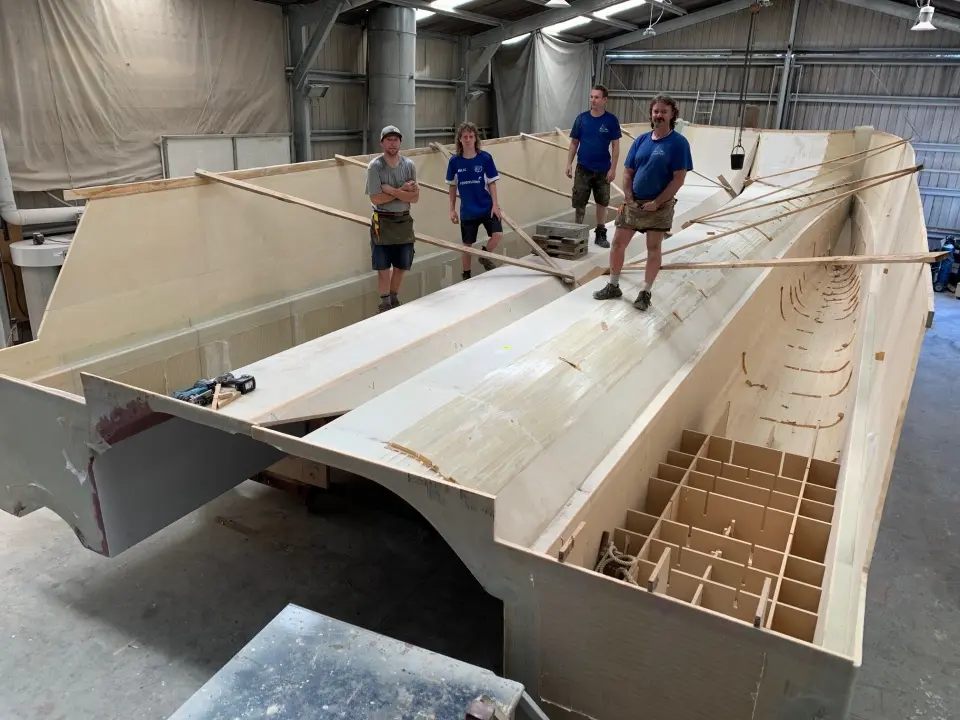
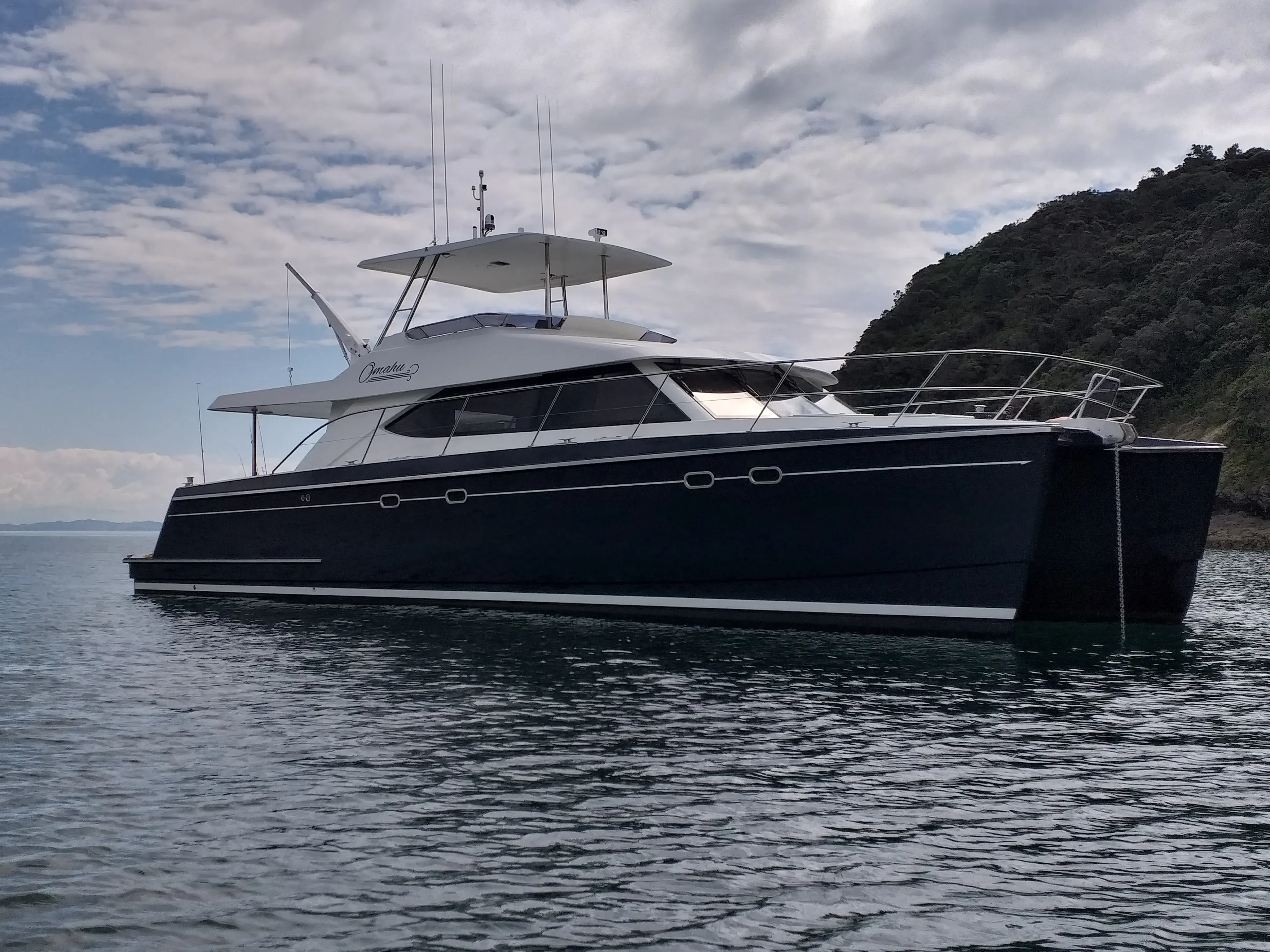
Omahu, designed and built by Roger Hill and built at Lifestyle Yachts in Pipiroa, New Zealand.
| LOA | 16 m |
| LWL | 15.36 m |
| Beam | 5.6 m |
| Draught | 1.09 m |
| Displacement | 20,205 kgs |
| Speed | 26 knots |
| Engines | Yanmar 6LY400 400hp |
| Lifestyle Yachts | www.lifestyle-yachts.co.nz |
| Roger Hill Yacht Design | www.powercatsnz.com |
New Zealand multihull designer Roger Hill designed this long-range displacement power cat for an existing client, whose previous boat was a Roger Hill sailing cat. The client is now ready for some long range adventures around the bottom of the South Island of New Zealand in the Summer and cruising around the Pacific islands during the Winter.
The accent is on comfort rather than speed and plenty of space for two couples to live aboard along with all of the equipment and storage required for long trips in remote places with no easy access to fuel, water, and food.
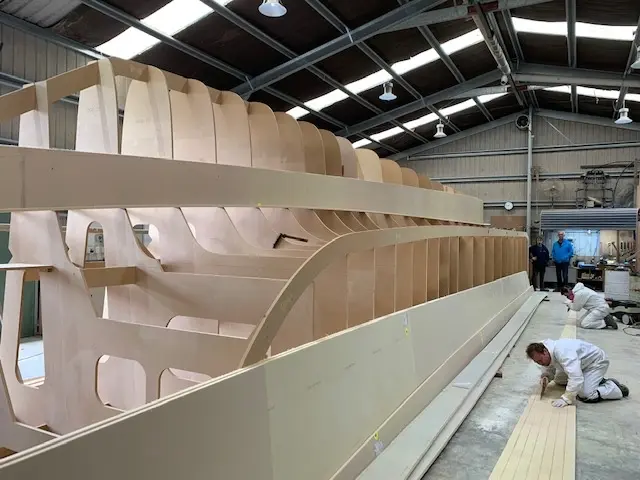
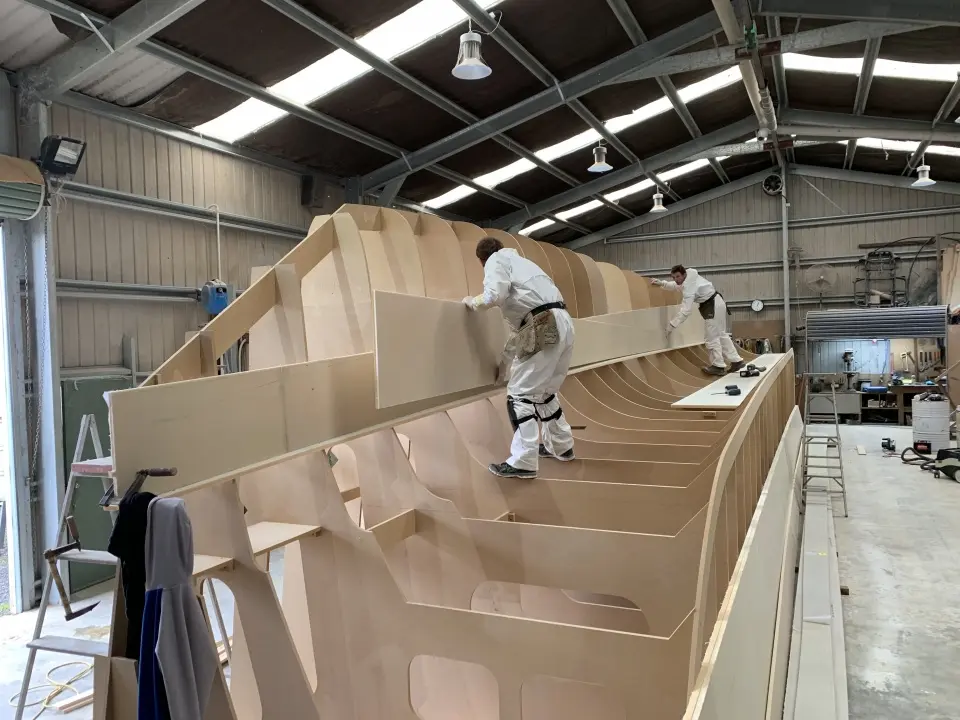
Because of previous experience and construction success, Roger based the design for construction with DuFLEX Composite panels and construction began this month at Lifestyle Yachts in Pipiroa, New Zealand.
The owners of Omahu decided on a dark blue hull which dictated the choice of foam core to be used in the hull and transom areas. A combination of Divinycell HP80 and HP100 foam cores in 20mm were chosen for the DuFLEX Strip Planks used for these areas to provide elevated temperature performance under the dark blue paint and offering high properties in all significant areas including mechanical performance, elongation to break, adhesion/peel strength, fracture toughness and dimensional stability. Divinycell HP is type approved by DNV-GL Maritime.
The panels were laminated with a high temperature laminating resin with an 800grm unidirectional E-Fibreglass and scarfed on the shorter edges of the panels to facilitate joining to panels to the full length of the hulls and the DuFLEX Z-Press was shipped with the panels to New Zealand.
Other DuFLEX Composite Panels components in the first shipment included wingdeck, soles, girders, webs, bulkheads and longitudinal all supplied in CNC-Routed Kit Form with various core types and densities – from H100 in 25mm and 30mm laminated with an 800grm unidirectional for strip planking the wing-deck sections, to 25mm H80 with 2 layers of 600grm or 800grm double bias on either side for the bulkheads – that were engineered to suit the design loads in the vessel. ATL also manufactured the CNC-routed MDF Build Jig for the project and each panel type, including the jig, was supplied with a CNC nesting and joining booklet to aid in the assembly process.
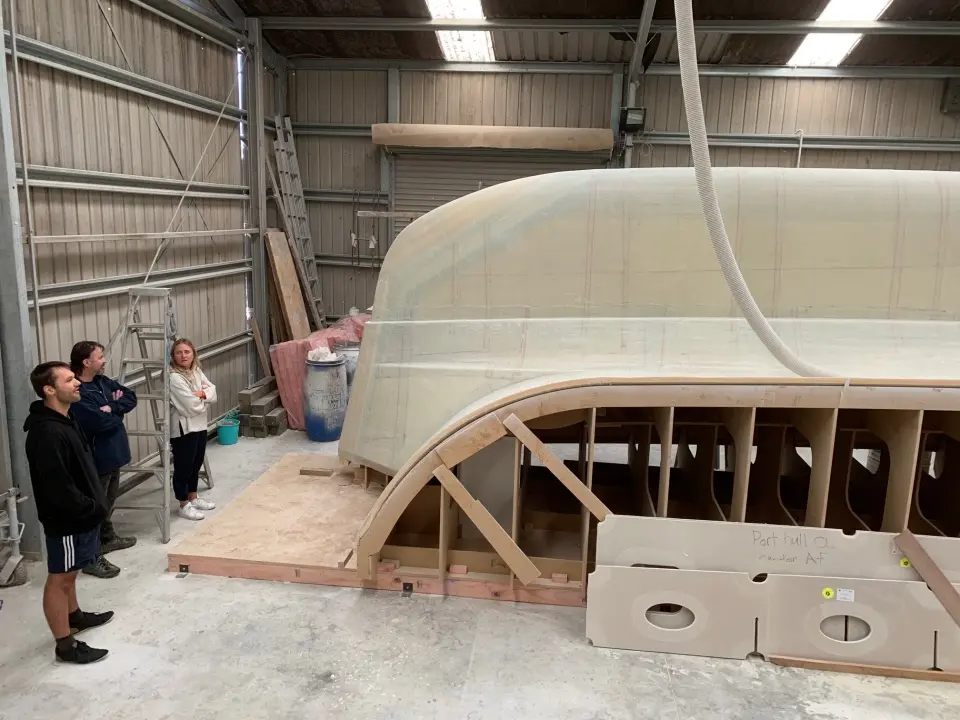
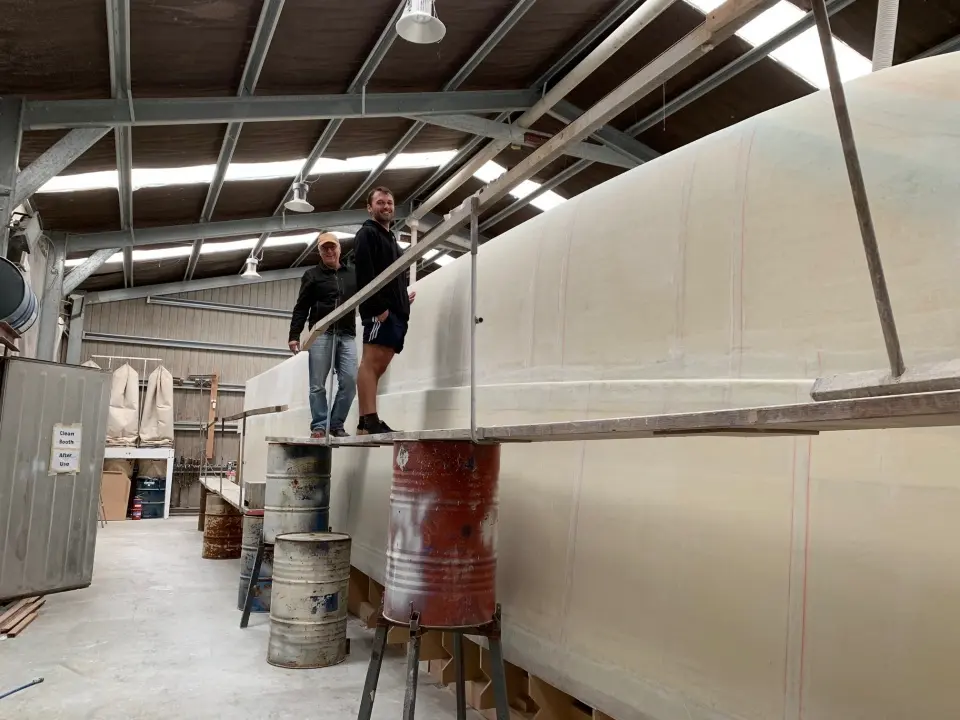
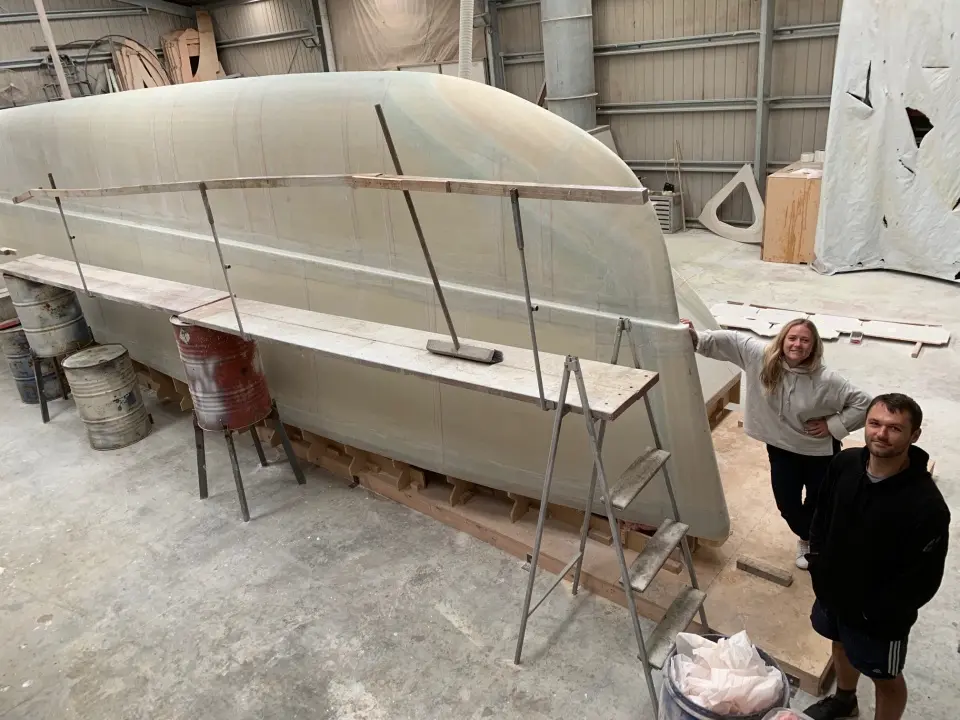
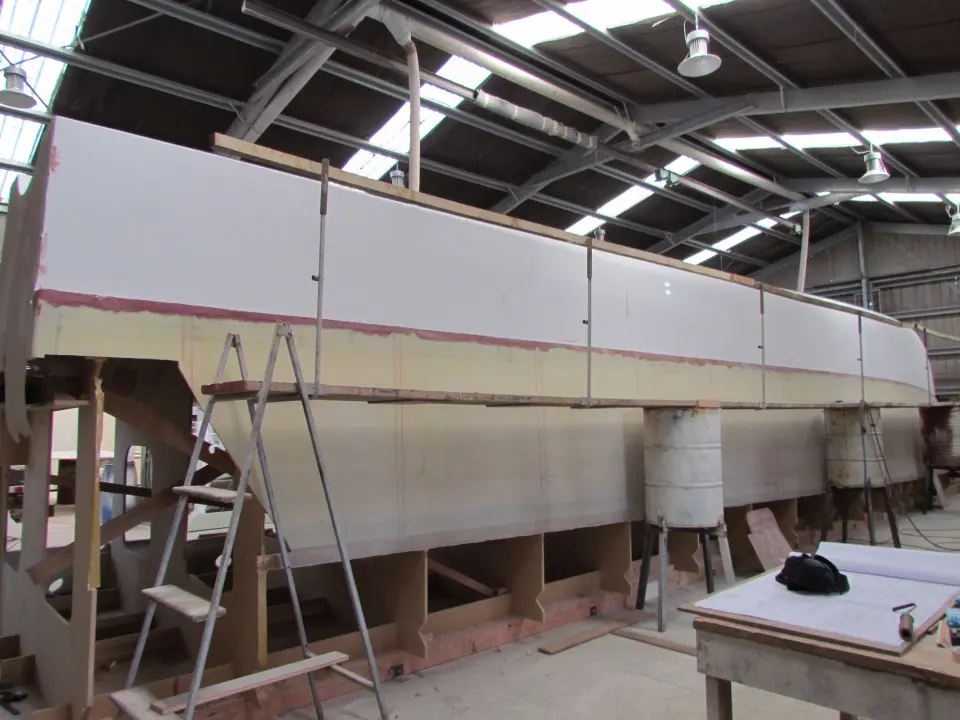
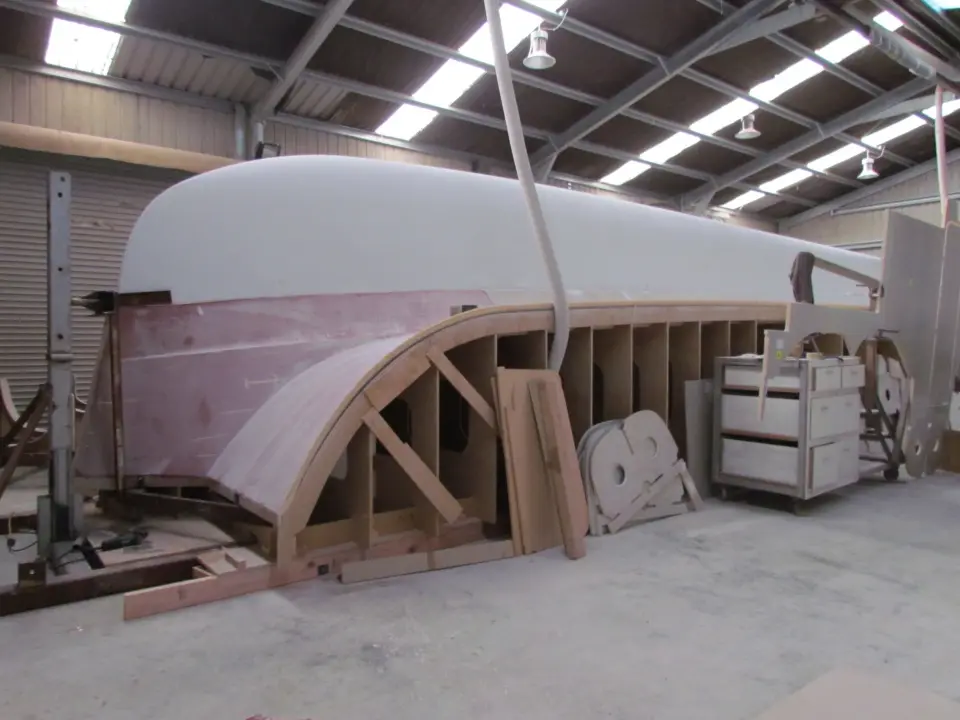
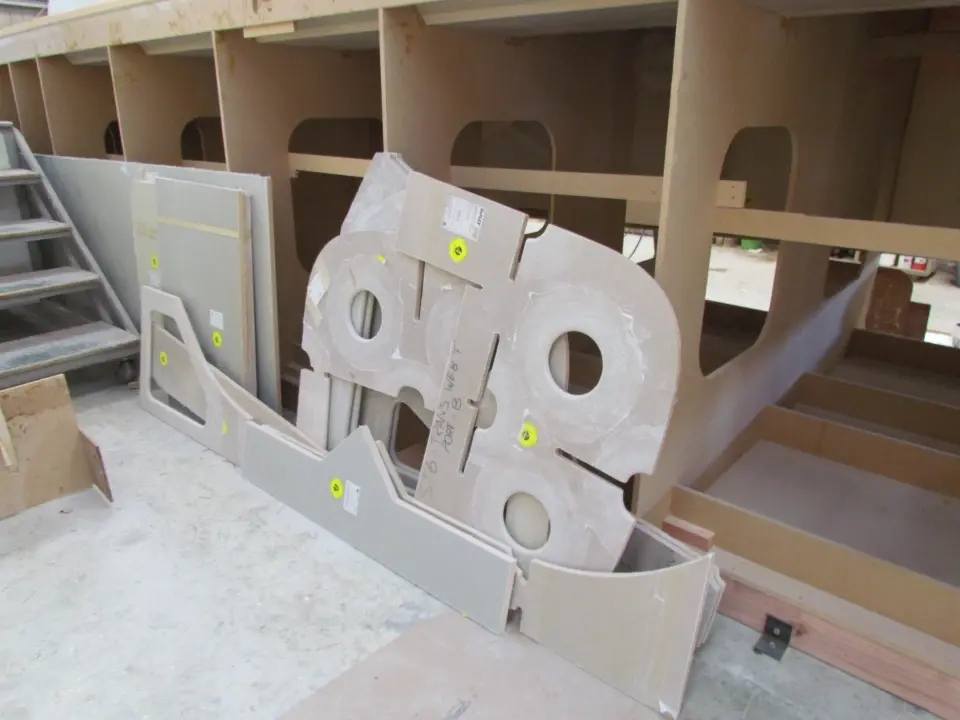
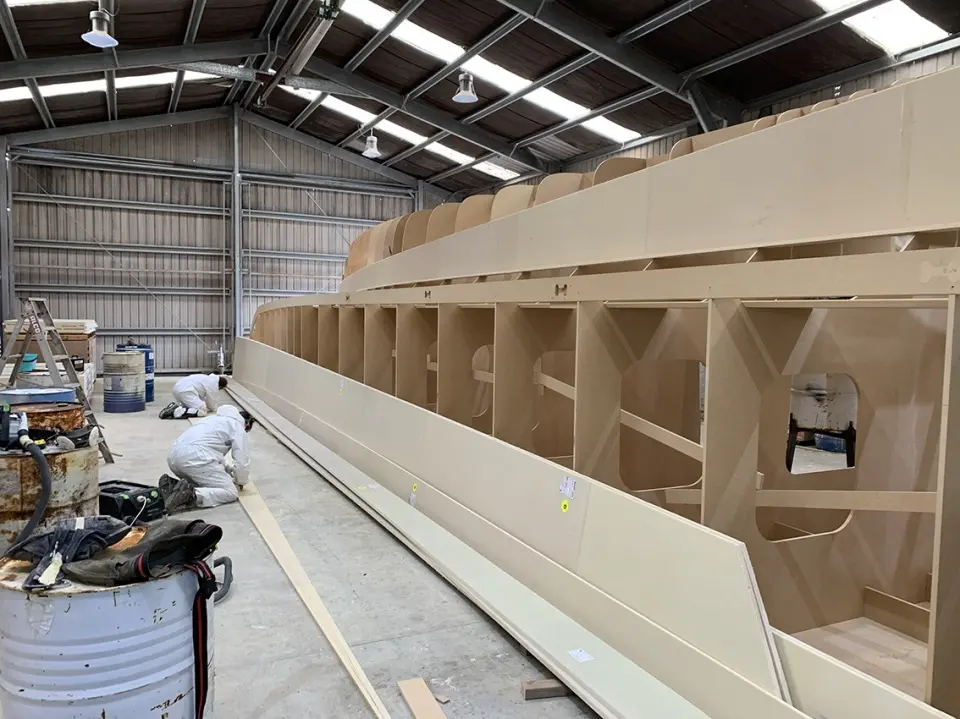
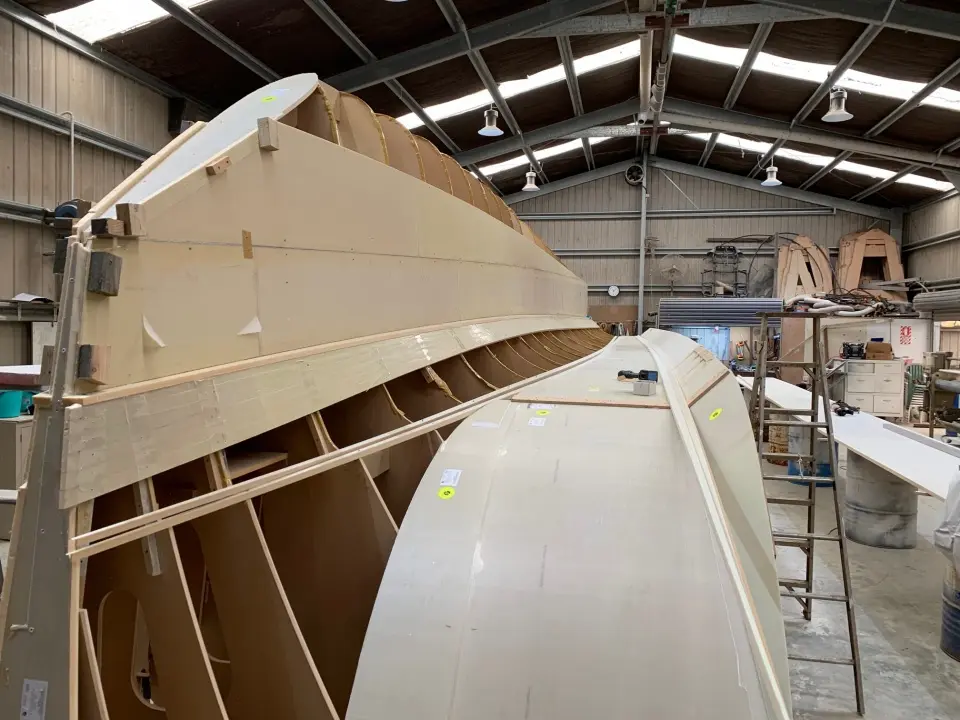
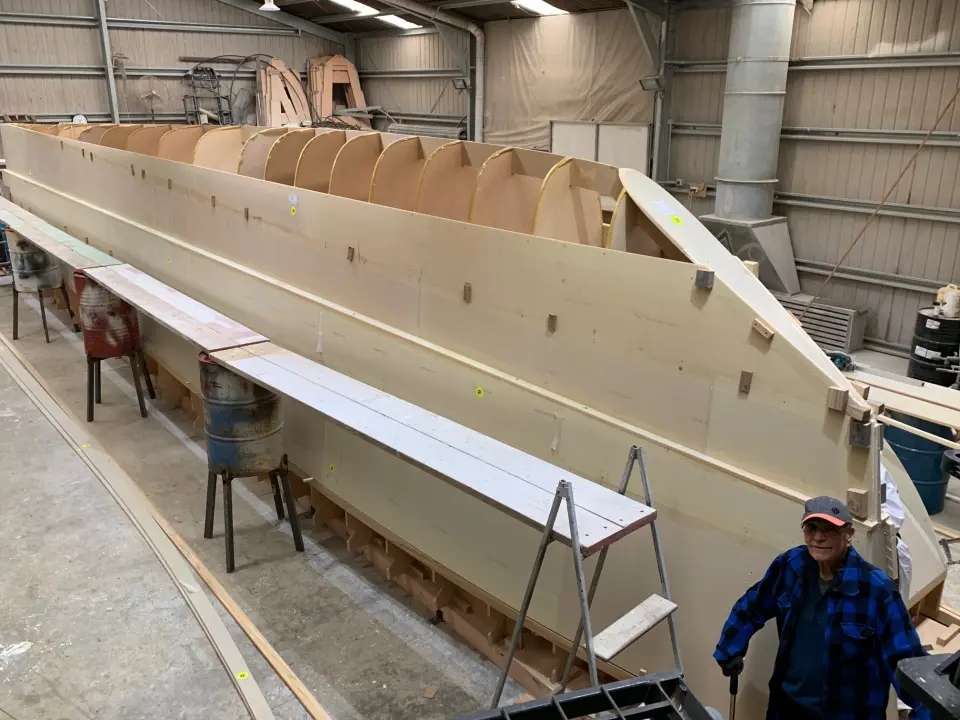
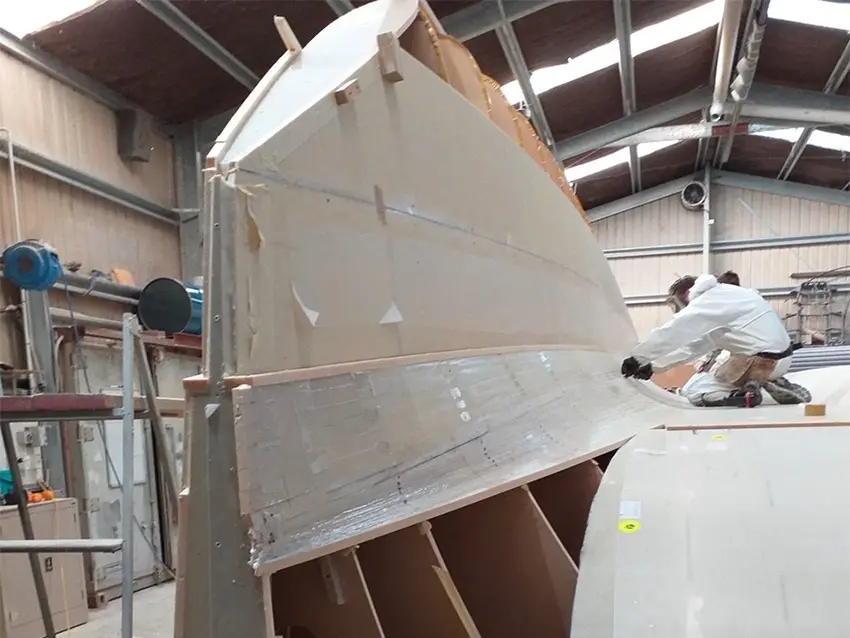
Work has begun on a wooden boat project uniting modern construction and traditional methods and aiming to showcase the enduring appeal and relevance of the Shipwright.
“The aim is to introduce a world class shipwright training program back into The Wooden Boat Centre,” said Paul D’Olier, Operations Manager.
| LOA | 8.95 m |
| LWL | 8.76 m |
| Beam | 2.52 m |
| Draft | 0.71 m |
| Displacement | 4,100 kgs ( SW) |
| Cruise Speed | 17 knots |
| Engine | 100 hp low emission diesel |
| The Wooden Boat Centre | www.woodenboatcentre.com |
| Wolstenholme Yacht Design | www.wolstenholmedesign.com |
The Franklin 29 provides a heritage-looking boat that fits the image of The Wooden Boat Centre as a traditional boat builder, featuring a modern finish and low maintenance. The unique appeal of this vessel is the blend of traditional looks, modern convenience and beautiful Tasmanian timbers. It’s an excellent platform for the major portion of the new course, as it provides training opportunities in the full gamut of skills.
Disciplines involved will include modern construction strip plank methods including CNC cut moulds and bulkheads; introduction to modern adhesives and fillers used in strip plank construction; vacuum bag sheathing processes; Dynel deck sheathing; composite bulkhead materials; laid deck installation; interior fit out and mechanical and electrical fit out.
The Wooden Boat Centre will build in a variety of both traditional and modern boat construction methods as Course content needs to be consistent year on year. Traditional construction components were easy with our small clinker and carvel boats that are a staple for us.
ATL Composites, in conjunction with their local distributors Tasmanian Marine Distributors, have been working closely with The Wooden Boat Centre over the last couple of months, providing recommendations on materials and construction techniques for the Franklin 29 project.
The 29 will feature a strip-planked hull made from Western Red Cedar, laid decks of Celery Top Pine, Huon pine on the transom and fitout with other Tasmanian native timbers.
WEST SYSTEM 105 epoxy and 206 Slow hardener have been specified as the base system and in particular WEST SYSTEM 105 and 207 Special Clear hardener combination will be used for all clear timber finishes on the project. The 105/207 combination has an ultraviolet inhibiting additive that will ensure an exceptionally clear, moisture resistant, timber finish and improved UV protection.
A mix of WEST SYSTEM Fillers, each possessing unique handling and performance, have been recommended to The Wooden Boat Centre to alter the consistency of the WEST SYSTEM resin and hardener, including the 413 Microfibre Blend for structural bonding and scarfing and 411 Microsphere Blend for edge-gluing the timber planks and non-structural filleting and filling, as well as 417 Low Density Filler for the fairing system under the proposed dark blue hull.
KINETIX R246TX thixotropic laminating resin will be used to extend the working time for laminating the hull and larger areas of the Franklin. Mac Dalton, from ATL, will be supporting The Wooden Boat Centre with technical advice during this process, and also offering expert techniques for the construction for smaller parts, that are intended to be used for some basic training of the students, on vacuum bagging.
Construction has begun on the Franklin 29. The project is on track for delivery ahead of the 2021 Wooden Boat Festival, 5 to 8 February, where it will be on display.
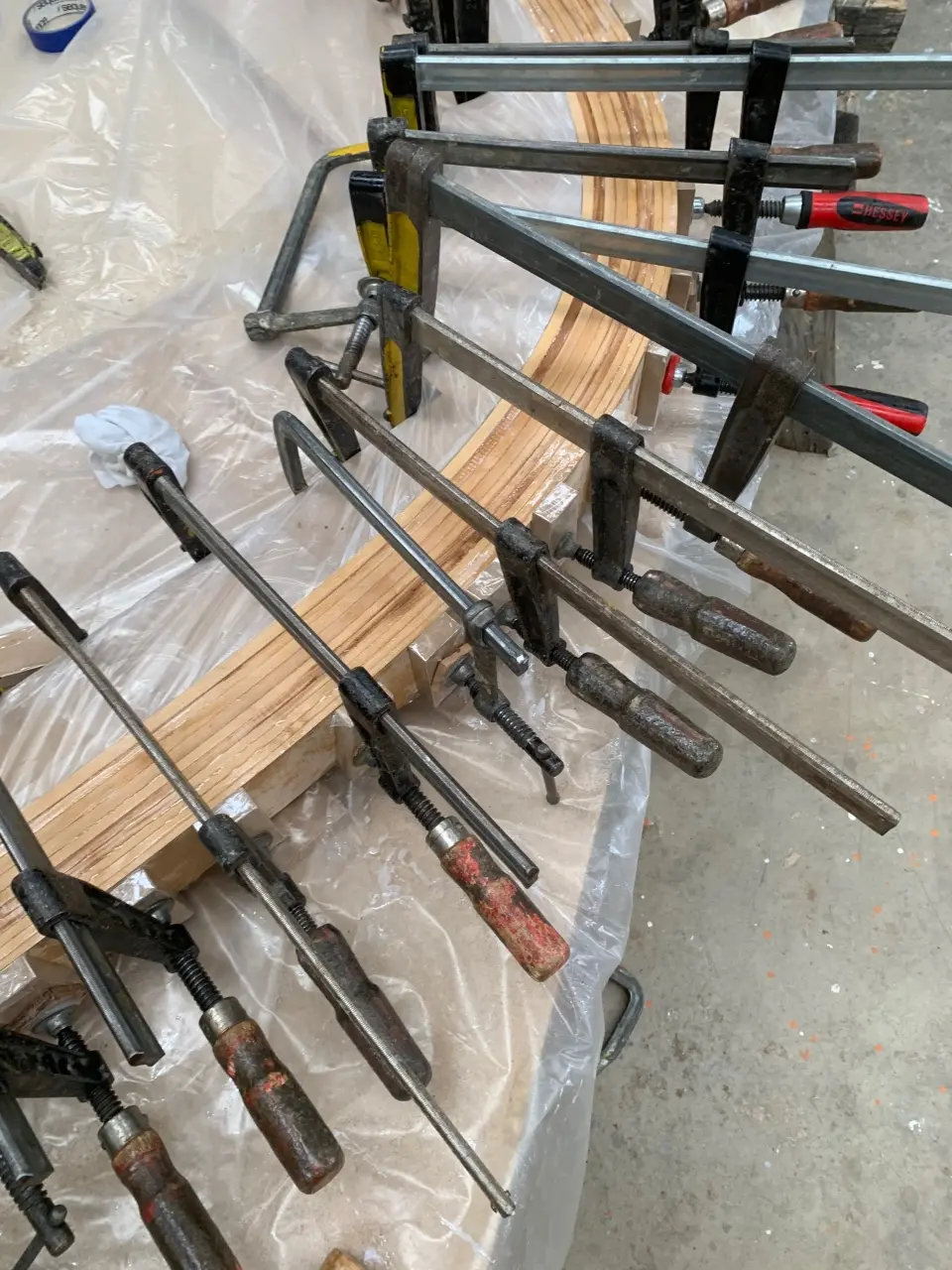
As of mid-May, the temporary hull molds have been completed and set up on the strong back, stem laminates have been shaped and steamed and hul planking will be the next step.
Select your desired option below to share a direct link to this page.
Your friends or family will thank you later.