





Structural Composite Panels in Modern Engineering
The Evolution of Structural Sandwich Panels by ATL Composites
Across construction, transport, defence, industrial manufacturing, and modular building, the use of structural composite panels is rapidly expanding. Engineers and specifiers are increasingly replacing traditional materials such as steel, aluminium, and timber with structural sandwich panels that deliver superior strength-to-weight efficiency, corrosion resistance, and long-term durability.
As performance expectations increase across demanding environments, advanced composite structures are becoming a foundational engineering material.
ATL Composites is an Australian manufacturer specialising in structural composite engineering, proprietary epoxy resin formulation, and integrated composite manufacturing systems. For decades, ATL has partnered with engineers, designers, and fabricators to develop lightweight structural solutions designed not only for weight reduction — but for total structural optimisation.
What Are Structural Composite Panels?
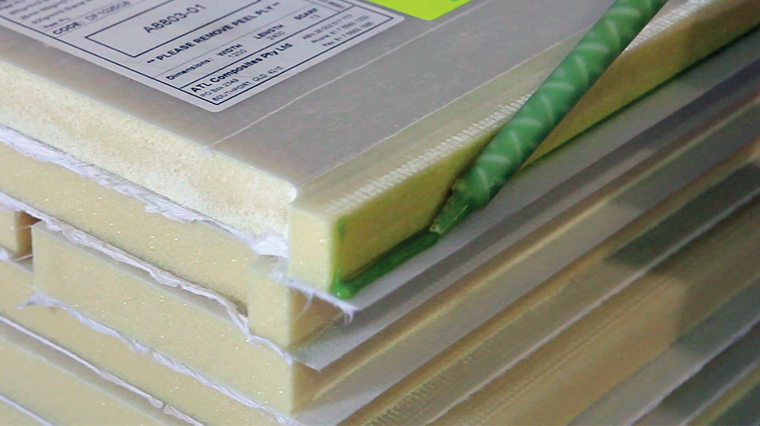
Structural composite panels — often referred to as sandwich panels — consist of high-strength fibre-reinforced laminate skins bonded to a lightweight structural core. This configuration creates exceptional stiffness, load-bearing capability, and span performance while significantly reducing overall weight.
Compared to traditional substrates, structural sandwich panels offer:
- Higher strength-to-weight ratios
- Improved fatigue performance
- Corrosion and moisture resistance
- Dimensional stability
- Reduced lifecycle maintenance
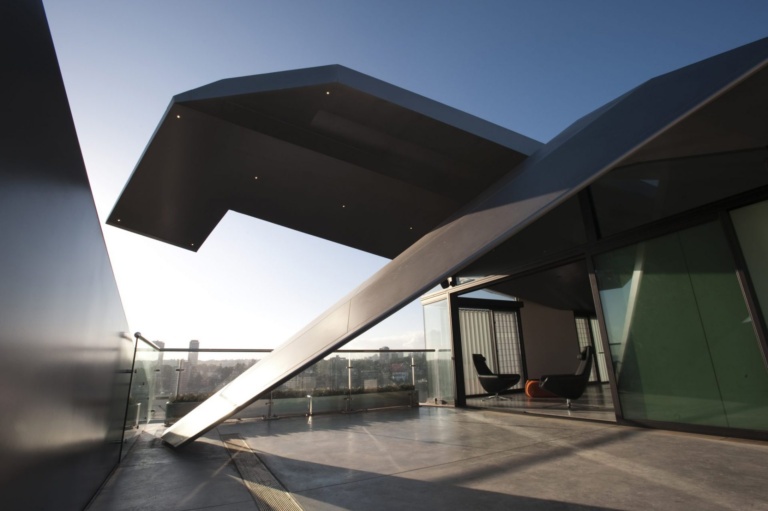
These characteristics make composite panels increasingly attractive for transport, infrastructure, architectural, and defence applications.
DuFLEX® Structural Sandwich Panels
At the centre of ATL’s structural capabilities is DuFLEX® Structural Panels — engineered composite sandwich panels manufactured within ATL’s fully integrated composite ecosystem.
DuFLEX® panels combine:
- ATL-formulated KINETIX® structural epoxy systems
- ATL-formulated TECHNIGLUE® structural adhesives
- Engineered structural foam cores
- High-strength E-glass reinforcements
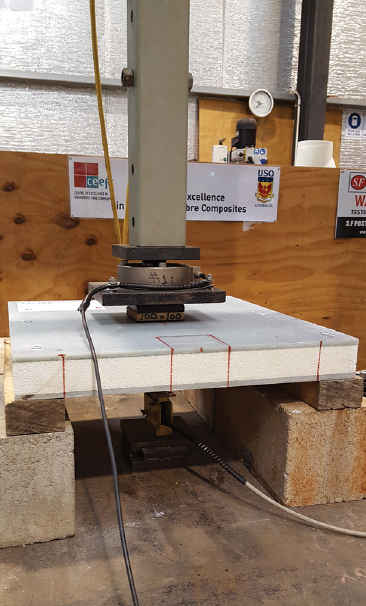
Using proprietary controlled-pressure consolidation processes, ATL produces lightweight structural laminates engineered for stiffness, span capability, and load performance consistency.
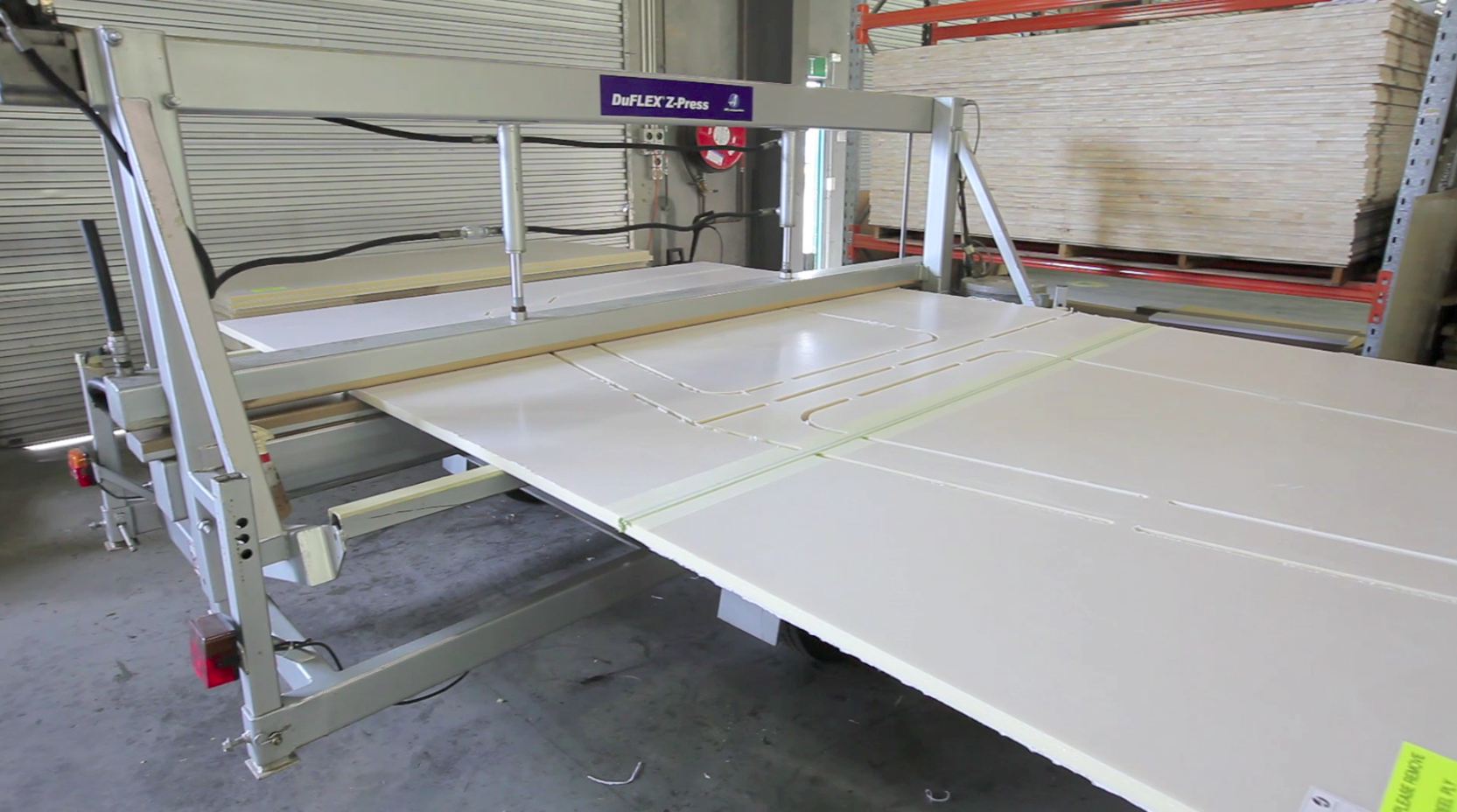
Each panel features dual press-finished faces, providing structural consolidation and high-quality surface finish on both sides — supporting both exposed architectural applications and fabrication efficiency.
DuFLEX® panels are not commodity laminates.
They are engineered structural systems.
Integrated Composite Manufacturing — Why Vertical Integration Matters
A defining advantage of ATL’s structural composite panels lies in vertical integration.
ATL formulates and manufactures its own structural epoxy systems in Australia. This provides complete control over:
- Fibre wet-out and resin flow dynamics
- Laminate consolidation and void reduction
- Cure kinetics and thermal stability
- Mechanical strength and fatigue performance
Unlike manufacturers reliant on third-party resin suppliers, ATL can tailor resin chemistry to suit specific engineered requirements — optimising laminate performance from formulation through to finished panel.
All systems follow a strong solvent-free philosophy, supporting safer processing environments and reduced emissions without compromising structural integrity.
From resin formulation through to finished structural sandwich panel, DuFLEX® is engineered — not assembled from disconnected supply chains.

Applications of Structural Composite Panels
ATL structural composite panels are specified across demanding environments where weight efficiency, structural performance, and long-term durability are critical, including:
- Transport flooring and structural enclosures
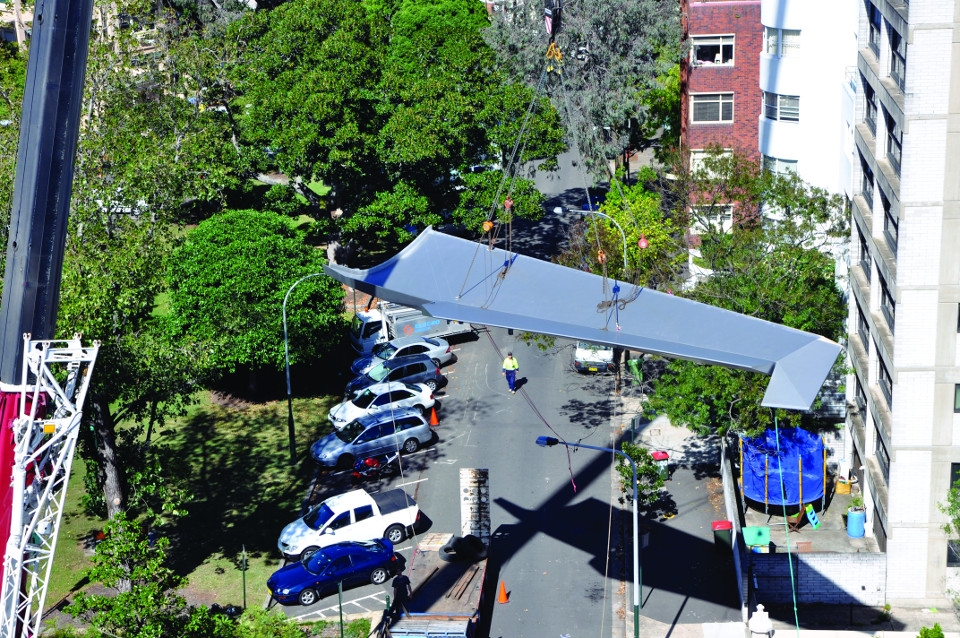
- Architectural balconies and walkways
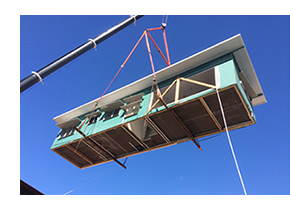
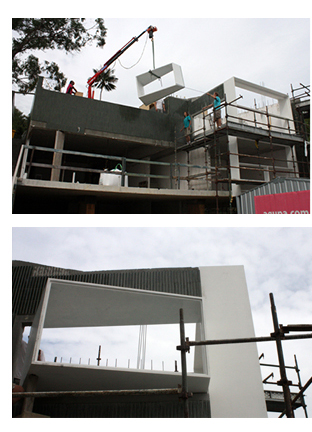
- Modular and prefabricated buildings
- Defence and infrastructure platforms
- Industrial access systems and load-bearing structures
- Unmanned aerial vehicles (UAVs) and drone structures
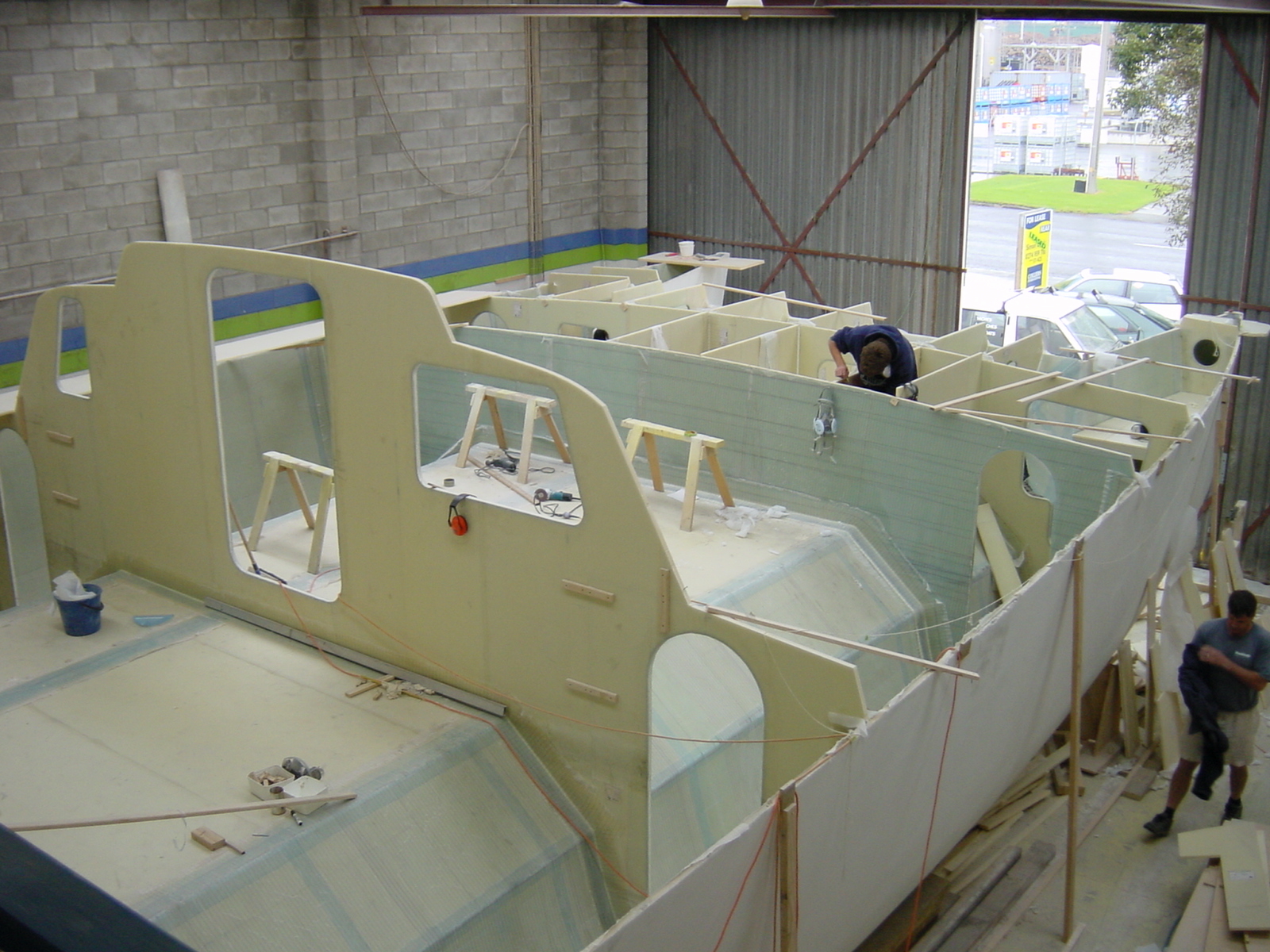
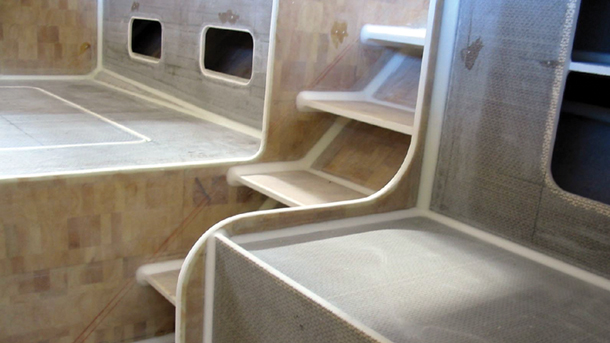
- Marine hulls, superstructures, and full composite boat builds
- Underwater and submersible vessel components
In these applications, structural sandwich panels are selected not only for weight reduction, but for corrosion resistance, fatigue performance, dimensional stability, and extended service life in both atmospheric and submerged environments.
From lightweight aerial platforms to high-load marine structures, advanced structural composite panels provide predictable mechanical performance while supporting efficient fabrication and lifecycle durability.
Precision Manufacturing for Predictable Structural Performance
ATL’s controlled-pressure consolidation processes deliver panel-to-panel uniformity and exceptional dimensional stability.
Fabrication advantages include:
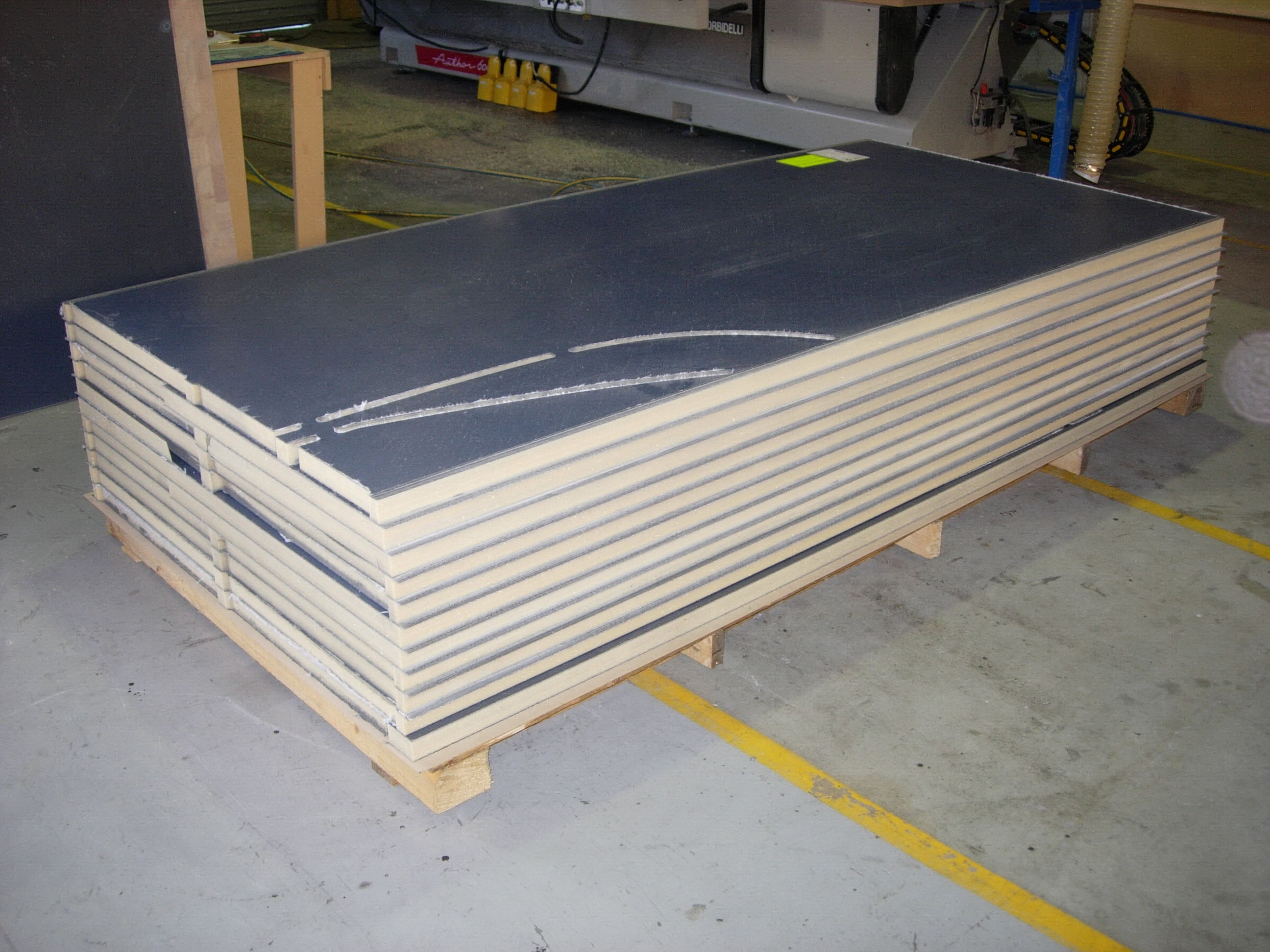
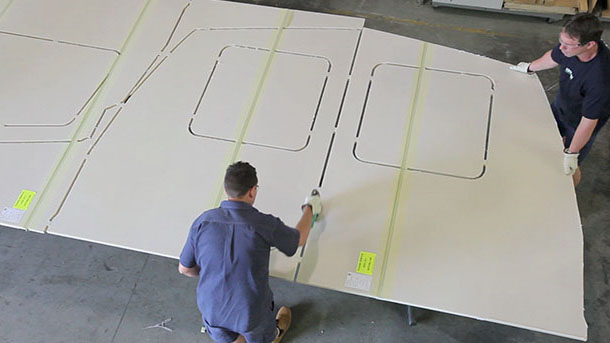
- Dual press-finished laminate faces
- Nesting optimisation for improved material yield
- Integrated peel ply surfaces for simplified secondary bonding
These engineered features improve downstream fabrication efficiency while maintaining structural performance certainty.
Engineering Support Beyond Panel Supply
ATL provides structural engineering insight, laminate specification guidance, and system integration support from concept development through to fabrication.
Rather than supplying standalone materials, ATL delivers integrated structural composite solutions designed for performance, compliance, and long-term reliability
As industries transition toward lighter, stronger, and more durable structural systems, structural composite panels are becoming essential engineering materials.
Through advanced resin formulation, structural laminate design, solvent-free technologies, and controlled manufacturing processes, ATL Composites continues to advance composite engineering across Australia and international markets.
DuFLEX® structural sandwich panels represent one expression of that capability — engineered within a complete composite ecosystem designed to deliver structural certainty and long-term performance.
The Future of Structural Composite Engineering
Advancing Structural Engineering Through Integrated Composite Technology