




Built to Win: Brett Burvill’s long game pays off
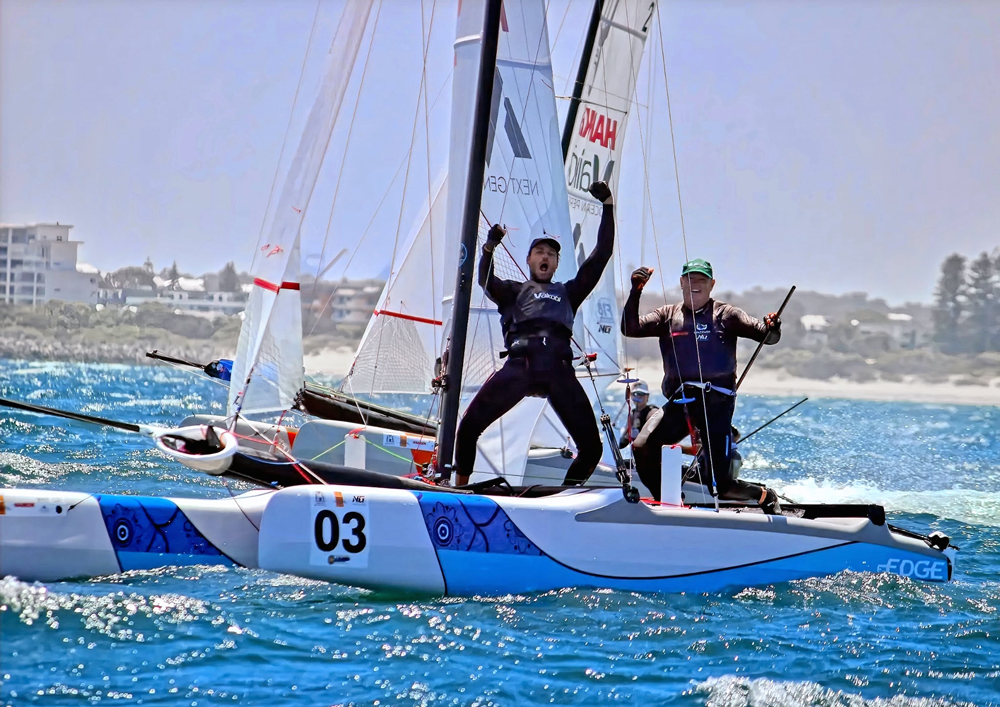
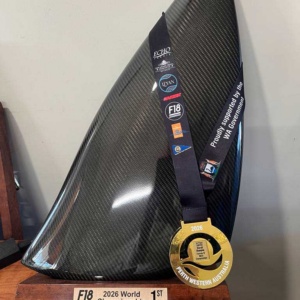
Still feeling the effects of a bout of encephalitis, running on adrenaline and racing against two of the greatest catamaran sailors of all time, Brett Burvill won the 2026 F18 World Championship, a prize he and teammate Max Puttman have long coveted, in a division Burvill has had a lasting impact on.
“We’ve now won nine major titles together,” he reflects, “but this was the one.”
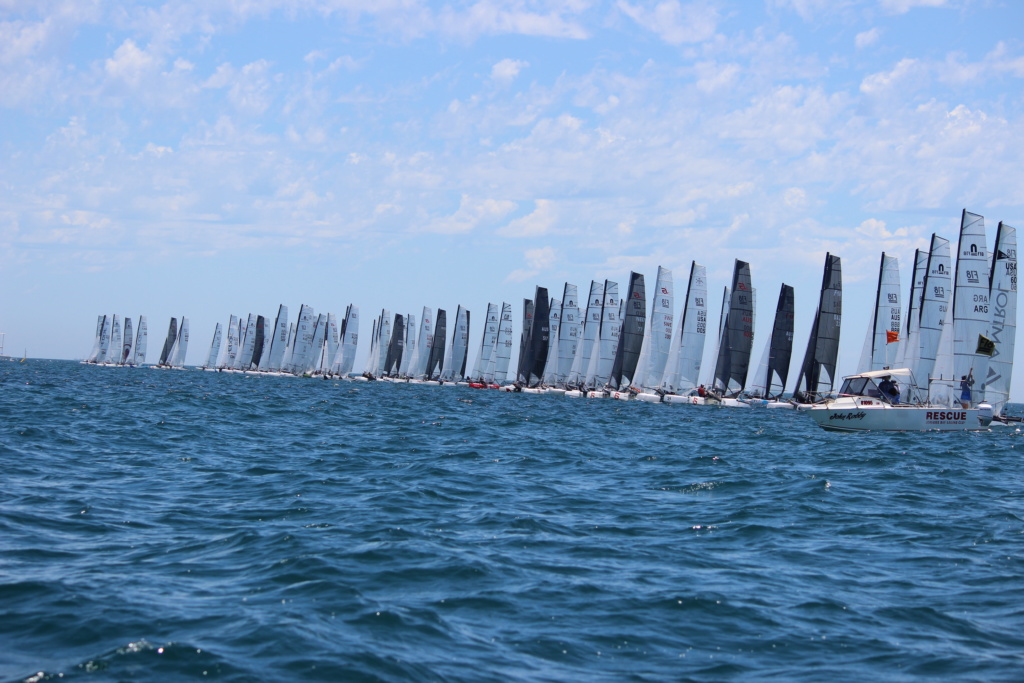
Fresh off the back of victory in the 2026 F18 World Championship (25 January to 3 February) held at the Jervoise Bay Sailing Club in Coogee, Western Australia, Brett Burvill is back in his studio working on the design and construction of composite yachts.
Known widely as “the Godfather of foiling”, Burvill has spent four decades refining the art and science of composite boatbuilding. Recognised for its pioneering design and engineering, his Windrush hydrofoiling moth which helped usher in the era of modern foiling moths is on display next to America’s Cup yacht, Australia II in the WA Maritime Museum in Fremantle,
In February 2026, with longtime crewmate Max Puttman, Burvill claimed a long-awaited world title against rivals Glenn Ashby and Darren Bundock – arguably two of the greatest catamaran sailors of all time.
For Burvill, the win carried particular weight. Despite a career spanning more than 25 years in the Formula 18 class, multiple podium finishes and countless race wins, the world title had remained elusive until now.
The physical toll was immense. Still recovering from encephalitis that struck him down several years ago, Burvill admits the campaign pushed him to his limits. “I was running on adrenaline the whole time,” he says. “Three weeks later, I was completely exhausted.
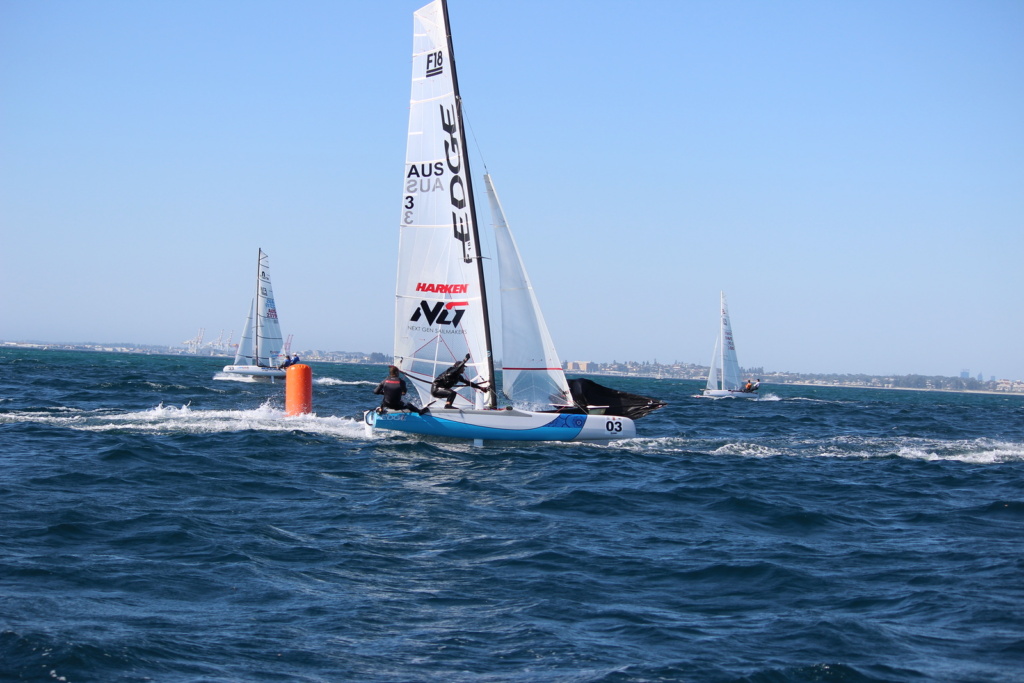
“I’m not as agile or as strong as I used to be,” he says candidly, “but experience, tactics, and seeing every possible scenario before it plays out are my advantage.”
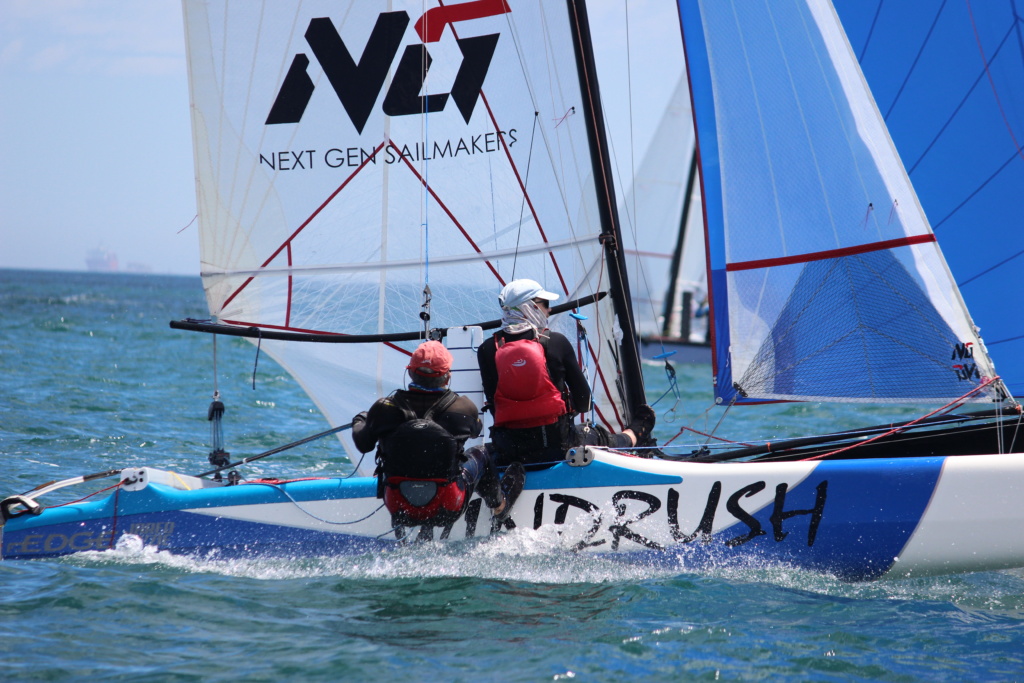
Burvill’s influence on the sport extends far beyond the racecourse. His F-18 Edge design, now around 15 years old, remains a benchmark in the class, with more than 54 boats produced and raced globally.
Every Edge is built using ATL Composites’ KINETIX® epoxy systems, fibreglass fabrics and vacuum-bagging consumables – the same materials Burvill has relied on for decades.
“I build every boat as if it’s for myself,” he says. “ATL products make that possible. They’re reliable and consistent.”
For a builder whose reputation rests on producing some of the strongest, stiffest boats in the class, consistency isn’t a convenience. It’s a requirement.
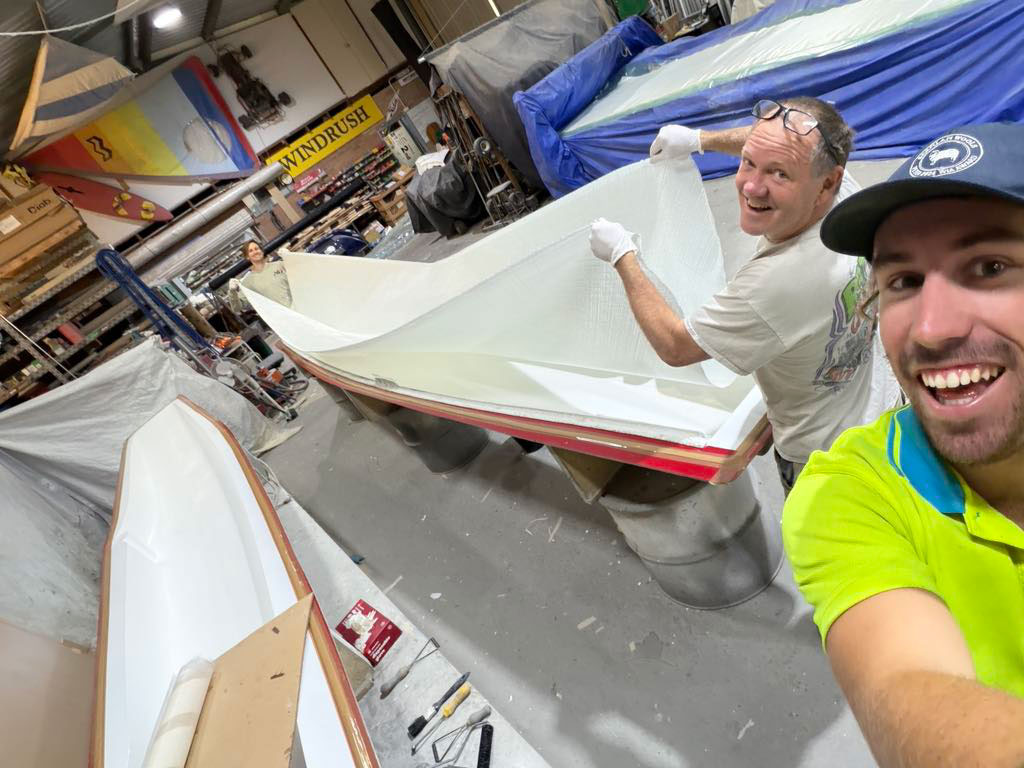
While some manufacturers turn out dozens of boats each year, Windrush typically produces two to four annually. The result is a product widely regarded as one of the strongest and stiffest on the market, favoured by sailors across Australia, Europe and North America.
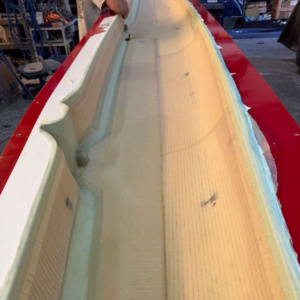
Burvill’s technical curiosity has always set him apart. Long before foiling became mainstream, he was experimenting with the concept in the late 1990s, applying principles he first encountered studying aeronautics in high school.
“I was fascinated by lift, wings and how foils could improve performance,” he recalls.
Working with contacts in the Air Force and leveraging early carbon fibre construction, he developed some of the first competitive hydrofoiling sailing craft.
“At the time, carbon fibre was incredibly expensive,” he continues, “around 20 to 25 times the cost of fibreglass, but we just went ahead and did it. It didn’t seem that hard.”
His experimental Windrush hydrofoiling moth was instrumental in developing the high-speed, hydrofoiling technology now standard in the International Moth class.
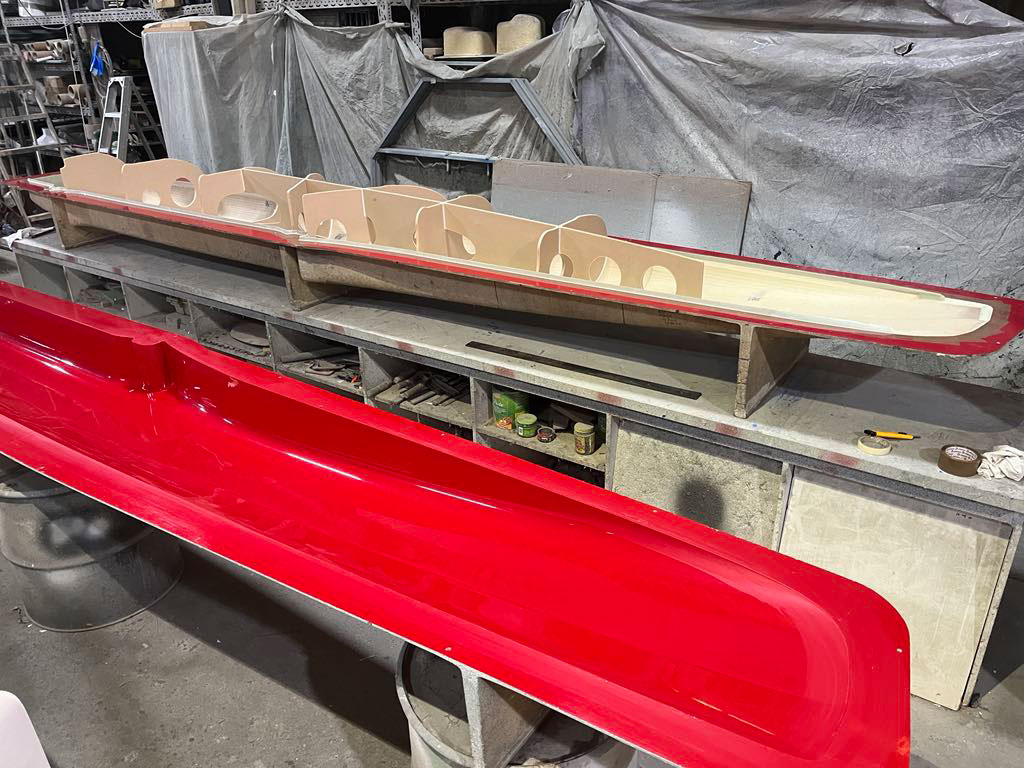
From early Windrush 14 beach cats in the 1980s to custom hydrofoiling projects and military-grade composite components, his career has traced the evolution of modern boatbuilding. Yet despite the innovation, Burvill remains grounded in the practical realities of the craft – back in the workshop, hands-on, solving problems.
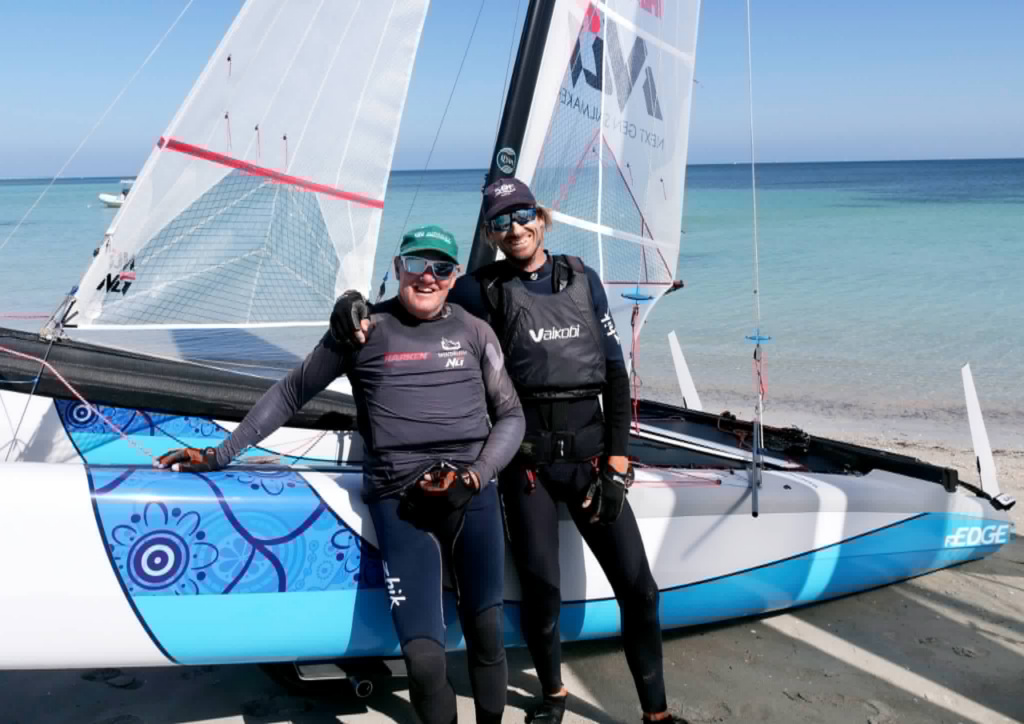
Being born and bred in the west has played its part in shaping that mindset. The Fremantle region, with its rich America’s Cup legacy and thriving marine industry, fostered a culture of experimentation and self-reliance.
“It is a very fertile environment for boating,” Burvill acknowledges. “You learn to be self-sufficient.”
Looking ahead, the competitive fire still burns and Burvill shows no sign of slowing down.
The World Champion duo had planned to campaign in Europe this year to add a European Championship to their titles, but time got away from them. Instead, they’re looking ahead to the Australian Championships in January 2027, followed by America or Canada in 2028 or 2029.
Fifty-four boats built. Four decades of refinement. One World Championship title. Burvill’s career is proof that in high-performance composite construction, the margin between winning and losing is often invisible – built into the layup schedule, the resin system and the details most people never see.