

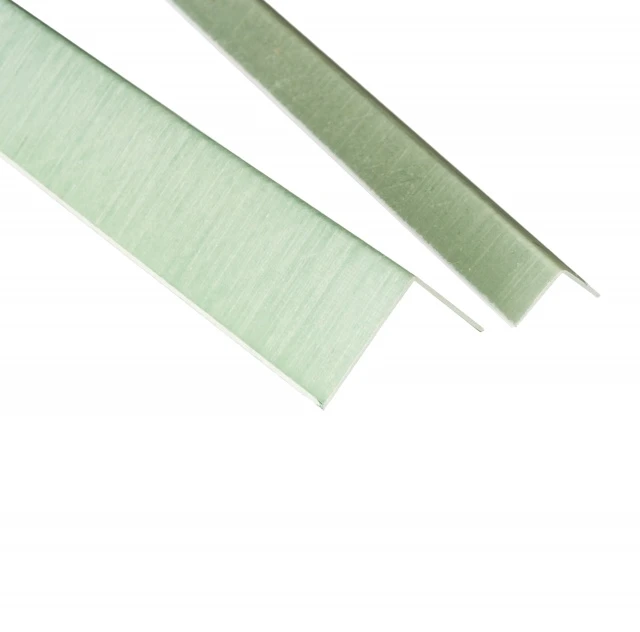
What Are FRP Bonding Angles?
FRP Bonding Angles are 90° structural profiles made from layers of precision-laid multi-axial E-glass, infused and cured using ATL’s advanced epoxy technology. Fibre direction and laminate schedules are tailored to maximise strength in right-angle joints, providing durable, predictable performance in high-load areas.
These angles are designed for use with DuFLEX® panels, ATL’s structural epoxy pastes, and the broader Kinetix® and Techniglue® adhesive systems, ensuring superior compatibility and long-term bonding integrity.
Key advantages include:
-
No Wet Lay-UpPre-cured profiles remove the mess, variability and labour of wet fibreglass taping.
-
High Strength-to-WeightEngineered laminate schedules provide excellent stiffness and strength at low weight.
-
Fast InstallationIdeal for overhead and inaccessible areas where wet lay-up is slow and difficult.
-
Superior BondingFormulated for use with ATL epoxy paste adhesives for reliable structural joints.
-
Consistent Laminate QualityFactory-controlled curing ensures repeatable performance and dimensional stability.
-
Kerfable & CurvableAngles can be kerfed and formed to follow partitions, radius bases and complex geometry.
Right-angle joints between DuFLEX® panels
Structural corner reinforcement in hulls, decks and modules
Internal framing and stiffeners in marine and industrial structures
Overhead and confined-area bonding where wet lay-up is impractical
Curved bases and partitions (kerfed angles)
Structural joints in modular, transport and architectural systems
FRP Bonding Angles are manufactured using the same resin technology that underpins ATL’s DuFLEX® panels, Kinetix® laminating systems and Techniglue® structural adhesives. This ensures:
Excellent chemical compatibility between angles, core and laminates
High bond strength when used with ATL epoxy paste adhesives
Consistent cure behaviour and long-term durability
A fully integrated composite system from core to coating
Independent tensile testing conducted by Queensland University of Technology (QUT), Test Report CET 4149/3 – Tensile Tests to Fibreglass Connections (Fins), using a Grade A Tinius Olsen Universal Testing Machine at 5 mm/min, evaluated the performance of polyester and epoxy bonded joints using FRP Bonding Angles.
In both cases, failure occurred through the adhesive layer rather than the FRP Bonding Angle, demonstrating the superior structural integrity of the angles.
| Test | Specimen Thickness (mm) | Nominal Area (mm²) | Failure Load (kN) | Failure Mode | Apparent Shear Strength (MPa) |
|---|---|---|---|---|---|
| 1 | 21 | 48,400 | 77.6 | Part shear through polyester bond / part tearing | 1.60 |
| 1 | 14 | 30,400 | 68.5 | Shear through epoxy bond | 2.25 |
ATL Composites manufactures FRP Bonding Angles in precision-cured 90° profiles engineered for structural joining, reinforcement and fast assembly of composite components. Each angle is produced using multi-axial E-glass and ATL’s high-performance epoxy resin systems to ensure dimensional stability, reliable bonding and predictable mechanical performance.
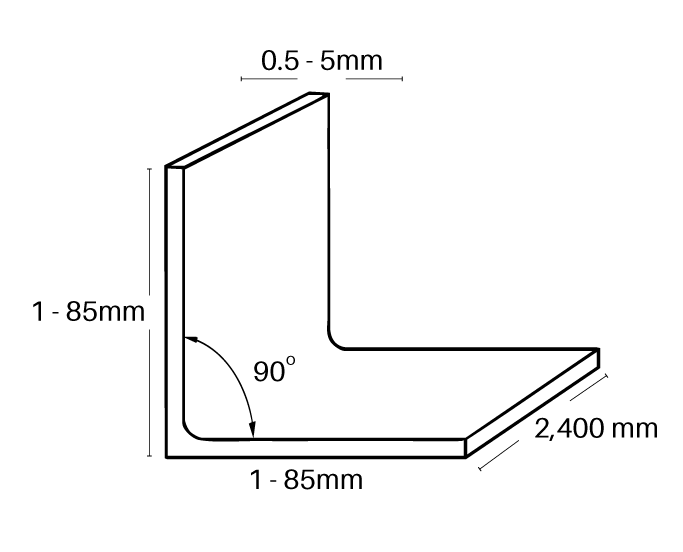
Our standard FRP Bonding Angle profile features 85 mm × 85 mm legs and is supplied in 2400 mm lengths for easy handling and integration into marine, transport, industrial and architectural structures.
Thanks to ATL’s proprietary joining techniques, Bonding Angles can also be supplied in extended continuous lengths for large modules, long-span structures and custom projects requiring uninterrupted reinforcement.
Available Thickness Range
FRP Bonding Angles are available in a wide range of laminate thicknesses from:
0.5 mm to 5 mm
This allows designers and builders to choose the optimal balance of weight, stiffness and bonding area for their project requirements.
Summary of Capabilities
Standard profile: 1 – 85 mm × 1 – 85 mm
Standard length: 2400 mm
Custom lengths: available using ATL’s proprietary joining process
Thickness range: 0.5 – 5 mm
Material: multi-axial E-glass laminated with ATL epoxy systems
Geometry: consistent 90° pre-cured structural profile
FRP Bonding Angle Measurements