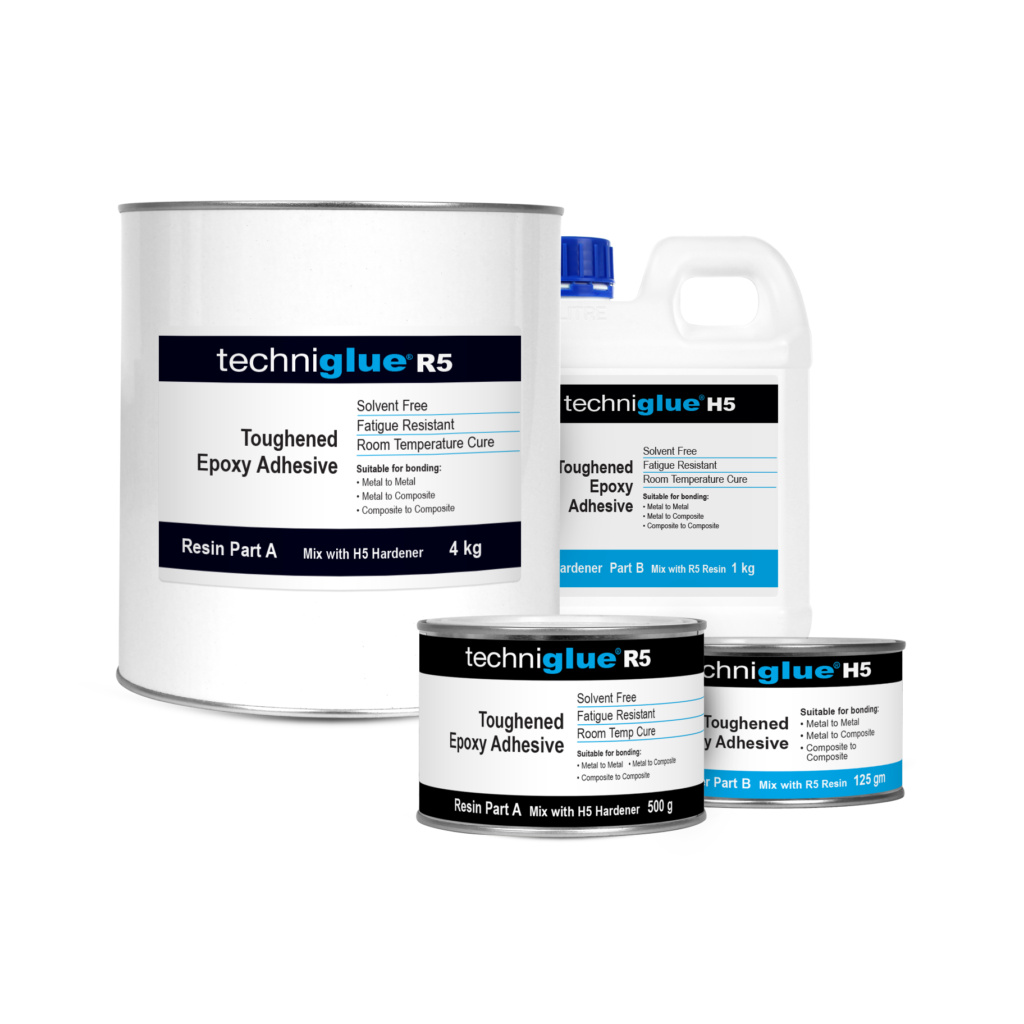
KEY PERFORMANCE TECHNIGLUE® R5 Structural Epoxy Adhesive
Toughened Performance for Composite and Metal Bonding
TECHNIGLUE® R5 delivers high-strength structural bonding with excellent peel resistance. Its toughened chemistry helps reduce peel failure at metal–resin interfaces and resist micro-cracking in fibre-reinforced composites, supporting improved fatigue and impact performance.
Suitable substrates include carbon fibre, Kevlar® and glass fibre composites, aluminium and steel. R5 is designed for close-fitting assemblies with bondlines up to 0.5 mm.
ENGINEERED FOR MULTI-MATERIAL STRUCTURAL BONDING

Surface Preparation
All bonding surfaces must be clean, dry and free from grease, dust and loose particles. Prepare both surfaces to a uniformly fine, matt finish so the adhesive can fully wet each substrate. Maintain a maximum bondline thickness of 0.5 mm.
FORMULATION
SOLVENT FREE
SYSTEM
2 Part Component
MIX RATIO
100:30 – Volume
POT LIFE
56 MIN @ 25°C – 100 g
CURE SOLID STATE
12-15HRS @ 25°C
TENSILE LAP SHEAR
28.9 MPa @ 25°C
max bondline
0.5 mm
Compatible hardener
H5
MIX VISCOSITY
2,050 mPa·s at 25°C
KEY PERFORMANCE FEATURES
-
STRUCTURAL BONDING High-strength bonding for demanding composite and metal assemblies with close-fitting joints.
-
PEEL RESISTANCE Toughened epoxy chemistry improves resistance to peel failure at metal–resin interfaces.
-
IMPACT RESISTANCE Helps improve the impact resistance of fibre-reinforced composite structures.
-
FATIGUE MICRO-CRACK RESISTANCE Helps resist micro-cracking in fibre-reinforced composites, supporting improved fatigue performance.
-
LOW MIXED VISOSITY Mixed viscosity of 2,050 mPa·s at 25°C for bonding applications with a maximum bondline thickness of 0.5 mm.
-
ROOM TEMPERATURE CURE Formulated for use with H5 hardener, reaching a solid state in 12–15 hours at 25°C.
TECHNICAL SPECIFICATIONS
| SUBSTRATE SUITABILITY | Composite-to-composite, composite-to-metal and metal-to-metal |
| COMPATABILE HARDENERS | H5 |
| MIX RATIO - VOULME | 100:30 — Resin:Hardener |
| MIX RATIO - WEIGHT | 100:26 — Resin:Hardener |
| POT LIFE | 56 minutes at 25°C — 100 g sample in air |
| CURE TO SOLID STATE | 12–15 hours at 25°C |
| MAXIMUM BONDLINE THICKNESS | 0.5mm |
| PACK SIZE | 625g / 5kg |
Measure resin and hardener accurately. Do not alter the mixing ratio to adjust cure time. Cure to a solid state does not indicate full development of mechanical properties; refer to the technical data sheet for cure information.
Typical Applications
TECHNIGLUE® R5 is suitable for close-fitting composite and metal assemblies where peel resistance, toughness and resistance to fatigue are important:
- Bonding prefabricated composite goosenecks and spreader roots to carbon masts.
- Bonding aluminium sail tracks to carbon masts.
- Aluminium yacht hull-to-deck joints.
- Bonding prefabricated components into prepreg structures.
multi-material structural bonding
TECHNIGLUE® R5 is suitable for bonding:
- Carbon fibre composites.
- Fibreglass laminates.
- Kevlar® composites.
- Aluminium.
- Steel.
Correct surface preparation and joint fit are essential. R5 is specified for a maximum bondline thickness of 0.5 mm.


WHY TECHNIGLUE ADHESIVES
Developed and manufactured by ATL Composites in Australia, TECHNIGLUE® epoxy adhesives provide structural bonding solutions for a range of substrates and fabrication processes.
Each formulation offers a different combination of handling, working time and cured performance. ATL’s technical team can help select the appropriate system for your materials, bondline thickness and service conditions.
Suggested links beneath this section:
- Explore the TECHNIGLUE® adhesive range
- TECHNIGLUE® R15 — metal bonding and non-sag application
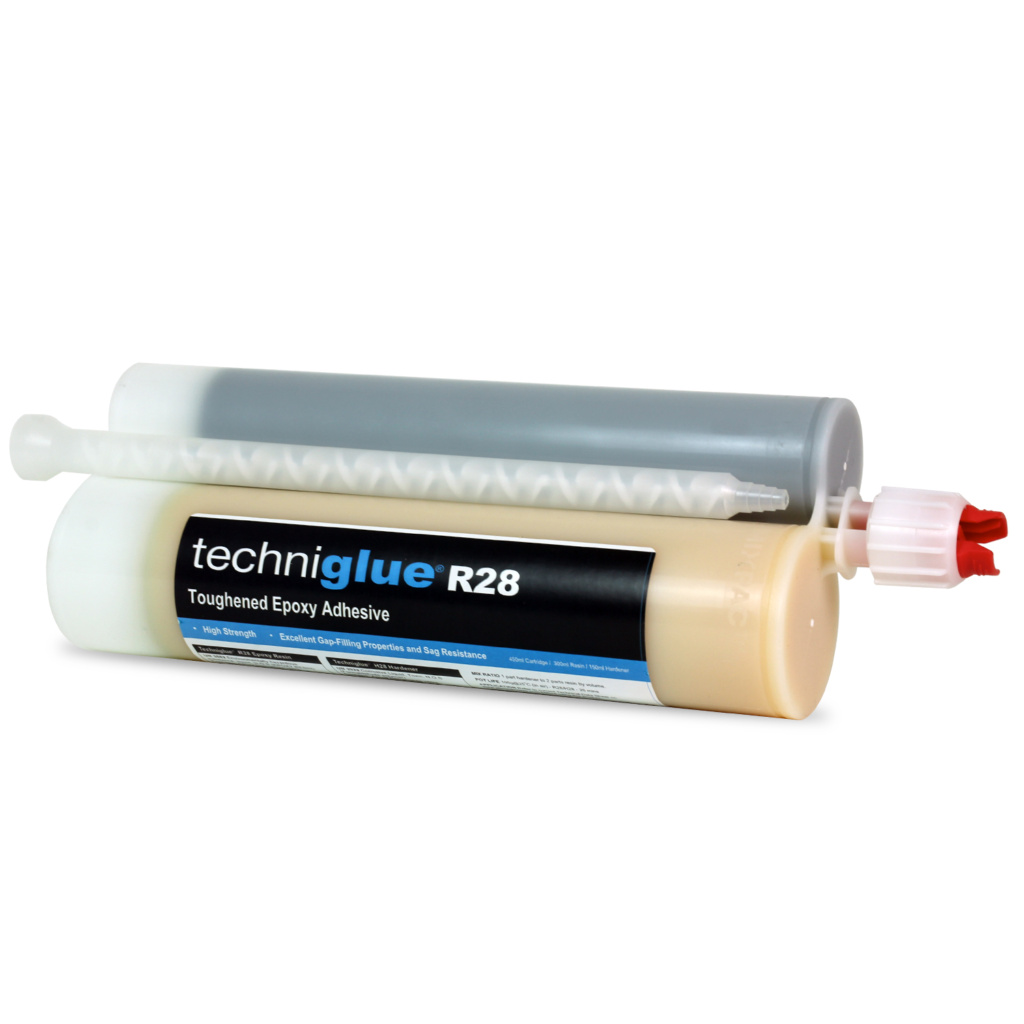
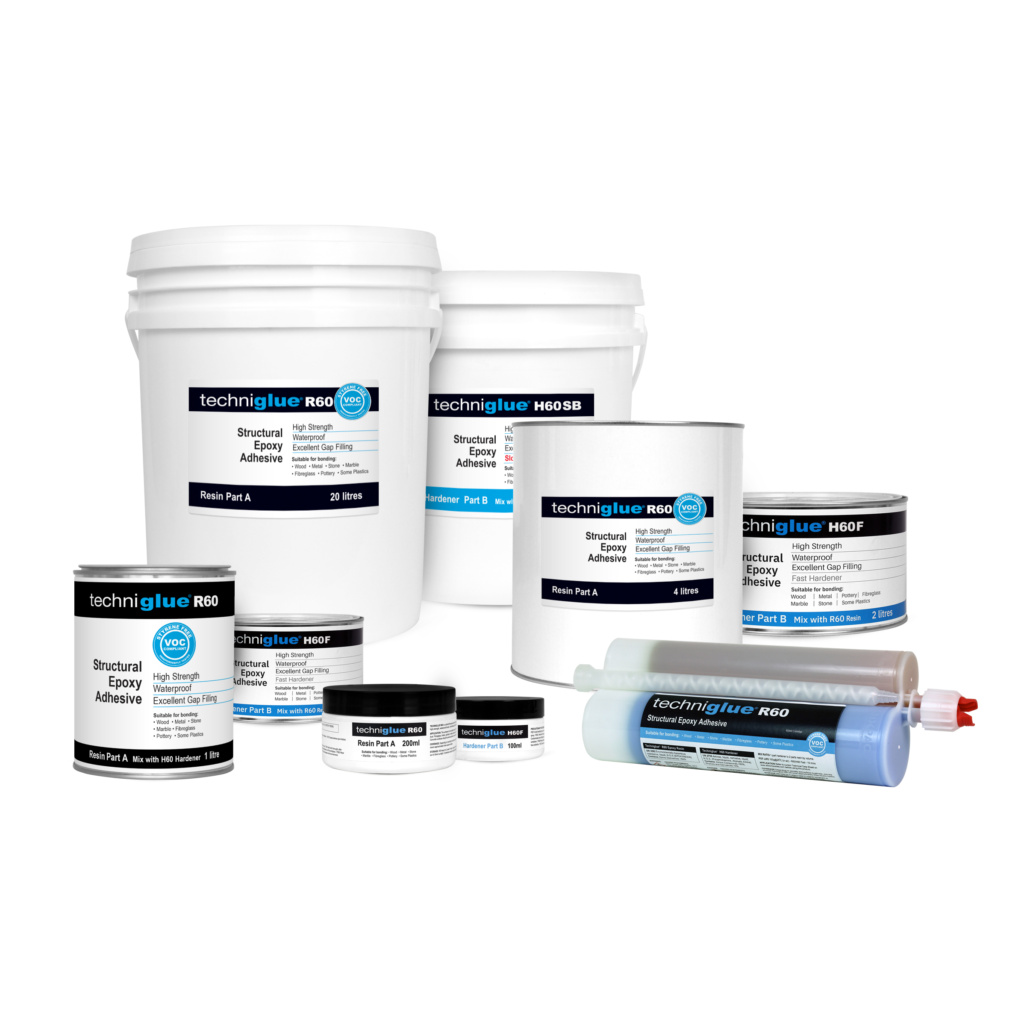
- TECHNIGLUE® R28 and TECHNIGLUE® R60 — cartridge dispensing options
- Explore KINETIX® epoxy laminating systems

TECHNIGLUE R5 FAQs
What is TECHNIGLUE® R5 designed for?
TECHNIGLUE® R5 is designed for structural bonding of close-fitting composite and metal assemblies where high peel strength, toughness and resistance to micro-cracking and fatigue are important. It is used with H5 hardener and cures at room temperature.
Can TECHNIGLUE® R5 bond carbon fibre to aluminium?
Yes. The technical data sheet specifically lists bonding aluminium sail tracks to carbon masts. Correct surface preparation is essential, and the maximum specified bondline thickness is 0.5 mm.
Is TECHNIGLUE® R5 suitable for marine applications?
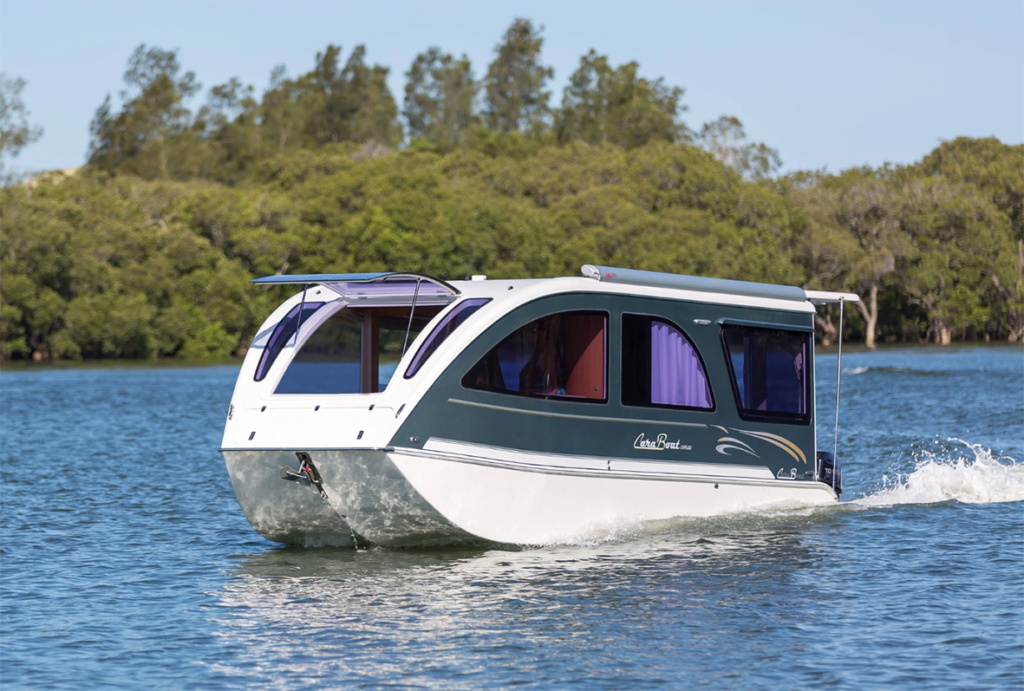
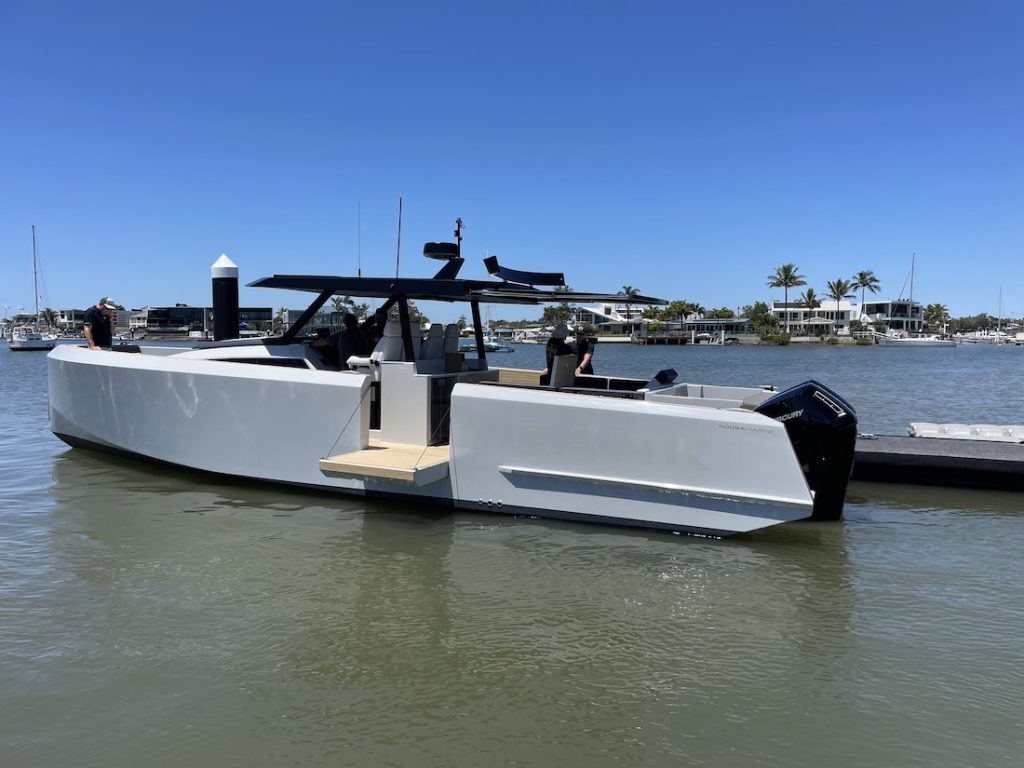
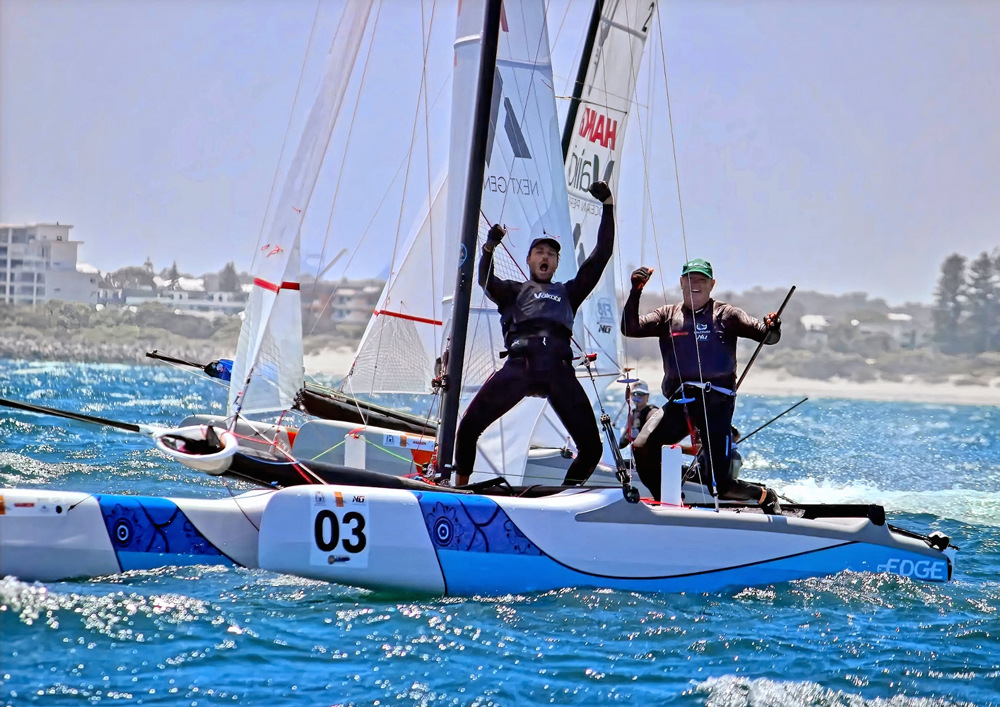
Yes. Documented applications include aluminium yacht hull-to-deck joints and bonding sail tracks, composite goosenecks and spreader roots to carbon masts.
What makes TECHNIGLUE® R5 different from conventional epoxy adhesives?
R5 uses toughened epoxy chemistry to improve peel resistance and resist micro-cracking in fibre-reinforced composites. This supports improved fatigue performance and can improve the impact resistance of composite structures.
Is TECHNIGLUE® R5 a gap-filling or non-sag adhesive?
No. R5 is a low-viscosity system specified for bondlines up to 0.5 mm. For wider gaps or applications requiring non-sag handling, contact ATL for an appropriate TECHNIGLUE® system.
What are the mixing ratio and working time?
Mix R5 resin with H5 hardener at 100:30 by volume or 100:26 by weight. Pot life is 56 minutes at 25°C for a 100 g sample in air. Do not change the mixing ratio to adjust cure time.