

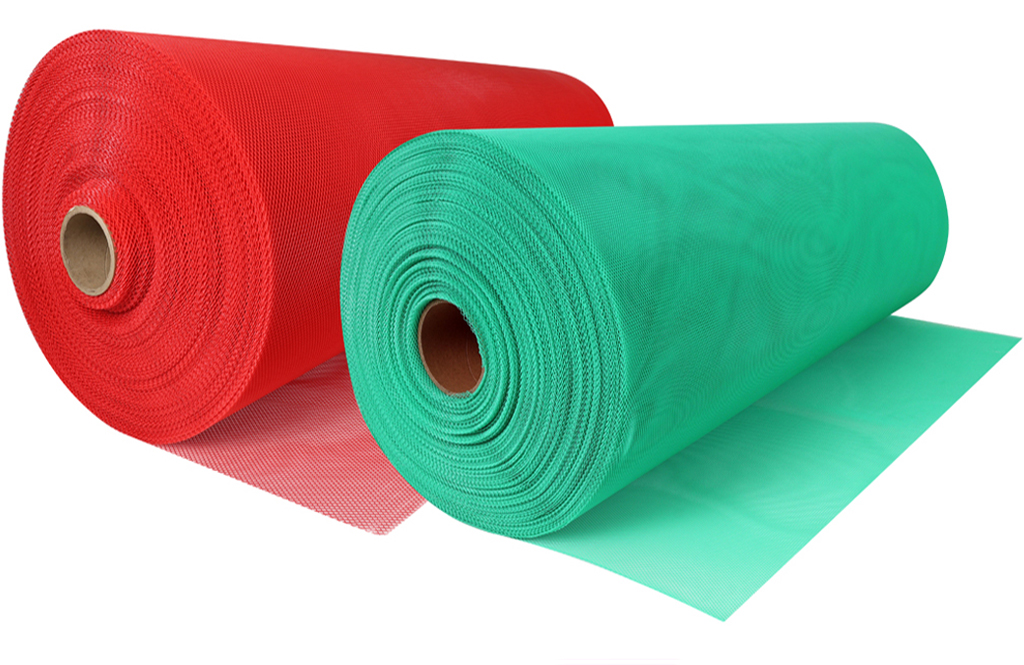

Flow mesh stocked by ATL
Airtech
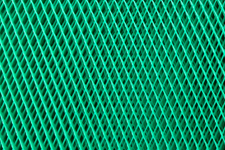
Greenflow® 75 – 150°C Extruded
150°CProcess Temp
A low-profile, 0.9 mm extruded flow mesh designed for fast, efficient resin distribution with polyester, vinyl ester and epoxy resin systems. Its tightly constructed mesh promotes consistent flow while minimising the amount of resin retained in the distribution layer. This reduces resin consumption and the material discarded during de-bagging, making it a practical choice where infusion efficiency and waste reduction are priorities.
With the highest temperature rating in the range, it also offers greater flexibility for applications requiring elevated processing temperatures.
Airtech
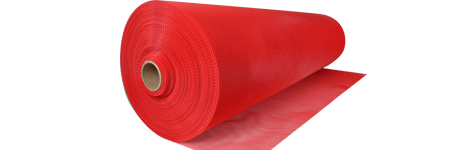
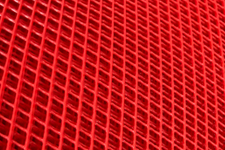
Resinflow® 60 – 100°C Extruded
100°CProcess Temp
A soft, drapable flow mesh engineered for slower, more controlled resin distribution during vacuum-assisted resin transfer moulding (VARTM). Its directional structure allows resin to travel faster along the length of the mesh than across its width, giving processors greater control over flow by adjusting the material’s orientation within the infusion layout. This controlled distribution can help manage laminate wet-out and improve surface finish.
At 1.3 mm thick, it has a higher profile than Greenflow and is supplied in a wider 1520 mm roll. Its drapability helps it conform to contoured surfaces, while the wider format provides greater coverage with each length laid.
Mesh with release film in one layer
The flow mesh comes bonded to Wrightlon® 3700 P16 perforated release film, so you cut and lay one layer instead of two.
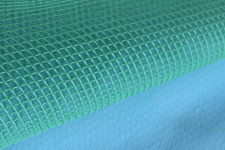
Airtech
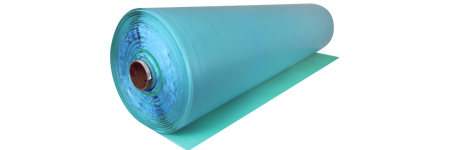
Greenflow® 75 + WL3700 P16
121°CProcess Temp
Flowlease 75-37P16 combines Greenflow® 75 flow mesh with Wrightlon® 3700 P16 perforated release film in a single, pre-assembled layer. The low-profile, tightly constructed mesh promotes fast, efficient resin distribution while minimising resin retained in the flow medium and discarded after processing.
The perforated release film allows resin to pass through to the laminate while preventing the mesh from bonding directly to the part, supporting easier removal after cure. By allowing the flow mesh and release film to be positioned together, Flowlease 75-37P16 reduces material handling, lay-up time and labour compared with applying the two layers separately.
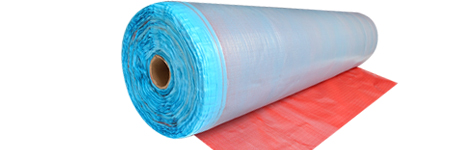
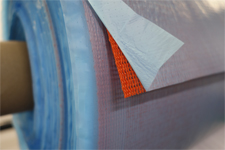
Airtech
Knitflow® 160 + WL3700 P16
115°CProcess Temp
Flowlease 75-37P16 combines Greenflow® 75 flow mesh with Wrightlon® 3700 P16 perforated release film in a single, pre-assembled layer. The low-profile, tightly constructed mesh promotes fast, efficient resin distribution while minimising resin retained in the flow medium and discarded after processing.
The perforated release film allows resin to pass through to the laminate while preventing the mesh from bonding directly to the part, supporting easier removal after cure. By allowing the flow mesh and release film to be positioned together, Flowlease 75-37P16 reduces material handling, lay-up time and labour compared with applying the two layers separately.
Specifications and part numbers
| Part | Description | Construction | Process Temp | Thickness MM | Width MM | Length LM | Best For |
|---|---|---|---|---|---|---|---|
| 0GF750104 | Greenflow75: Infusion Extruded Green Mesh | Extruded | 150°C | 0.9 | 1040 | 106 | Flat and gently curved lay-ups, minimal resin waste |
| 0V900 | Resin Flow60: Infusion Extruded Red Mesh | Extruded | 100°C | 1.3 | 1520 | 106 | VARTM processing in the wider roll |
| 7537P16 | Greenflow75 Mesh & WL3700 Release Film P16 | Extruded + P16 film | 121°C | 0.9 | 1520 | 106 | Large lay-ups — one layer instead of two |
| 16037P16 | Knitflow 160 Knitted Mesh & WL3700 Release Film P16 | Knitted + P16 film | 115°C | – | 1520 | 106 | Complex geometry — one layer, drapes into corners |
Scroll the table sideways to see all columns.
Extruded or knitted — what is the difference?
Flow media comes in two constructions and they behave differently in the bag.
Extruded mesh
A moulded plastic grid. It holds its shape, it has a consistent open volume, and it flows resin fast and predictably across a flat or gently curved surface. Greenflow® 75 and Resinflow® 60 are both extruded. Greenflow at 0.9 mm is the low-profile option — less resin held in the mesh means less waste at de-bag.
Knitted mesh
A 3D knitted textile. It drapes into corners and around returns that an extruded grid would bridge, which makes it the better choice on complex geometry. Knitflow® 160 is knitted, and it is supplied bonded to release film.
The practical rule: extruded for flat and simple, knitted for complex. If the mesh bridges a corner, resin does not reach the laminate underneath it — and that is a dry spot you find after cure.
Why use mesh bonded to release film?
In a normal infusion stack the perforated release film and the flow mesh are two separate layers, cut separately and laid separately. The combination products put them together — Greenflow® 75 or Knitflow® 160 already bonded to Wrightlon® 3700 P16.
That saves a cutting operation and a laying operation on every part. It also removes a failure mode: two loose layers can shift against each other while the bag is drawn down, and where the mesh ends up sitting directly on the laminate it will bond into the part.
On a small part the time saved is minor. On a hull, a deck or any large lay-up done under time pressure before a resin kicks, it is not.
How much flow media do you need?
Enough to carry resin to every part of the laminate before the resin gels. Coverage is usually short of the edges rather than full-width — mesh run right to the perimeter lets resin race around the outside and trap air in the middle. Leave a margin of dry laminate at the edges and let the flow front close inward.
Roll widths are 1040 mm and 1520 mm, both in 106 lm rolls, so most parts are covered without joining.
Where flow media sits in the stack
Laminate, peel ply, perforated release film, flow media, bagging film. The film underneath is what stops the mesh bonding into the part, which is why the combination products exist — they are those two layers pre-assembled.
Flow media is not a substitute for peel ply. Peel ply leaves the bond-ready surface; the mesh only distributes resin and is removed with the bag. And flow media is chosen against the resin — ATL's KINETIX® infusion epoxy systems are formulated for controlled flow and cure behaviour in exactly these processes.
Frequently asked questions
What is infusion flow media?
Flow media is a plastic mesh laid over the laminate during vacuum infusion. It carries resin quickly across the whole part so the laminate wets out evenly instead of resin creeping in from one point.
What is the difference between extruded and knitted mesh?
Extruded mesh is a moulded plastic grid — it holds its shape and flows fast across flat or gently curved surfaces. Knitted mesh is a 3D textile that drapes into corners and around returns without bridging. Extruded for simple geometry, knitted for complex.
What is mesh with release film, and why would I use it?
The flow mesh comes bonded to perforated release film in a single layer, so you cut and lay one layer instead of two. It saves time on every part and removes the risk of the two layers shifting against each other while the bag is drawn down.
Do I still need release film if I use a combination product?
No — the release film is already bonded to the mesh. That is the point of it. You still need peel ply underneath if the surface will be bonded or coated afterwards.
How much flow media do I need?
Enough to carry resin to every part of the laminate before it gels, but usually not right out to the edges. Mesh run to the perimeter lets resin race around the outside and trap air in the middle. Leave a margin of dry laminate and let the flow front close inward.
Which temperature grade should I choose?
Match it to the peak temperature the laminate will reach, including exotherm. Greenflow® 75 is rated to 150 °C, the Greenflow 75 + WL3700 P16 combination to 121 °C, Knitflow® 160 + WL3700 P16 to 115 °C and Resinflow® 60 to 100 °C.
Is flow media the same as peel ply?
No. Peel ply is a woven fabric that leaves a textured, bond-ready surface on the laminate. Flow media is a plastic mesh that distributes resin and is removed with the bag. Most infusion stacks use both.
Talk to ATL about your application
Tell us the part geometry, the resin system and the cure schedule, and we will recommend a mesh construction, width and temperature grade that suits.
or call +61 7 5563 1222