


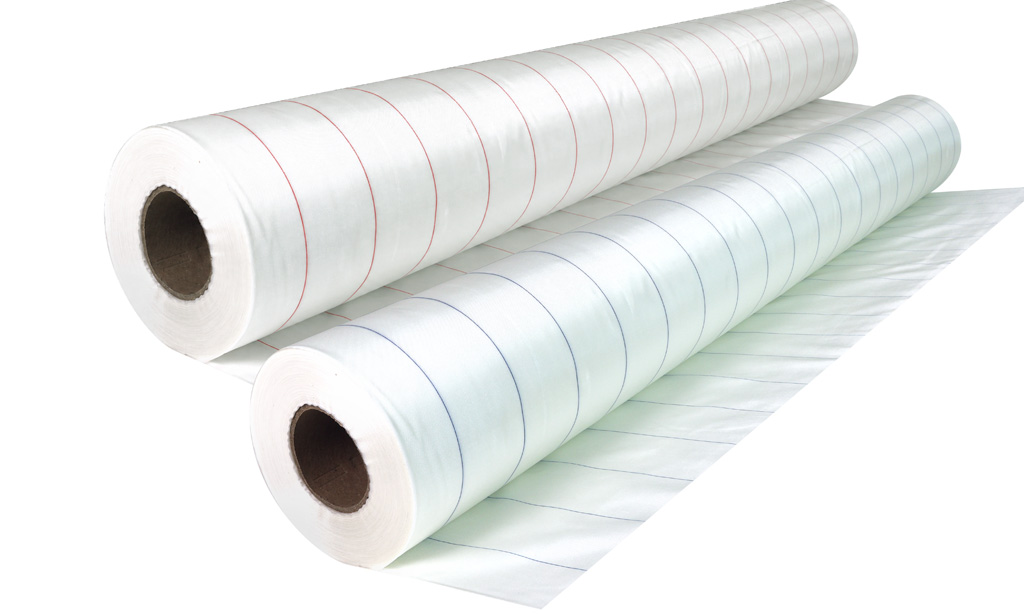
Peel ply grades stocked by ATL
Process temp 190°C

Airtech
Red Trace – 85 gsm Everyday Grade
Optimised for everyday vacuum bagging and resin infusion. Peels away cleanly to leave a textured, contamination-free surface ready for secondary bonding, laminating or coating — usually without sanding.
- 85 gsm nylon
- 1300 mm & 250 mm wide
- 10 & 100 lm rolls
Part numbers: 0V769 · 1V769 · V769T250
Process temp 210°C
Airtech
Blue Trace – 105 gsm High Temperature
For higher-temperature cure cycles, oven post-cures and long cycles where thermal stability is critical. The heavier 105 gsm fabric also handles well on large parts.
- 105 gsm nylon
- 1300 mm wide
- 10, 50 & 100 lm rolls
Part numbers: 0V771 · 5V771 · 1V771
Specifications and part numbers
| Part | Trace | Description | Process Temp | Weight GSM | Width MM | Length LM |
|---|---|---|---|---|---|---|
| 0V771 | Blue | Nylon Peel-Ply White | 210°C | 105 | 1300 | 100 |
| 5V771 | Blue | Nylon Peel-Ply White | 210°C | 105 | 1300 | 50 |
| 1V771 | Blue | Nylon Peel-Ply White | 210°C | 105 | 1300 | 10 |
| 0V769 | Red | Nylon Peel-Ply White | 190°C | 85 | 1300 | 100 |
| 1V769 | Red | Nylon Peel-Ply White | 190°C | 85 | 1300 | 10 |
| V769T250 | Red | Nylon Peel-Ply White | 190°C | 85 | 250 | 100 |
Scroll the table sideways to see all columns.
How peel ply is used
In vacuum bagging
Peel ply goes directly onto the wet laminate, under the perforated release film and breather. It holds the surface texture, absorbs a small amount of resin at the interface and gives you a defined layer to remove after cure. Without it, the release film sits on the laminate and you lose both the bond texture and the clean separation.
In resin infusion
Peel ply sits between the dry reinforcement and the flow media. Resin passes through it during infusion, and when the bag comes off the peel ply lifts the flow mesh away with it in one piece. This is the main reason infusion laminates come out of the bag ready to bond rather than needing to be ground back.
Peel ply or release film — which do you need?
They are not interchangeable, and using the wrong one shows up later as a failed secondary bond.
Peel ply
A woven fabric. It leaves a textured, contamination-free surface that is ready for bonding, laminating, coating or painting. Use it wherever something will be applied to that surface afterwards.
Release film
A plastic film. It stops layers sticking together and, in perforated grades, lets a controlled amount of resin bleed into the breather. It leaves a smooth surface, not a bond-ready one.
Most vacuum bagging stacks use both: peel ply on the laminate, release film above it. If you are only going to use one and the part will be bonded or coated later, use peel ply.
Choosing a width and roll length
The 1300 mm width suits panels, hulls and general lay-up. The 250 mm width is worth knowing about: it is the practical choice for bond lines, tapes, stringers, local repairs and narrow laminates, where cutting down a full-width roll wastes material.
Roll lengths run 10, 50 and 100 linear metres, so a workshop running occasional jobs is not forced into a production-sized roll. Peel ply is a consumable, not a component — if you are running a repeatable process, buying at 100 lm reduces both cost per metre and the number of joins in a lay-up.
Matching consumables to your resin system. Peel ply is chosen against the resin and the cure schedule, not in isolation. ATL's KINETIX® infusion epoxy systems are formulated for controlled flow and cure behaviour in these processes, and the peel ply, flow media and bagging film stocked here are selected to suit them.
Frequently asked questions
What is peel ply used for?
Peel ply is a woven release fabric laid directly on the laminate during lay-up. After cure it peels away, leaving a clean, textured, contamination-free surface ready for secondary bonding, laminating, coating or painting — usually without sanding.
What is the difference between peel ply and release film?
Peel ply is a woven fabric that leaves a bond-ready textured surface. Release film is a plastic film that stops layers sticking together; perforated grades bleed a controlled amount of resin into the breather. Most vacuum bagging stacks use both. If the surface will be bonded or coated later, you need peel ply.
Do I need to sand after removing peel ply?
Usually not. Removing nylon peel ply leaves a textured, contamination-free surface ready for the next operation. Always check the surface preparation requirements of the adhesive, resin or coating you are applying.
Should I choose the 190 °C or the 210 °C grade?
Match the grade to the peak temperature the laminate will reach, including exotherm — not the shop temperature. The 190 °C Red Trace grade suits most ambient and moderately elevated-temperature epoxy work. The 210 °C Blue Trace grade is for higher-temperature cure cycles, oven post-cures and long cycles where thermal stability is critical.
Can I use nylon peel ply with polyester and vinyl ester resins?
Yes. Nylon peel ply is used with epoxy, polyester and vinyl ester systems in both wet lay-up and infusion. Confirm compatibility for your specific resin and cure schedule against the current technical data sheet.
What is the tracer thread for?
The coloured tracer identifies the grade at a glance on the roll and in the lay-up, so the right fabric goes into the right process and any peel ply left on a part is easy to spot before bonding.
What width and roll length should I order?
The 1300 mm width covers panels, hulls and general lay-up. The 250 mm width suits bond lines, tapes, stringers and local repairs, and avoids wasting material cutting down a wide roll. Rolls are available in 10, 50 and 100 linear metres.
Talk to ATL about your application
Tell us the part, the resin system and the cure schedule, and we will recommend a peel ply grade, width and roll length that suits.
or call +61 7 5563 1222