



Release Films
Airtech
Wrightlon® 3700 P16
121°CProcess Temp
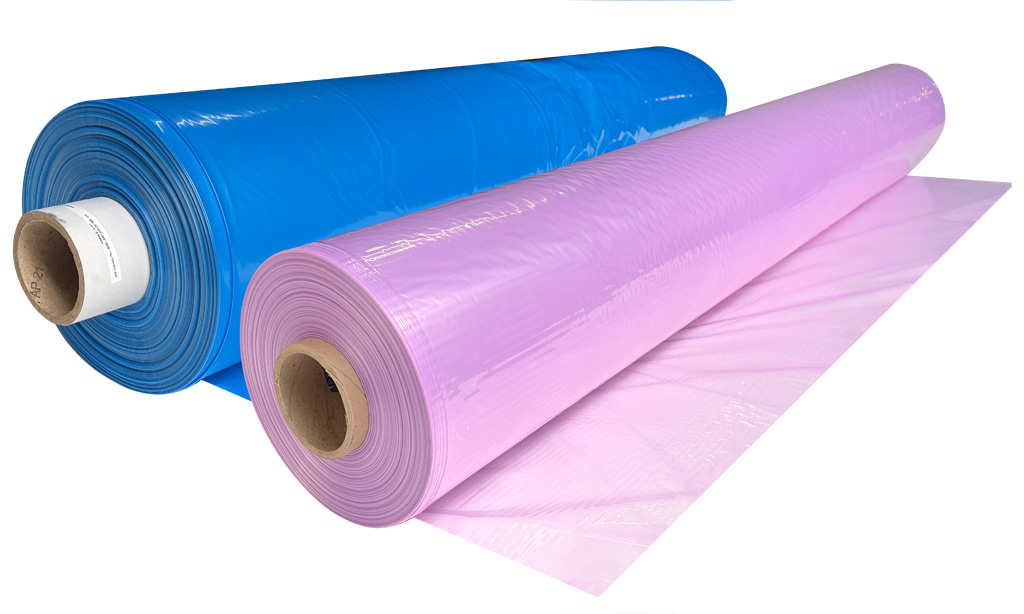
Blue release film for low-to-medium temperature processing. The most open of the perforated grades, so resin passes freely into the flow media. Reliable release from epoxy, polyester and vinyl ester resin systems.
Airtech
Dahlar® 125 P3
140°CProcess Temp
Economical, tear-resistant film that reduces bridging and wrinkles – improving surface finish and cutting rework. The less open perforation, for controlled resin bleed into the breather.
Airtech
Dahlar® 125R
140°CProcess Temp
The same economical, tear-resistant film with no perforation. Nothing passes through it, so the laminate gives up no resin – the grade for prepreg and any process where resin content is already set.
Teflon
PTFE Film
–Not Rated
Clean, low-friction release barrier for plug and mould surfaces. Reusable across multiple pulls. Not a bag-stack consumable – it goes onto the tool, not into the laminate.
Specifications and part numbers
| Part | Description | Perforation | Process Temp | Thickness MM | Width MM | Length LM | Best For |
|---|---|---|---|---|---|---|---|
| 0WL370P16 | Wrightlon WL3700: Release Film P16 Perforation | P16 · 0.4 mm / 3 mm centres | 121°C | 0.025 | 1520 | 609 | Resin infusion — resin passes freely into the flow media |
| 0DAH125P3 | Dahlar125: Release Film P3 Perforation | P3 · 0.381 mm / 6.3 mm centres | 140°C | 0.025 | 1520 | 304 | Wet lay-up under vacuum — controlled bleed into the breather |
| 0DAH125R | Dahlar125R: Release Film Non Perforated | None | 140°C | 0.025 | 1520 | 304 | Prepreg and any process where no resin should bleed |
| 0TEFLON | PTFE Teflon Film | None | Not rated | – | 1000 | 50 | Plug and mould surfacing — reusable, not a bag-stack layer |
Scroll the table sideways to see all columns.
Choosing a perforation grade
Perforation is what makes one release film different from another. The holes control how much resin passes through the film during cure — and that single variable decides the resin content of your laminate and whether the surface underneath comes out dry, wet or right.
The grade codes describe the hole pattern. Dahlar 125 P3 is perforated with 0.381 mm holes on staggered 6.3 mm centres. Wrightlon 3700 P16 uses 0.4 mm holes on staggered 3 mm centres — a materially more open film, because the holes sit at less than half the spacing.
P16 — the more open grade
More open area means resin moves through the film readily. ATL specifies Wrightlon 3700 P16 for resin infusion, where resin needs to pass up into the flow media and back down through the laminate without the film restricting it.
P3 — controlled bleed
Fewer, more widely spaced holes mean less resin escapes. ATL specifies Dahlar 125 P3 for wet lay-up under vacuum, where the job is to bleed a measured amount of excess resin into the breather and no more. Too open a film here and you pull out resin you needed.
None — no bleed at all
Dahlar 125R is the same film with no holes. Nothing passes through it. Use it for prepreg, where the resin content is already set at manufacture and any bleed is a loss, and anywhere the laminate must not give up resin.
If you are unsure, work backwards from the process rather than the product. Infusion wants flow. Wet lay-up wants controlled bleed. Prepreg wants none.
Release film or peel ply — which do you need?
Both sit on the laminate and both come off after cure, so they get confused constantly.
Peel ply
A woven fabric. It leaves a textured, bond-ready surface — use nylon peel ply wherever something will be bonded, laminated or coated afterwards.
Release film
A plastic film. It leaves a smooth surface, not a bond-ready one. Its job is separation and resin control, not surface preparation.
Most vacuum bagging stacks use both: peel ply directly on the laminate, perforated release film above it, then breather.
Where release film sits in the stack
Wet lay-up under vacuum
Laminate, peel ply, perforated release film, breather/bleeder, bagging film. The perforation grade of the film is what decides how much resin the breather draws off.
Resin infusion
Laminate, peel ply, perforated release film, flow media, bagging film. Here the film separates the flow media from the laminate so the mesh lifts away cleanly at de-bag, while still letting resin through.
PTFE film is different again. It is not part of the bag stack — it goes onto a plug or mould surface as a reusable release barrier, and stays with the tool rather than the part.
Frequently asked questions
What is release film used for?
Release film sits between the laminate and the consumable layers. It stops the layers above sticking to the part, and — in perforated grades — controls how much resin passes through during cure.
What is the difference between P3 and P16 perforation?
The codes describe the hole pattern. P3 has 0.381 mm holes on staggered 6.3 mm centres; P16 has 0.4 mm holes on staggered 3 mm centres, which makes it a materially more open film. More open means resin passes more freely. ATL specifies P16 for resin infusion and P3 for controlled bleed in wet lay-up.
When should I use non-perforated release film?
When no resin should leave the laminate. Prepreg is the common case — the resin content is set at manufacture, so any bleed is a loss. Dahlar® 125R is the non-perforated version of the same 140 °C film.
What is the difference between release film and peel ply?
Peel ply is a woven fabric that leaves a textured, bond-ready surface. Release film is a plastic film that leaves a smooth surface and controls resin flow. If the part will be bonded or coated afterwards, you want peel ply — and most stacks use both.
Which temperature grade should I choose?
Match the film to the peak temperature the laminate will reach, including exotherm — not the ambient shop temperature. Wrightlon® 3700 is rated to 121 °C and the Dahlar® 125 grades to 140 °C.
Can release film be reused?
The bag-stack films are single-use. PTFE film is the exception — it is a reusable release barrier for plug and mould surfaces rather than a consumable layer inside the bag.
What width does release film come in?
The Wrightlon® and Dahlar® grades are all 1520 mm wide at 0.025 mm thickness. PTFE film is 1000 mm.
Do I need release film for resin infusion?
Usually yes. A perforated film between the laminate and the flow media lets resin through while keeping the mesh from bonding to the part, so it lifts away cleanly at de-bag.
Talk to ATL about your application
Tell us the process, the resin system and the cure schedule, and we will recommend a perforation grade and temperature rating that suits.
or call +61 7 5563 1222