



Resin Infusion Fittings & Accessories
Which fitting fits which line?
Start with the line, not the fitting. ATL stocks polyethylene tubing in two sizes and the connectors are sized to match, one for one. Pick the tubing for the job, then take the connector carrying the same figure.
1/2″ line — 0V804
0V804 is 1/2″ outside diameter on a 3/8″ bore, and it suits resin feed on small and medium parts. Use V815 (arch base) or V815FLAT (flat base) with it — both are 1/2″ fittings.
5/8″ line — 0V805
0V805 is 5/8″ outside diameter on a 1/2″ bore. It is the one to reach for on the vacuum line and on resin feed for large parts — a bigger bore holds flow rate over distance and is harder to choke with a kink. Use V816 or V816FLAT.
Arch base or flat base?
The base is about where the fitting sits, not what size it is. A flat base seats on a flat tool surface or a flat area of the bag and pulls down evenly. An arch base spans a spiral or a resin line running underneath it, so the connection is made over the top of the feed rather than at the end of it. If you are not sure, the flat base is the more forgiving.
Spiral wrap — 12 mm or 16 mm
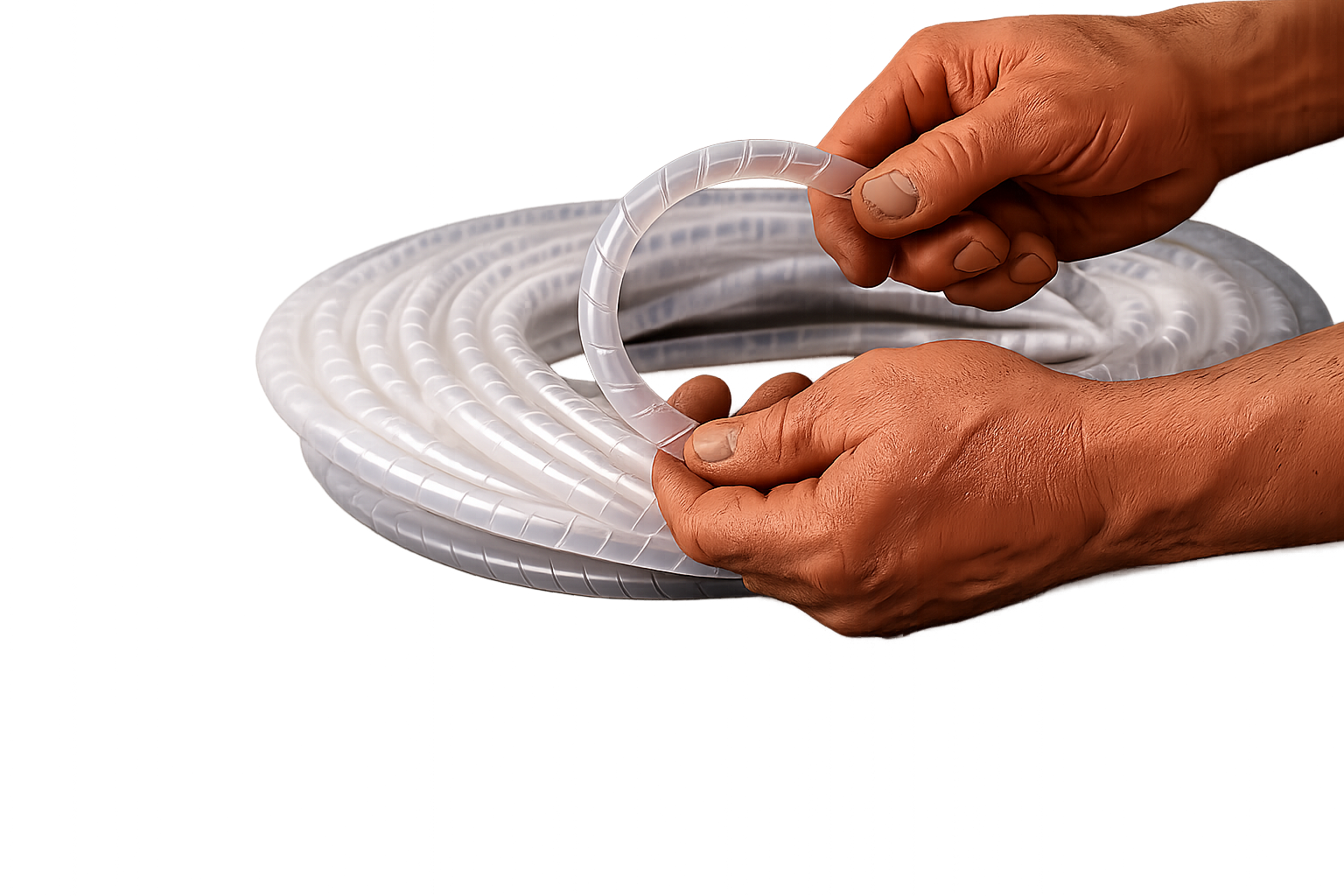
Spiral wrap sits inside the bag along the feed and vacuum edges and holds an open channel, so the line cannot be pinched shut when the bag draws down. 12 mm is the general-purpose size for most parts; 16 mm is for long runs and large areas, where resin has further to travel before it gels. Both are rated to 100 °C.
Temperature is set by the weakest part in the chain. The connectors are rated to 80 °C and the tubing to 87 °C, so on a cure hotter than that it is the circuit — not the bag — that limits the process. The nylon T-joints are rated to 180 °C and are never the limit. Check the cure schedule against the lowest-rated component before you build the stack, not after.
Tubing and spiral wrap
Airtech
Polyethylene Tubing & Spiral Wrap
Polyethylene tubing connects the resin supply and the vacuum equipment to the bag. Spiral wrap provides an open distribution pathway along the edge or surface of the laminate, and holds that pathway open once the bag is drawn down.
| Part | Description | Process Temp |
Outside Diameter |
Inside Diameter |
Length LM |
|---|---|---|---|---|---|
| 0V804 | Polyethylene Tubing | 87°C | 1/2″12.7 mm | 3/8″9.5 mm | 50 |
| 0V805 | Polyethylene Tubing | 87°C | 5/8″15.9 mm | 1/2″12.7 mm | 50 |
| 0V806 | Spiral Wrap | 100°C | – | 12 mm | 20 |
| 0V807 | Spiral Wrap | 100°C | – | 16 mm | 20 |
Resin infusion connectors
Airtech
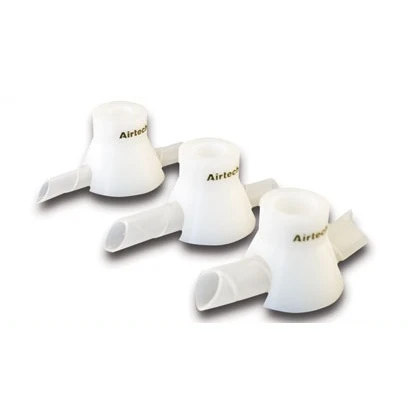
Connectors create the entry and exit points for resin and vacuum lines. Each size comes in two base styles — arch for connecting over a spiral or feed line, flat for seating on a flat surface.
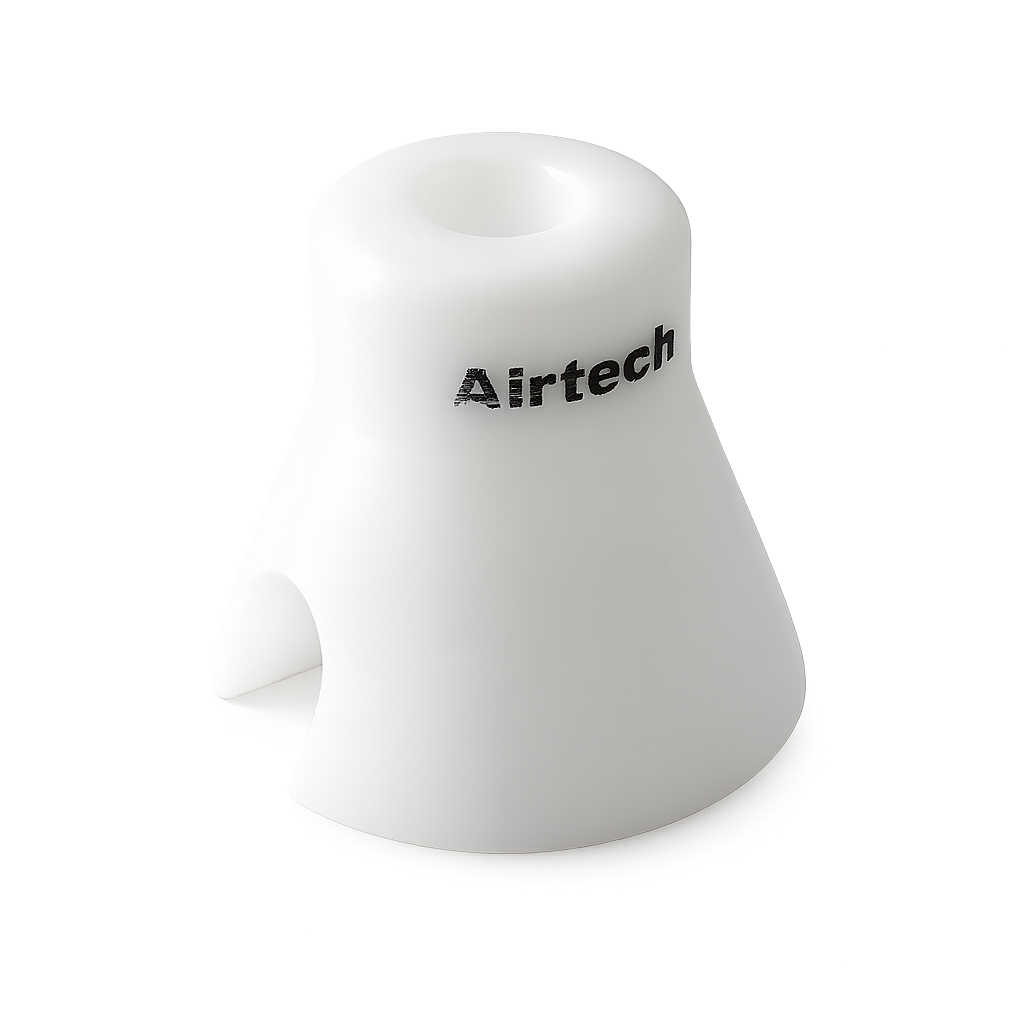
V815
Resin Infusion Connector
Arch Base 1/2″ · Fits 0V804
Arch base connector for the 1/2″ line. The arch spans a spiral or resin line running underneath, so the connection is made over the top of the feed rather than at the end of it.
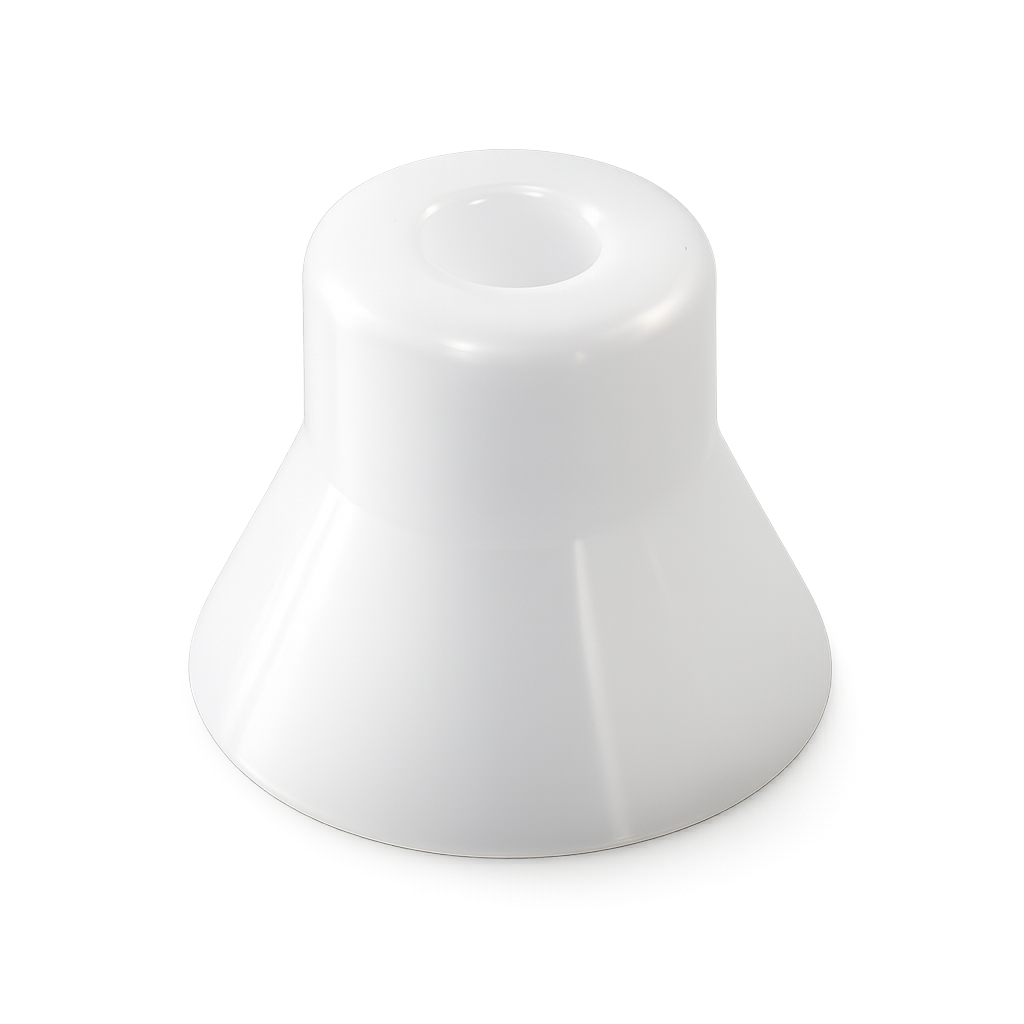
V815FLAT
Resin Infusion Connector
Flat Base 1/2″ · Fits 0V804
The same 1/2″ connection on a flat base, for stable mounting on a flat tool surface or a flat area of the bag. The more forgiving of the two bases.
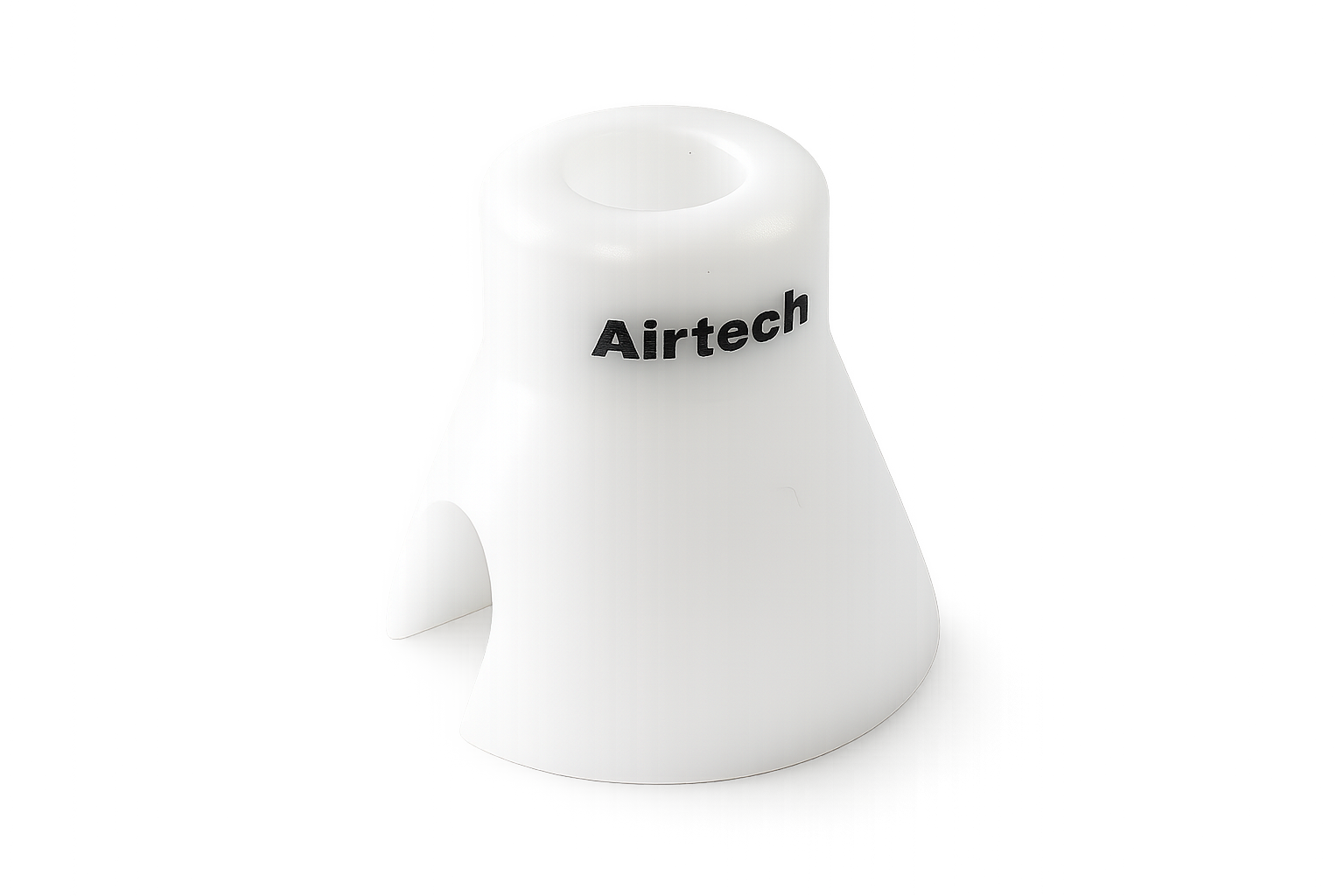
V816
Resin Infusion Connector
Arch Base 5/8″ · Fits 0V805
Arch base connector for the larger 5/8″ line — the size to use on the vacuum side and on resin feed for large parts.

V816FLAT
Resin Infusion Connector
Flat Base 5/8″ · Fits 0V805
The same 5/8″ connection on a flat base, for stable mounting on a flat tool surface or a flat area of the bag.
Nylon barbed T-joints
Airtech
T-joints split a line; they do not adapt between sizes. Use one where a single resin feed has to reach two entry points, or where a vacuum line needs to pull from both ends of a bag. Both are nylon and rated to 180 °C — well above the connectors, so a T-joint is never the temperature limit in the circuit.
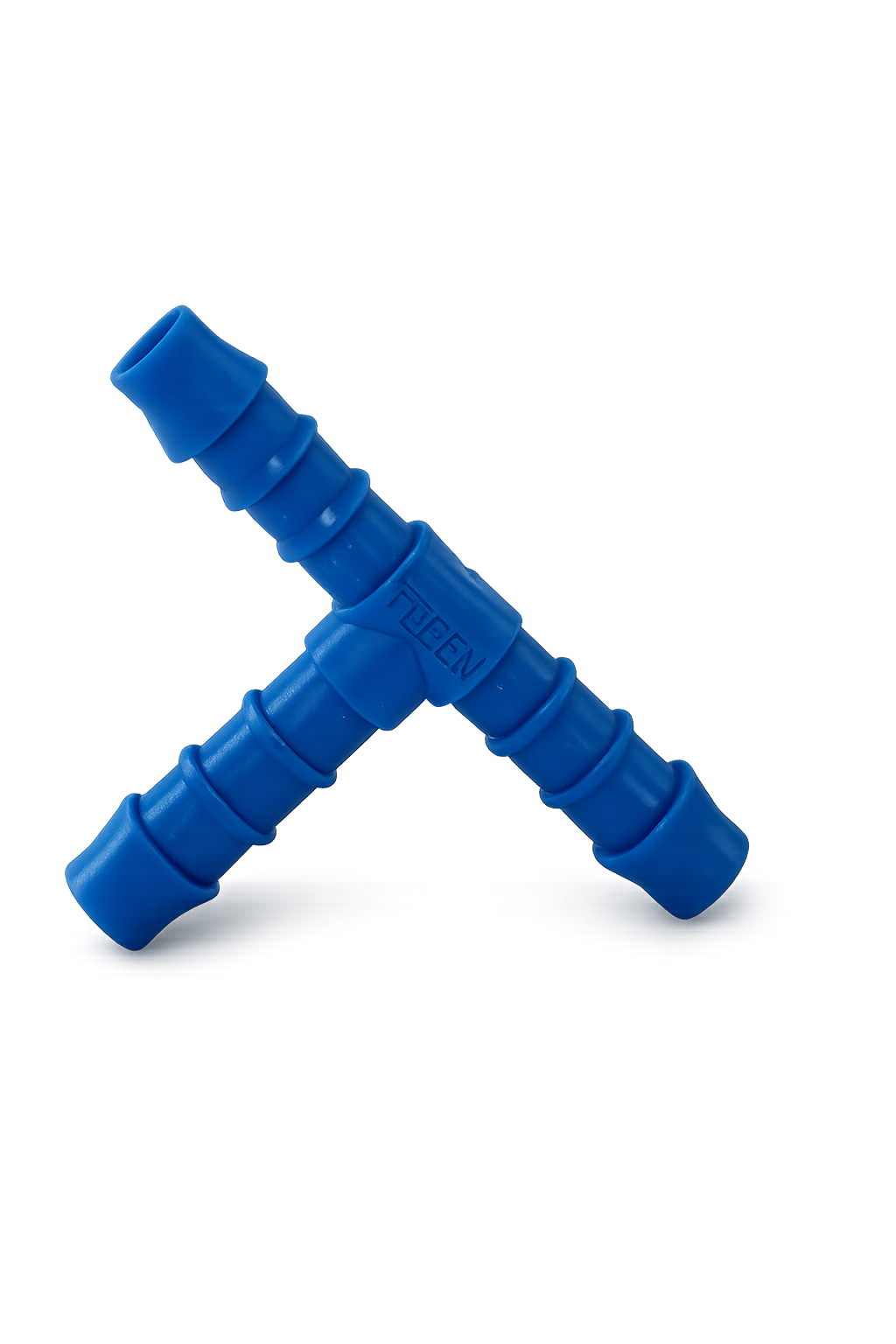
V860
Nylon Barbed T-Joint
8 mm · 180°C
Nylon barbed T-joint for branching a vacuum or resin line. Rated to 180 °C.
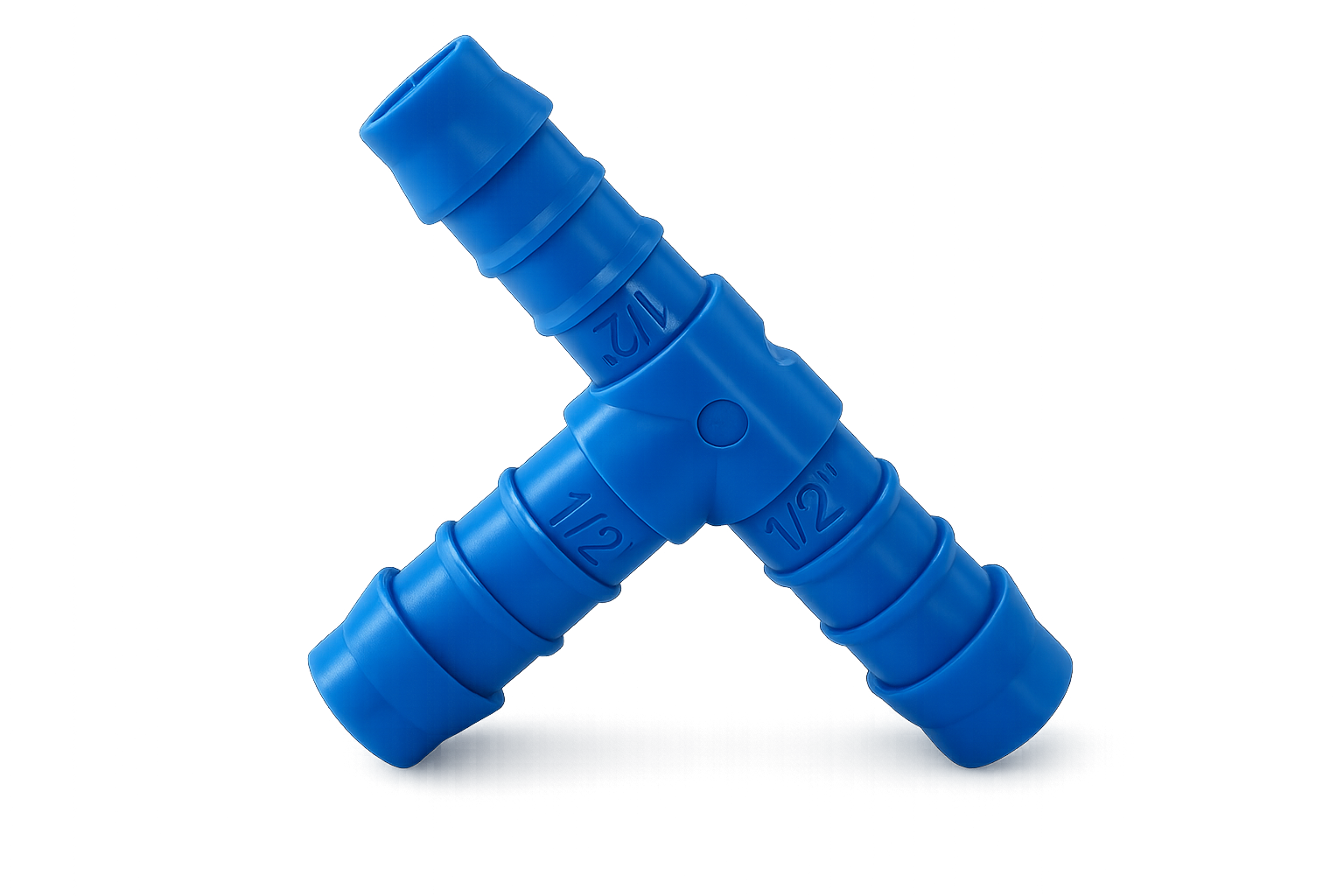
V861
Nylon Barbed T-Joint
12 mm · 180°C
The larger of the two, for branching a bigger feed or vacuum line. Rated to 180 °C.
T-joints are sized in millimetres. The tubing above is imperial, so check the barb against the bore of your line before ordering — or ask us and we will confirm the right one for your set-up.
Specifications and part numbers
| Part | Description | Process Temp |
Line Size | Fitting Type | Fits Line | Best For |
|---|---|---|---|---|---|---|
| V815 | Resin Infusion Connector Fitting – Arch Base | 80°C | 1/2″ | Arch Base | 0V804 | Connecting over a spiral or feed line |
| V815FLAT | Resin Infusion Connector Fitting – Flat Base | 80°C | 1/2″ | Flat Base | 0V804 | Flat tool surface or flat area of bag |
| V816 | Resin Infusion Connector Fitting – Arch Base | 80°C | 5/8″ | Arch Base | 0V805 | Larger lines, over a spiral or feed |
| V816FLAT | Resin Infusion Connector Fitting – Flat Base | 80°C | 5/8″ | Flat Base | 0V805 | Larger lines on a flat surface |
| V860 | Nylon Barbed T-Joint | 180°C | 8 mm | T-Joint | – | Splitting a feed to two entry points |
| V861 | Nylon Barbed T-Joint | 180°C | 12 mm | T-Joint | – | Splitting a larger feed or vacuum line |
Scroll the table sideways to see all columns.
Frequently asked questions
What size infusion fitting do I need?
Start with the line. ATL stocks tubing in 1/2″ (0V804) and 5/8″ (0V805), and the connectors match one for one: V815 and V815FLAT for the 1/2″ line, V816 and V816FLAT for the 5/8″. Pick the tubing for the job, then take the connector carrying the same figure.
What is the difference between an arch base and a flat base connector?
The base is about where the fitting sits, not what size it is. A flat base seats on a flat tool surface or a flat area of the bag. An arch base spans a spiral or a resin line running underneath it, so the connection can be made over the top of the feed rather than at the end of it. Both bases are available in both sizes.
What is spiral wrap for, and which bore should I use?
Spiral wrap sits inside the bag along the feed and vacuum edges and holds an open channel, so the line cannot be pinched shut when the bag draws down. ATL stocks 12 mm for general-purpose feed and vacuum runs, and 16 mm for long runs and large areas where resin has further to travel before it gels.
Can I use the same fittings on the vacuum line and the resin line?
Yes — the connectors, tubing and spiral wrap are used on both sides of the circuit. What changes is the size: the vacuum line is usually run in the larger 5/8″ bore so it holds flow over distance, while resin feed is sized to the part.
What temperature are infusion fittings rated to?
The resin infusion connectors are rated to 80 °C and the polyethylene tubing to 87 °C. The nylon T-joints are rated to 180 °C. The circuit is limited by its lowest-rated component, so on a cure above 80 °C it is the connectors, not the bag, that set the ceiling. Check the cure schedule before building the stack.
What is a T-joint used for?
Splitting a line, not adapting between sizes. Use one where a single resin feed has to reach two entry points, or where a vacuum line needs to pull from both ends of a bag. Both ATL T-joints are nylon and rated to 180 °C.
Do I still need spiral wrap if I am using flow media?
Usually yes, and they do different jobs. Flow media distributes resin across the face of the laminate; spiral wrap holds an open channel along the feed and vacuum edges so the line itself cannot close under vacuum. Most infusion set-ups use both.
What else do I need to build the circuit?
A pump to pull it and a tape to seal it. ATL stocks vacuum pumps, sealant tape, bagging film and the rest of the vacuum bagging and infusion range alongside these fittings.
Talk to ATL about your set-up
Tell us the part size, the resin system and how you are running the feed, and we will spec the tubing, fittings and spiral wrap to match.
or call +61 7 5563 1222