


WEST SYSTEM® | Epoxy Basics | Guide 10
Cured epoxy has to be washed, sanded to the right grit for the coating going over it, and coated within about 24 hours of that final sand.
Paint and varnish do two things over epoxy: they finish the job, and they protect the epoxy from the ultraviolet light that breaks it down over time. Paint adhesion relies on the coating keying into the sanding scratches — so the grit you finish at decides whether the finish holds.
Grit guidance from WEST SYSTEM instructional material — always check the coating manufacturer's own instructions as well.
Overview
The most common finishes over epoxy are paint and varnish. Both protect the epoxy from ultraviolet light, and both require proper surface preparation before they go on.
Preparation for the final finish is just as important as it is for recoating with epoxy: the surface must be clean, dry and sanded. Paint adhesion relies on the mechanical grip of the coating keying into the sanding scratches in the epoxy.
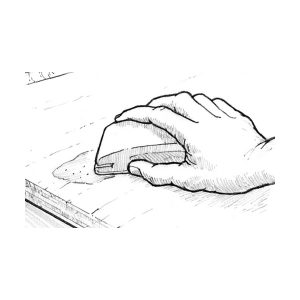
Quick reference
| Coating to be applied | Finish sanding at | Notes |
|---|---|---|
| High-build or filling primer | 80–100 grit | Usually sufficient — the primer fills the scratch pattern. |
| Primers and high-solid coatings | 120–180 grit | May be adequate; check the coating instructions. |
| High-gloss paint or varnish | 220–400 grit | Produces a high-gloss finish with most paints and varnishes. |
| Finer than 400 grit | Not advised | May not leave enough tooth for good adhesion. |
Start with 80-grit paper if there are runs or sags to knock down, sand until the surface looks and feels fair, then finish at the grit your coating calls for.
Guide only. Follow the coating manufacturer's instructions where they differ, and refer to the current technical data sheet for full product specifications and suitability.
5 steps
Allow the final epoxy coat to cure thoroughly before you touch it with abrasive.
Wash the surface with an abrasive pad and water to remove amine blush, then dry with paper towels. Many people prefer to wet sand instead, which reduces dust and does this step at the same time.
If there are runs or sags in the epoxy, begin with 80-grit paper to remove the highest areas. Sand until the surface feels and looks fair.
Complete the sanding with the appropriate grit for the coating to be applied — see the table above, and check the coating instructions.
Once you are satisfied with the texture and fairness, rinse the surface with fresh water. The rinse water should sheet evenly, without beading or fish-eyeing.
If it beads up — a sign of contamination — wipe the area with solvent, dry with a paper towel, then wet sand again until the beading is gone.
Proceed with the final coating once the surface has dried thoroughly. Begin coating within 24 hours of the final sanding to reduce the chance of contamination, and follow all of the coating manufacturer's instructions.
A trick used by professionals: make a test panel to evaluate both the degree of surface preparation required and the compatibility of the finish system.
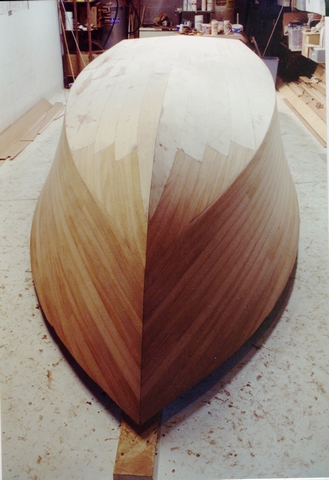
Further reading. Ted Moores's article Sealing and Priming in Epoxyworks issue 35 covers priming over epoxy in more detail.
4 questions
It depends on the coating: 80–100 grit under a high-build or filling primer, 120–180 grit under primers and high-solid coatings, and 220–400 grit for a high-gloss paint or varnish. Finer than 400 grit may not leave enough tooth for good adhesion.
Yes — wash off the amine blush with water and an abrasive pad, then dry with paper towels. Wet sanding removes the blush at the same time, so you can skip the separate wash.
Rinse it with fresh water. The water should sheet evenly. If it beads or fish-eyes, the surface is contaminated: wipe with solvent, dry, and wet sand again until the beading stops.
Yes, wherever it is exposed. Ultraviolet light breaks epoxy down over time, so paint or varnish is what protects it — as well as finishing the job.
Supplied by ATL Composites
Resin & hardeners
105 Epoxy Resin with 205 Fast, 206 Slow, 207 Special Clear and 209 Extra Slow Hardeners. 207 cures blush-free.
Application tools
Roller frames and covers, squeegees, mixing sticks and static mixers for coating work.
Browse the full WEST SYSTEM range supplied by ATL Composites.
View the WEST SYSTEM rangeGuide only. Adapted from WEST SYSTEM instructional material (original guide). Read the product label and the current technical and safety data sheets before use.
Guide 10 of 11
Contact ATL Composites for product-selection support on +61 7 5563 1222 or [email protected].
WEST SYSTEM® and 105 Epoxy Resin® are registered trademarks of Gougeon Brothers, Inc., USA. Manufactured and distributed in Australia by ATL Composites Pty Ltd. Diagrams and instructions courtesy of WEST SYSTEM.