


WEST SYSTEM® | Epoxy Basics | Guide 11
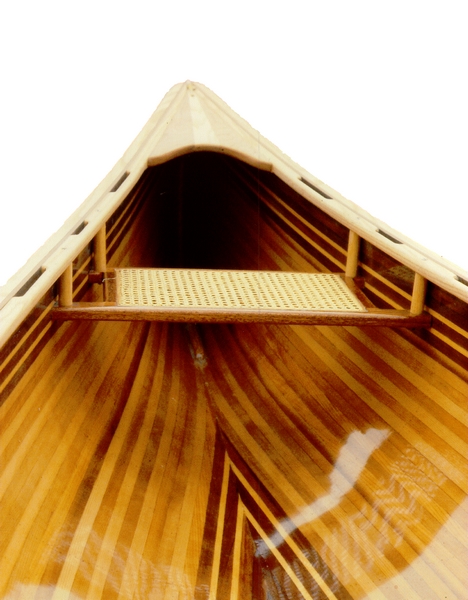
A finish coating over an epoxy barrier coat does two jobs: it decorates the surface, and it shields the epoxy from the sunlight that would otherwise break it down.
The finish extends the life of the epoxy moisture barrier, and the barrier gives the finish a stable base — together they are far more durable than either coating on its own. Most coatings are compatible with fully cured WEST SYSTEM epoxy, but UV performance varies enormously between them.
Selection guidance from WEST SYSTEM instructional material. Follow the coating manufacturer's own instructions and data sheets.
What to weigh up
Protection from sunlight is the primary consideration. Long-term UV protection of the barrier coat depends on how well the finish coating itself resists UV, and how well it keeps its pigments — or its shield of UV filters — on the surface of the epoxy.
A high-gloss finish reflects a higher proportion of the light hitting the surface than a dull one. All other things being equal, a white coating, and especially a glossy white, will last the longest.
Most types of coating are compatible with epoxy. Thoroughly cured epoxy is an almost completely inert hard plastic, so most paint solvents will not soften, swell or react with it. It is still worth building a test panel to confirm compatibility for the system you intend to use.
5 finish types
| Coating | UV protection | Strengths | Limitations |
|---|---|---|---|
| Latex paints | Adequate | Compatible with epoxy and often the most suitable choice in architectural applications. | Limited durability. |
| Alkyd finishes enamel, marine enamel, acrylic enamel, alkyd-modified epoxy, traditional and spar varnish |
Low | Easy to apply, low cost, low toxicity, widely available. | Low UV resistance and low abrasion resistance. |
| One-part polyurethanes | Better than alkyd | Easy application and cleanup, better properties than alkyds. | More expensive; some are incompatible with amine-cure epoxy systems — 207 Special Clear Hardener may offer better compatibility. Test first. |
| Epoxy paints one-part and two-part |
Limited | Two-part versions are durable and chemical resistant, with characteristics similar to higher-performance polyurethanes. | Limited UV protection compared with linear polyurethanes. |
| Two-part linear polyurethane (LP) | Excellent | The most durable protection available: excellent UV protection, gloss retention and abrasion resistance, and compatible with epoxy. Pigmented or clear. | Expensive, requires more skill to apply, and presents a greater health hazard — especially when sprayed. |
Guide only. Follow all instructions from the coating manufacturer, and refer to the current technical and safety data sheets. Make a test panel to evaluate the degree of surface preparation required and the compatibility and handling characteristics of the finish system.
3 special cases
Antifouling paints come in a variety of formulations. Most systems are compatible with epoxy and can be applied directly over a prepared epoxy barrier coat. If you are unsure of compatibility, or have curing or adhesion problems with a specific product, use only a primer recommended for that antifouling over the barrier coat, following the recommendations given for preparing fibreglass surfaces.
Other paints, including marine LPs and primers, are not recommended for use below the waterline.
Primers are usually not needed to help a paint film bond to epoxy. Interfacing primers may be required with some specialised antifoulings, and high-build primers are useful for hiding scratches or flaws in the substrate. If the instructions on your paint or varnish call for a specially primed surface, follow the recommendations given for fibreglass preparation.
Self-etching primers do not work well over an epoxy coating, because of epoxy's chemical resistance.
Gelcoat is a pigmented version of the resin used to build fibreglass boats and other products. It is sprayed into a mould before the glass fabric and resin are applied, giving a smooth pre-finished surface when the part is released. It is not often used as a post-production finish coating, but it can be applied over epoxy and is useful in some repair situations.
The Fiberglass Boat Repair & Maintenance manual (PDF), published by Gougeon Brothers, covers patching gelcoat over an epoxy repair in detail.
4 questions
Two-part linear polyurethane. It offers excellent UV protection, gloss retention and abrasion resistance, and is compatible with epoxy — but it is expensive, needs more skill to apply and presents a greater health hazard, particularly when sprayed.
Yes, in most cases — thoroughly cured epoxy is an inert hard plastic that most paint solvents will not affect, and primers are usually not needed for adhesion. The surface still has to be washed, sanded and coated properly: see Final Epoxy Surface. Build a test panel to confirm compatibility.
Most antifouling systems are compatible with epoxy and can go directly over a prepared barrier coat. If you are unsure, or have curing or adhesion problems, use only a primer recommended for that antifouling. Marine LPs and primers are not recommended below the waterline.
Self-etching primers rely on chemically etching the surface, and cured epoxy resists that attack. Sand to a mechanical key instead and use a primer suited to fibreglass surfaces.
Supplied by ATL Composites
Resin & hardeners
105 Epoxy Resin with 205 Fast, 206 Slow, 207 Special Clear and 209 Extra Slow Hardeners.
Additives
423 Graphite Powder, and 501 and 502 Pigments for tinting epoxy coatings.
Publications
Instruction manuals and technical booklets covering coating, repair and construction.
Browse the full WEST SYSTEM range supplied by ATL Composites.
View the WEST SYSTEM rangeGuide only. Adapted from WEST SYSTEM instructional material (original guide). Read the product label and the current technical and safety data sheets before use — for the epoxy and for the finish system.
Guide 11 of 11
Contact ATL Composites for product-selection support on +61 7 5563 1222 or [email protected].
WEST SYSTEM®, 105 Epoxy Resin® and 207 Special Clear Hardener® are registered trademarks of Gougeon Brothers, Inc., USA. Manufactured and distributed in Australia by ATL Composites Pty Ltd. Diagrams and instructions courtesy of WEST SYSTEM.